How to Manage Mouth Sores and Difficulty Eating After Oral Cancer Radiation Treatment
Mouth sores and swallowing problems are among the most common side effects of oral cancer radiation. Learn how to care for your mouth, ease pain at mealtime, and protect your nutrition during recovery.
Updated on Jun 5, 2026
Radiation therapy is a main treatment for oral cancer. It uses high-energy beams to target and destroy cancer cells. These beams can also damage soft tissue inside your mouth and throat. Many people develop painful mouth sores and have trouble eating and swallowing during and after treatment.
These side effects are common. According to the National Cancer Institute, nearly all people who receive radiation to the head and neck area develop some mouth irritation. Most side effects get better over time. You can take steps to reduce discomfort and protect your health while you heal.
This guide explains what causes these side effects, how to care for your mouth, how to manage eating and swallowing, and when to contact your medical team.
What Are Mouth Sores After Radiation?
The mouth sores that come from radiation therapy are called oral mucositis. This is inflammation of the mucous membranes, the moist lining inside your mouth, cheeks, gums, and throat. Sores can look like red, swollen patches, open ulcers, or raw areas that bleed easily. They may cause a burning feeling or make your mouth feel very tender.
Mouth sores usually begin in the first one to two weeks of radiation treatment. They often get worse around the middle of treatment. Most sores start to heal about two to four weeks after radiation ends. But healing time varies from person to person. People who also received chemotherapy with radiation may take longer to recover.
Pain from mouth sores can make it hard to eat, drink, and speak. That's why handling them early, before they get worse, helps you feel more comfortable and stay nourished.
How to Care for Your Mouth During and After Radiation
Good daily mouth care is one of the best ways to reduce mouth sores and prevent infection. The American Cancer Society recommends starting an oral care routine as early as possible, ideally before radiation begins.
Practical steps to follow each day:
- Rinse often with a gentle solution. Mix one teaspoon of baking soda and one teaspoon of salt in a quart of warm water, or use plain salt water. Swish gently and spit. Do not swallow. Rinse four to six times a day, especially after meals and before bed.
- Brush gently with a soft-bristle toothbrush. Brush at least twice a day. If your gums are very sore, ask your care team about using a foam brush instead.
- Avoid alcohol-based mouthwashes. Alcohol dries out tissue and can irritate open sores. Choose an alcohol-free rinse instead.
- Keep your lips moist. A plain lip balm or petroleum jelly can prevent painful cracking.
- Drink plenty of water. Sipping water keeps your mouth moist and washes away bacteria that could cause infection.
- Avoid tobacco and alcohol. Both slow healing and make irritation worse.
If you wear dentures, ask your dental team if it's safe to wear them during treatment. Dentures that don't fit well can rub against sore areas and damage fragile tissue.
Managing Mouth Pain at Mealtime
Even with good mouth care, eating when you have sores is painful. These steps may help:
- Use pain relief before eating. If your doctor prescribed a mouth rinse or pain medication, use it 20 to 30 minutes before meals. This can make eating much more comfortable.
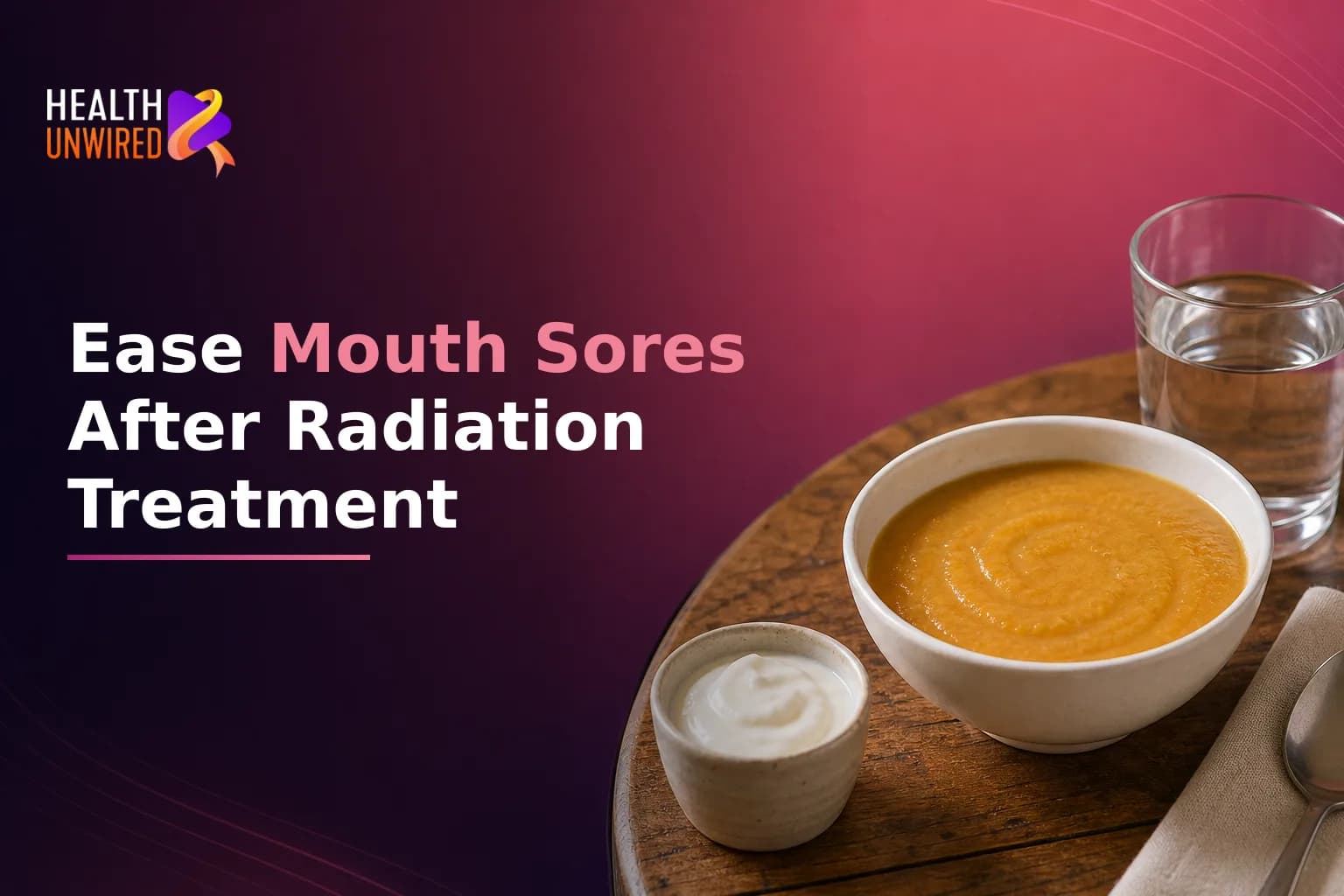
- Choose soft, cool foods. Hot foods and drinks can make soreness worse. Soft, cool foods are usually easier to eat. Try yogurt, soft scrambled eggs, oatmeal, mashed potatoes, and pureed soups.
- Avoid irritating foods. Skip spicy, acidic, salty, or crunchy foods. Tomatoes, citrus fruits, vinegar dressings, and rough foods can make sores worse.
- Cut food into small pieces. Small bites are easier to chew and cause less discomfort.
- Try a straw for liquids. A straw can help you drink without the liquid touching the most painful areas.
Small amounts of food add up. If you can only manage a few spoonfuls at a time, that still helps. Skipping meals slows healing and leaves your body without fuel.
Understanding Dry Mouth After Radiation
Dry mouth, called xerostomia, is a common side effect of head and neck radiation. Radiation can damage salivary glands, which produce moisture you need to chew, swallow, and digest food. According to the National Cancer Institute, salivary glands may not fully recover after radiation. For some people, dry mouth can last long after treatment ends.
Dry mouth can make it harder to:
- Chew and swallow food without discomfort
- Taste food and drink normally
- Speak clearly and comfortably
- Protect teeth from decay, since saliva normally rinses away harmful bacteria
To manage dry mouth:
- Sip water throughout the day
- Use a humidifier at night to add moisture to the air
- Ask your care team about saliva substitutes (gels, sprays, or rinses that coat your mouth and feel like natural saliva)
- Try sugar-free gum or candy to help create saliva, if your mouth can tolerate it
- Avoid caffeine and alcohol, which worsen dryness
Protecting your teeth is important when saliva is low. Tooth decay can develop quickly without saliva to wash away bacteria. Ask your dentist about fluoride treatments or prescription fluoride toothpaste.
Managing Difficulty Swallowing
Difficulty swallowing, called dysphagia, is a major side effect after oral cancer radiation. As Cancer Research UK explains, swallowing problems can start during treatment and continue for months. Sometimes radiation makes throat muscles and tissues stiff and less flexible, making swallowing harder over time.
A speech-language therapist is an important part of your recovery team if you have swallowing problems. They can:
- Check how safely you swallow food and liquids
- Teach exercises to keep your throat muscles strong and flexible
- Recommend safe food and liquid textures for you
- Help prevent aspiration (when food or liquid goes into your airway instead of your esophagus)
Starting swallowing therapy early, before or during radiation treatment, may help with long-term recovery. If you haven't seen a speech-language therapist yet, ask your oncology team for a referral.
Seek help if you notice these warning signs: choking or coughing during meals, food feeling stuck in your throat, pain with every swallow, or weight loss.
Eating Well When Eating Is Hard
Good nutrition helps your body heal from radiation. When eating is painful or swallowing is hard, getting enough nutrition can feel overwhelming. The American Cancer Society recommends foods high in calories and protein when appetite is low.
Soft, nourishing foods that may be easier to eat:
- Smoothies blended with yogurt, soft fruits, nut butter, or protein powder
- Pureed soups or broths made with soft vegetables, lentils, or beans
- Soft-cooked fish, silken tofu, or poached chicken
- Mashed sweet potatoes or ripe avocado
- Pudding, applesauce, or soft canned fruit — avoid citrus varieties
- Nutritional supplement drinks, if recommended by your dietitian or care team
A registered dietitian can help you create a meal plan that fits your symptoms. If you're losing weight fast or can't eat enough by mouth, your care team may suggest a temporary feeding tube. This is a short-term way to protect your nutrition while you recover. Your swallowing can still improve with time.
Taste changes are common after radiation. Food may seem bland, metallic, or different. This usually gets better as healing happens. Try plastic utensils instead of metal to reduce metallic taste.
The Emotional Side of Eating Difficulties
Having trouble eating can affect your mood and wellbeing. Meals are part of comfort, routine, and connection with others. When eating becomes painful or limited, it's normal to feel frustrated, isolated, or anxious. Your feelings make sense.
Ask for help from your support network. Caregivers and loved ones can prepare soft meals, go to appointments, and offer support on hard days. If your partner or family member is supporting you, help them understand what you're facing and make sure they take care of themselves too. You may find our guide on supporting a partner through cancer treatment helpful.
If you feel overwhelmed, sad, or anxious, talk to a social worker, counselor, or patient navigator at your cancer center. Many centers offer these services to patients and families.
When to Talk to Your Doctor
Some mouth soreness and eating trouble during and after radiation is normal. But contact your care team right away if you experience:
- Mouth sores getting worse after treatment ends
- Pain you can't control with your medications or rinses
- A fever of 38°C (100.4°F) or higher
- Can't eat or drink for more than a day or two
- Weight loss
- Choking or coughing during meals, or pain when swallowing
- Mouth bleeding that doesn't stop
- Extreme tiredness or sudden weakness
Your care team is here to help. Reporting symptoms early helps prevent serious problems and keeps you on track.
This article is for general information and is not a substitute for medical advice. Talk to your oncologist or care team about your specific situation.
Frequently Asked Questions
Similar Topics
Prostate Cancer Treatment Decisions: Understanding Surgery, Radiation, Hor…
Prostate cancer treatment decisions are rarely straightforward. This guide explains surgery, radiation, and h…
HealthUnwired Team
Jun 14, 2026
Managing Chemo Brain and Cognitive Changes During Lung Cancer Treatment
Chemo brain is a common but often overlooked side effect of lung cancer treatment. Learn what causes cognitiv…
HealthUnwired Team
Jun 5, 2026
Managing Fatigue and Shortness of Breath During Lung Cancer Chemotherapy
Fatigue and shortness of breath are two of the most common side effects of lung cancer chemotherapy. This gui…
HealthUnwired Team
Jun 5, 2026