India Medical Visa for Cancer Treatment: What to Prepare
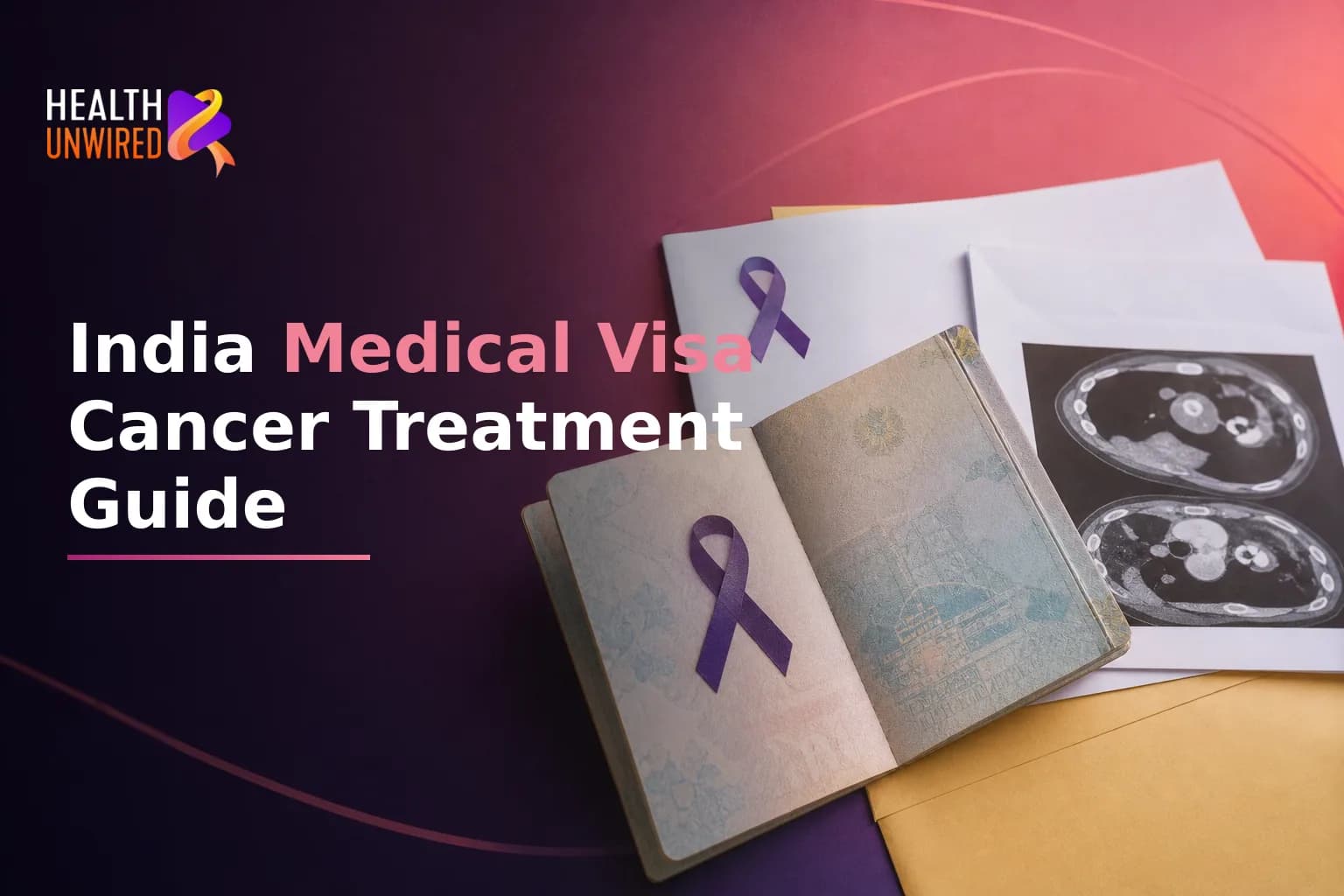
Applying for an Indian Medical Visa is the first practical step for international prostate cancer patients planning treatment abroad. This guide walks you through the documents, the hospital letter you need first, and what to do after you land.
Updated on Aug 31, 2026
India Medical Visa for Cancer Treatment: What to Prepare
If you or a family member has been diagnosed with prostate cancer and you are considering specialist care at an Indian hospital, you probably wonder: what does it take to enter the country legally and without delays? India has a visa category for international patients - the Medical Visa, or e-MV when applied online - and you complete the application entirely through a government portal. Most decisions arrive within three to five business days. This guide covers the documents you need, what the Indian hospital has to provide first, and what happens after you land.
How to Get a Medical Visa for Cancer Treatment in India
Follow these steps in order. Each one depends on the step before it.
- Choose an accredited Indian hospital and have your treatment plan confirmed with the oncology team there.
- Ask the hospital to generate a Medical Invitation Letter through the Indian government portal. This letter comes with a Medical Reference Number that you enter directly into your visa application form.
- Gather your medical records and diagnostic images from your home-country doctors.
- Open the official application at indianvisaonline.gov.in and complete the Medical Visa form online.
- Upload your documents, pay the visa fee, and receive your e-Visa as a PDF by email.
- Print the e-Visa clearly. You need a printed copy at check-in and on arrival in India.
- After you arrive, register with the Foreigners Regional Registration Office (FRRO) within 14 days.
This sequence applies to most countries. The visa category and steps stay the same across cancer types and nationalities, with a small number of country-specific exceptions noted below.
What Is an Indian Medical Visa?
The Medical Visa - MED Visa, or e-MV when applied online - is a visa category India created for patients who need in-person medical care in the country. You cannot use a tourist visa for planned cancer treatment. The purpose of your visit must match the visa category. Using a tourist visa for medical treatment can cause serious problems on arrival or during your stay.
The e-Medical Visa is typically valid for 60 days from your first day of entry and allows three entries within that period. This structure works well for cancer treatment. Some patients leave India briefly between treatment cycles - to rest at home or manage family responsibilities - and then return for follow-up. The allowance for three entries covers that.
You may bring up to two family members or caregivers. Each of them applies for a separate Medical Attendant Visa (e-MEDX) through the same online portal at the same time as your own application. Their visa is typically processed alongside yours.
The Documents You Need to Apply
Gather everything on this list before you open the application form. A missing document typically means a delay, a rejection, or having to reapply from scratch.
- Passport with at least six months of validity remaining beyond your planned arrival date, and at least two blank pages available for stamps.
- Recent passport-size photograph in the required format: square shape, white background, JPEG file. The portal specifies exact pixel dimensions - check those before you upload.
- Medical Invitation Letter from your Indian hospital. This is the most critical document. The hospital generates it through the Indian government's Medical and Ayush Visa portal. It contains a Medical Reference Number you enter directly into the visa form. You cannot generate this letter yourself.
- Medical records from your home-country doctors, including your pathology report, diagnostic imaging (CT scans, PET-CT, MRI, bone scan where relevant), PSA test history if applicable, and a treatment summary from your current oncologist.
- Proof of financial means - a recent bank statement, a sponsorship letter, or insurance documentation showing you can cover the cost of treatment and your stay in India.
- Completed visa application form, submitted online at indianvisaonline.gov.in.
Before you collect your records, read our guide to getting your medical records ready for treatment abroad. It explains what format Indian oncologists expect, how to organize imaging reports, and how to handle records that are not in English.
The Hospital Invitation Letter: The Step That Starts Everything
The most important step happens before you touch the visa application form. The hospital you choose must confirm your treatment plan and then generate a formal Medical Invitation Letter through the government's Medical and Ayush Visa portal. You cannot complete your visa application without this letter.
The letter includes the hospital's name and registration number, your planned treatment dates, the type of care involved, and an estimated cost. It includes the Medical Reference Number that links your visa application to the hospital's entry in the government system.
Any hospital that routinely treats international patients will handle this as a standard step and send you the letter electronically, usually within a few business days of confirming your treatment plan. If the hospital you are considering does not know what the Medical and Ayush Visa portal is, that is reason to find a better hospital. Managing international patients well requires specific competency and preparation.
Who Can Apply - and Who Cannot
Citizens of most countries are eligible for the Indian e-Medical Visa online. India periodically updates the list of eligible nationalities. Some countries require you to apply through the Indian embassy or High Commission instead of the online portal. Check the current eligibility list at indianvisaonline.gov.in before you begin planning your trip, because eligibility can change quickly.
Patients who face a real emergency - a fast-growing diagnosis or a treatment deadline that cannot wait - may get faster processing of 24 to 72 hours. Contact the nearest Indian embassy or High Commission directly to ask for this, and have the hospital provide written proof of the urgency.
Timing Your Application
You can apply up to 120 days before your planned arrival. Standard processing takes three to five business days when all documents are ready. In practice, allow at least three to four weeks from the date you start collecting documents to the date you plan to fly. That buffer gives you time to correct any problems - a photograph that does not meet the pixel requirements, a bank statement with the wrong date - without the pressure of an upcoming departure.
Once approved, your e-Visa arrives as a PDF by email. Print it clearly. Most airlines require a physical copy at check-in, and Indian immigration expects to see it on arrival. Keep a digital backup in your email or a cloud folder if the printed copy is lost.
After You Arrive: FRRO Registration
If your stay in India will exceed 14 days on a Medical Visa, you must register with the Foreigners Regional Registration Office (FRRO) within 14 days of arrival. This is a requirement you cannot skip.
Most patients can complete FRRO registration online at indianfrro.gov.in/frro/. You upload a photograph, copies of your passport and visa, and your address in India - typically the hospital or a nearby hotel. The hospital's international patient services team usually helps you on your first or second day.
If your treatment extends beyond the 60-day visa window, you can apply for a visa extension at the FRRO office in the city where your hospital is located. Bring a letter from the hospital confirming that ongoing treatment is medically necessary. The office decides extensions one at a time and routinely approves them for patients still getting treatment.
What Prostate Cancer Patients Should Know
Prostate cancer is one of the most commonly diagnosed cancers in men worldwide, according to the American Cancer Society, which is why Indian specialist centers see many international patients with this diagnosis each year. Indian hospitals treat prostate cancer at all stages - from robotic-assisted prostatectomy for organ-confined disease to hormonal therapy, radiation therapy, and advanced systemic treatments for metastatic disease.
Patients exploring PSMA-directed radioligand therapy for advanced prostate cancer should review the Lutetium Therapy guide to Lu-177 PSMA before they arrive. It explains how the therapy works, what you need to qualify, and what to ask the treatment team.
For a clear picture of what prostate cancer treatment in India costs compared to other countries, see our article on prostate cancer treatment costs across five countries. Understanding the likely total spend before you commit - including travel, accommodation, and extra money for unexpected costs - helps you plan money and medical decisions together.
What Else to Pack
Your passport and visa are the legal foundation. But several other items help your medical appointments go better.
- Original diagnostic images on a CD, USB drive, or secure cloud link - MRI, CT, PET-CT, bone scan. Indian oncologists and radiologists need to review these directly, not read a summary. Incomplete or low-quality imaging is one of the most common causes of delay at the first consultation.
- A written medication list with each drug's name, dosage, frequency, and your prescribing doctor's contact details. Bring enough medication for your full trip plus 7 to 10 extra days if travel is delayed.
- Translated records if any of your home-country records are not in English. Some Indian hospitals offer translation services, but arriving with pre-translated documents saves time at the first consultation.
- Your home-country oncologist's contact information in a format the Indian team can use. When the two care teams talk directly, planning often goes faster.
If you are traveling with prescription medications that require special handling or customs documentation, read our guide to flying with cancer medications internationally before you pack.
Consider a Remote Consultation Before You Book
Before you set your travel dates, choose a hospital, or commit to a treatment timeline, consider a video consultation with a verified Indian oncologist. A 60-minute call lets the specialist review your reports, confirm the plan works for you, and give the hospital enough detail to create your Medical Invitation Letter accurately. That same consultation will tell you what additional tests or imaging the team in India will want, so you arrive prepared instead of scrambling to organize records.
You can upload your scans and reports securely, pick a verified oncologist, and hold the video call within 48 hours - no travel required - at healthunwired.com/meetexpert.
When to Talk to Your Doctor
Talk to your current oncologist before you apply for your visa. Your home-country doctor needs to know you are seeking treatment abroad, and they need to prepare or certify medical documents that the visa portal and hospital need. Some records - particularly pathology reports and imaging summaries - may need to follow a specific format that the Indian hospital will specify. Ask early because preparing certified documents can take weeks at some centers.
This article is for general information and is not a substitute for medical advice. Always consult your oncologist or care team about your specific situation.
Read the full guide
Similar Topics

Your First Week After a Prostate Cancer Diagnosis
A prostate cancer diagnosis raises immediate questions about tests, timelines, and next steps. This guide wal…
HealthUnwired Team
Sep 9, 2026

Prostate Cancer Second Opinion: What Oncologists Review
A second opinion on prostate cancer can change more than your diagnosis - it can change your entire treatment…
HealthUnwired Team
Sep 3, 2026
Insurance for Prostate Cancer Treatment in India
Planning prostate cancer care in India means sorting out your insurance before you travel - not after. Here i…
HealthUnwired Team
Aug 31, 2026