Ovarian Cancer and Fertility: Should You Preserve Your Options?
A new ovarian cancer diagnosis and the wish to have children do not have to be in conflict. Here is what you need to know about your fertility preservation options - and why the time to ask is now, before treatment starts.
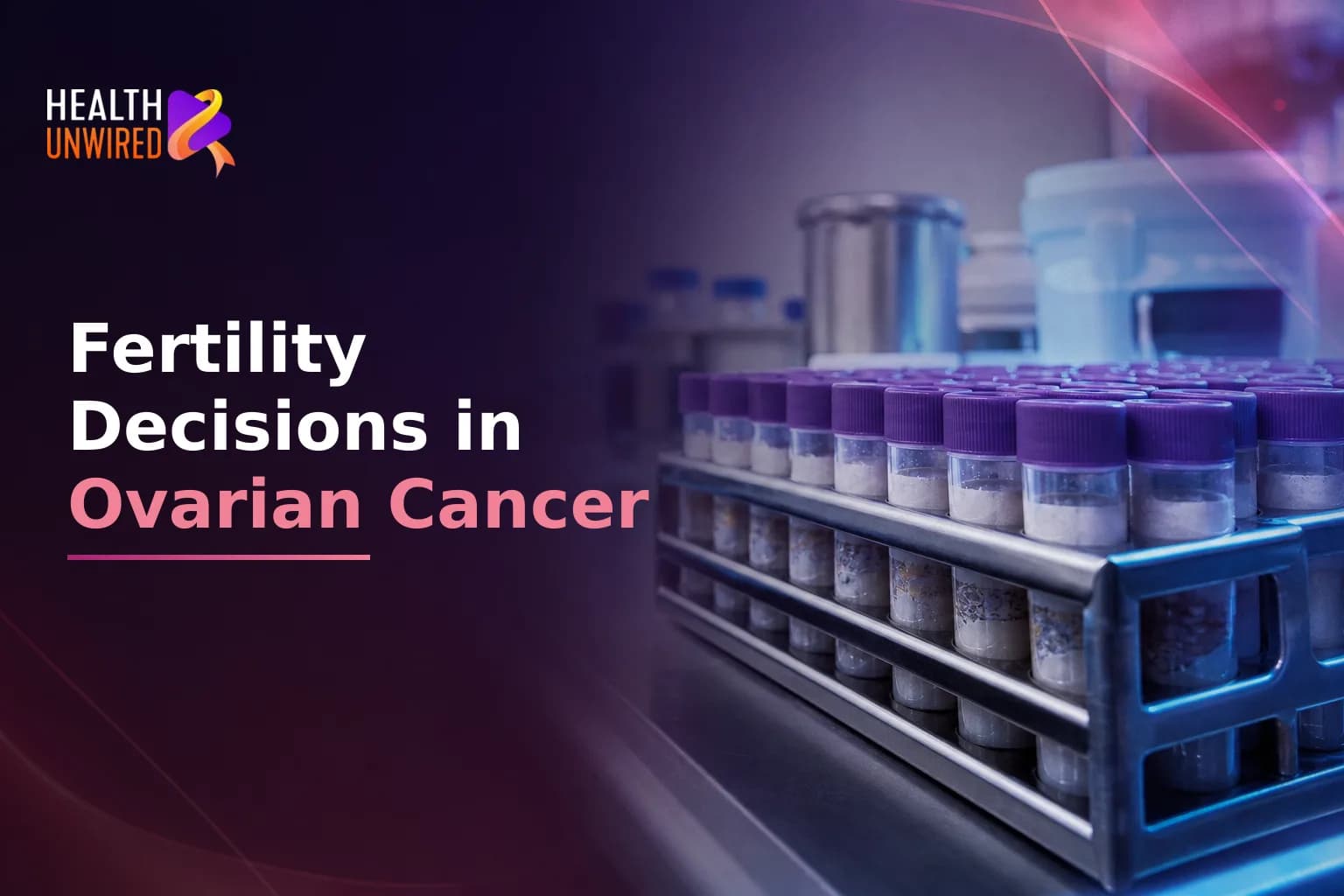
Updated on Aug 23, 2026
If you have just been diagnosed with ovarian cancer and you hope to have children, you may have two pressing concerns at once: getting the most effective treatment possible and protecting your ability to become a parent. For many patients, especially those diagnosed at an early stage, these goals do not have to conflict. But you need to raise the fertility question before your treatment plan is finalized, not after it starts.
Ovarian cancer can affect women at any age, including younger patients who are still planning a family. For these patients, fertility preservation is a legitimate and important part of the clinical conversation - and most modern oncology teams expect it to come up.
This article explains the main options, who may qualify for each, and what to ask your team right now.
Why Fertility Is at Risk During Ovarian Cancer Treatment
Standard treatment for ovarian cancer often involves removing both ovaries and the fallopian tubes - a procedure called bilateral salpingo-oophorectomy - along with the uterus in many cases. This causes surgical menopause immediately after the operation and ends the natural ability to conceive or carry a pregnancy.
Chemotherapy also increases risk. Some drugs used to treat ovarian cancer - particularly platinum-based agents and alkylating agents - can damage the eggs in the ovaries and reduce what doctors call ovarian reserve, the supply of eggs available for future use. According to the American Cancer Society, chemotherapy can cause temporary or permanent loss of ovarian function depending on the drugs used, the doses given, and the patient's age at the time of treatment. Younger patients generally face lower risk than those in their late thirties or early forties, though there are no guarantees either way.
These risks are real - but they are not unavoidable. A candid conversation with your care team before surgery or chemotherapy begins is the most important first step.
Who May Qualify for Fertility-Sparing Options?
Not every patient with ovarian cancer is a candidate for fertility preservation through surgery. Your eligibility depends on several clinical factors that your oncologist will assess.
- Stage of cancer. Fertility-sparing surgery is generally considered only for patients with stage IA or selected stage IC disease - meaning the cancer is confined to one ovary. A review published in PubMed Central found that fertility-sparing surgery may be oncologically safe in selected stage I epithelial ovarian cancer patients, provided a complete surgical staging is performed at the same time. For later-stage disease, standard surgery is almost always required.
- Tumor type. The cell type matters greatly. Borderline tumors - also called low malignant potential tumors - and germ cell tumors, which are more common in younger patients, often work well with conservative approaches. High-grade serous tumors, the most common type overall, are less likely to qualify for fertility-sparing surgery.
- Tumor grade. Lower-grade tumors (grade 1 or grade 2) are generally considered more eligible for fertility-sparing treatment than high-grade tumors, which are more likely to spread beyond the ovary.
- Ovarian reserve. Your current egg supply matters if you are considering egg or embryo freezing before chemotherapy. A reproductive endocrinologist can assess this with a blood test and an ultrasound - usually in one appointment that can be arranged within days of your diagnosis.
If you are not sure whether you are seeing the right specialist for this conversation, our guide to whether you need a gynecologic oncologist for ovarian cancer explains the expertise that should be involved in decisions like these.
What Are the Main Fertility Preservation Options?
There are two broad paths: surgical preservation during your cancer operation, and assisted reproduction techniques done before chemotherapy starts. Some patients pursue both at once, which is why a team approach - involving both a gynecologic oncologist and a reproductive endocrinologist - gives you a full picture early on.
Fertility-Sparing Surgery
For eligible patients, a surgeon removes only the affected ovary and adjacent fallopian tube - a procedure called unilateral salpingo-oophorectomy (USO) - while leaving the uterus and the other ovary intact. The surgeon also performs a full staging procedure at the same time, including biopsies of the peritoneum (the lining of the abdomen), lymph node assessment, and washing of the pelvic cavity. This approach allows natural ovarian function to continue after recovery and keeps the uterus available for a future pregnancy.
This is a specialized procedure. It should be performed by a gynecologic oncologist who regularly performs fertility-sparing cancer staging - not a general surgeon or a general OB/GYN.
Egg (Oocyte) Cryopreservation
If standard surgery is needed - or if you want a biological backup regardless of your surgical plan - you can freeze your eggs before chemotherapy starts. A reproductive endocrinologist gives you hormone injections over roughly 10 to 14 days to stimulate your ovaries to produce multiple eggs in one cycle. A brief procedure collects the eggs and stores them in a fertility clinic freezer. According to Mayo Clinic, egg freezing is now well established and not experimental.
The main constraint is timing. You need roughly two weeks between your diagnosis and the start of chemotherapy. Many oncologists can work with this window with advance planning, but it requires a quick referral to a fertility clinic - sometimes within the first few days after diagnosis.
Embryo Cryopreservation
If you have a partner or are willing to use donor sperm, your retrieved eggs can be fertilized and stored as embryos. According to Memorial Sloan Kettering Cancer Center, embryo cryopreservation has the most evidence behind it and is considered the most established method of fertility preservation before cancer treatment. The hormone stimulation and egg retrieval process is the same as for egg freezing - about 10 to 14 days.
Ovarian Suppression During Chemotherapy
A medication called a GnRH agonist (gonadotropin-releasing hormone agonist) is injected during chemotherapy. It temporarily quiets ovarian activity, which may protect the ovaries from chemotherapy damage. The American Cancer Society notes this option might help protect ovarian function in some patients, though the evidence is not as strong as for egg or embryo freezing. Most specialists consider it a supporting measure rather than a stand-alone fertility strategy.
A Word on Ovarian Tissue Freezing
You may come across ovarian tissue cryopreservation in your research - a method where doctors remove and freeze a piece of ovarian tissue before treatment, then transplant it back later. For many cancers, this is now an accepted option. For ovarian cancer specifically, however, doctors generally do not recommend it: transplanting the frozen tissue could bring cancer cells back into the body. Ask your team directly about this distinction, and be cautious about information sources that don't explain this clearly.
How Do Fertility Preservation Options for Ovarian Cancer Compare?
| Option | Who it may suit | Timing before chemotherapy | Key limitation for ovarian cancer |
|---|---|---|---|
| Fertility-sparing surgery | Stage IA or selected IC, low-grade, one ovary affected | Done as part of the cancer operation | Not appropriate for advanced-stage or high-grade disease |
| Egg (oocyte) freezing | Any patient with adequate ovarian reserve and enough time | 10 to 14 days of hormone stimulation required | Requires brief treatment delay; success rates decline with age |
| Embryo freezing | Patients with a partner or willing to use donor sperm | 10 to 14 days of hormone stimulation required | Ethical and legal considerations vary by country |
| GnRH agonist (ovarian suppression) | Patients who cannot delay chemotherapy | Given at the same time as chemotherapy | Evidence is less robust than egg or embryo freezing |
| Ovarian tissue freezing | Generally not suitable for ovarian cancer | Before chemotherapy | Risk of reintroducing cancer cells when tissue is replaced |
For most ovarian cancer patients, egg or embryo freezing is the most practical option for biological backup before chemotherapy begins. Fertility-sparing surgery is a separate conversation that happens at the time of the cancer operation itself. In ideal circumstances, both decisions are discussed together - with input from a gynecologic oncologist and a reproductive endocrinologist - before any treatment starts. Sources: Mayo Clinic; American Cancer Society; PubMed Central.
What Happens If Both Ovaries Need to Be Removed?
If your cancer requires the removal of both ovaries, you will have surgical menopause immediately after the operation. Symptoms - including hot flashes, mood changes, and sleep problems - can appear within days. Your oncology team can discuss symptom management with you based on your overall health and your cancer type.
Losing the ovaries does not necessarily mean losing the chance to build a family. If your uterus is preserved, a previously frozen embryo or a donor egg may still allow you to become pregnant with the help of a reproductive specialist. If the uterus is also removed, gestational surrogacy or adoption may be worth exploring later. The legal status and availability of these options varies significantly by country, so you should learn what's available in your location before you need it.
A new ovarian cancer diagnosis - combined with fertility concerns and the sudden physical changes of surgical menopause - carries real emotional weight. Managing sleep and stress during this period is part of caring for yourself through treatment.
Questions to Raise Before Your Treatment Plan Is Final
You do not need to wait for your oncologist to bring this up. Fertility preservation is a routine part of modern oncology for reproductive-age patients, and raising it directly is expected and appropriate. These are reasonable questions to ask at your earliest appointment:
- Given my stage and tumor type, am I a candidate for fertility-sparing surgery?
- Is there a window to freeze eggs or embryos before chemotherapy starts?
- Can you refer me to a reproductive endocrinologist this week?
- Will the chemotherapy regimen you are recommending reduce my ovarian reserve, and to what degree?
- What are my options for having children if both ovaries need to be removed?
For a broader checklist of what to cover at your first oncology visit, see our guide to questions to ask your oncologist at your first appointment.
When a Second Opinion Is Worth Getting
Fertility-sparing decisions in ovarian cancer are among the most complicated conversations in gynecologic oncology. Not all centers have equal experience with conservative staging procedures for younger patients. If the fertility conversation has not come up naturally with your current doctor, or if you want an independent view on whether a conservative surgical approach is safe in your specific case, seeking a second opinion is a normal step - and one that most oncologists support.
You do not have to travel to get one. An online consultation lets you share your pathology report and imaging by secure upload, speak with a verified gynecologic oncologist via video, and get a clear view of your options - typically within 48 hours. If you are worried that asking for a second opinion will slow things down, our guide to getting a second opinion when cancer treatment is urgent explains exactly how this works without causing harmful delays.
To connect with a verified oncologist from wherever you are in the world, you can upload your reports and book a video consultation through HealthUnwired. No travel needed. A specialist reviews your records and you speak by video, usually within 48 hours of booking.
When to Talk to Your Doctor
Raise fertility preservation early after your diagnosis - ideally before your treatment plan is finalized, and within the first week of appointments. Ask specifically for a referral to a reproductive endocrinologist if you want to consider egg or embryo freezing. If your treatment has already been scheduled and this conversation has not happened yet, it is not too late to raise it - but act quickly, because the window for egg freezing before chemotherapy starts is short.
This article is for general information and is not a substitute for medical advice. Always consult your oncologist or care team about your specific situation.
Read the full guide
Similar Topics
Ovarian Cancer Treatment in India for Kenyan Patients
Kenyan patients researching ovarian cancer treatment in India will find specialist gynecologic oncology teams…
HealthUnwired Team
Sep 8, 2026
Ovarian Cancer Second Opinion: What Gynecologic Oncologists Review
A gynecologic oncologist reviews far more than a single test result in an ovarian cancer second opinion. Lear…
HealthUnwired Team
Aug 29, 2026
Do You Need a Gynecologic Oncologist for Ovarian Cancer?
A gynecologic oncologist - a surgeon trained specifically in ovarian cancer - is associated with better stagi…
HealthUnwired Team
Aug 12, 2026