Thyroid Cancer Treatment Options: Why Specialist Input Changes Your Decision
Surgery, radioactive iodine, or active surveillance — the right path for thyroid cancer is not the same for every patient. Here is what you need to know before making your treatment decision.
Updated on Jun 10, 2026
When Your Diagnosis Raises More Questions Than Answers
A thyroid cancer diagnosis can stop you mid-sentence. One moment everything is routine. The next, you are looking at a biopsy report and trying to make sense of terms like papillary carcinoma or follicular neoplasm with vascular invasion.
What makes thyroid cancer especially difficult to handle is that the treatment path is not the same for every patient. Some people need surgery right away. Others may be offered careful monitoring instead of immediate intervention. Some will need radioactive iodine after surgery. A smaller number will need targeted therapy. The right approach depends on many individual factors. Understanding those factors is the first step toward making a decision you feel confident about.
The main thyroid cancer treatment options are explained below. Specialist input, including a formal second opinion, can matter more for this cancer type than for many others.
Understanding Thyroid Cancer: Four Types, Very Different Paths
Thyroid cancer is not one disease. It is a group of cancers that begin in the thyroid gland. a small, butterfly-shaped gland at the base of your neck that produces hormones your body needs to regulate energy and metabolism. There are four main types, and each one behaves differently.
- Papillary thyroid cancer is the most common type. According to the National Cancer Institute, it accounts for the large majority of thyroid cancer diagnoses. It tends to grow slowly and responds well to treatment in most patients.
- Follicular thyroid cancer is the second most common type. It is classified as a differentiated cancer, meaning the cells still resemble normal thyroid tissue and respond to similar treatment strategies as papillary cancer.
- Medullary thyroid cancer starts in cells that produce a hormone called calcitonin. It does not respond to radioactive iodine therapy and requires a separate treatment strategy. It may also be linked to inherited genetic conditions, which affects how families are counseled.
- Anaplastic thyroid cancer is rare and fast-growing. It requires urgent, specialized management and is best handled by a high-volume cancer center with experience in this specific disease.
Knowing your exact type and stage shapes every treatment decision that follows. What is appropriate for low-risk papillary thyroid cancer may be entirely wrong for medullary or anaplastic disease. This is one reason why a general opinion may not be sufficient for a cancer this varied.
The Main Treatment Options Explained
Treatment decisions for thyroid cancer are shaped by the type, the size and position of the tumor, whether it has spread to lymph nodes or other organs, your age, and your overall health. Here is an overview of the main options a specialist may discuss with you.
Surgery is the most common first treatment for thyroid cancer. The goal is to remove all or part of the thyroid gland. A total thyroidectomy removes the entire gland and is often recommended for larger tumors or when cancer has spread beyond the thyroid. A lobectomy removes only the half of the gland where the tumor is located and may be appropriate for smaller, lower-risk cases. According to the American Cancer Society, the choice between these two approaches depends on tumor size and stage, the presence of concerning features on imaging or pathology, and the experience of the surgical team. If nearby lymph nodes appear involved, a neck dissection may be performed at the same time. After a total thyroidectomy, you will need to take thyroid hormone replacement medication daily for life.
Radioactive iodine (RAI) therapy is often used after surgery for differentiated thyroid cancers. The thyroid is the only tissue in the body that absorbs iodine in significant amounts. This makes RAI a highly targeted approach. You take it as a capsule or liquid. It travels through your bloodstream and collects in any remaining thyroid tissue, including cancer cells that may have spread. The American Cancer Society explains that RAI may be used to destroy leftover thyroid tissue after surgery, to treat thyroid cancer that has spread to the neck lymph nodes or distant organs, and to treat cancer that returns after initial treatment. RAI is not effective for medullary or anaplastic thyroid cancers, which do not absorb iodine.
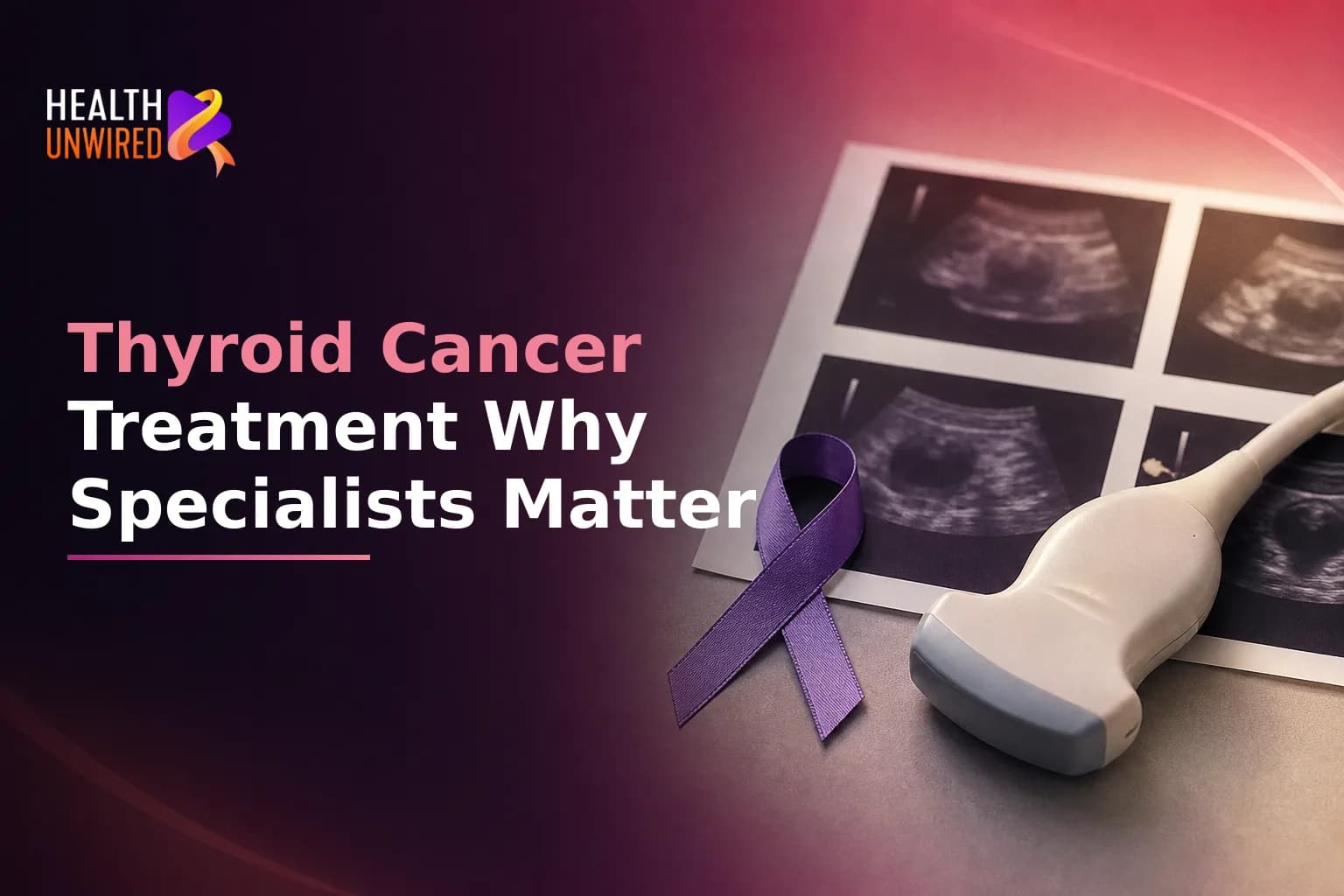
Active surveillance is an approach some specialists offer to carefully selected patients with very small, low-risk papillary thyroid tumors. Rather than proceeding to immediate surgery, these patients are monitored regularly with neck ultrasound. Memorial Sloan Kettering Cancer Center outlines specific clinical criteria that must be met for this approach to be appropriate. These include tumor size, location, and the absence of aggressive features. This approach requires regular monitoring and clear, agreed-upon criteria for when surgery would be reconsidered. Whether it applies to your individual situation must be assessed by a specialist with experience in this area.
Thyroid hormone suppression is part of ongoing management after thyroid surgery. Your hormone replacement dose is often set at a level that keeps TSH (thyroid-stimulating hormone) below normal range. High TSH can encourage remaining cancer cells to grow. The target TSH level is adjusted based on individual risk category. This decision should be reviewed by an endocrinologist or oncologist with thyroid cancer experience.
External beam radiation uses high-energy rays aimed at the neck area from outside the body. It is not a standard first treatment for most thyroid cancers, but it may be used when cancer cannot be fully removed by surgery, when tumors do not respond to RAI, or in specific cases of medullary or anaplastic disease.
Targeted therapy is an option for advanced thyroid cancers that have spread or no longer respond to standard treatments. These drugs work by blocking specific proteins that cancer cells use to grow. The American Cancer Society outlines several approved targeted agents for differentiated thyroid cancers that are radioactive-iodine resistant and for medullary thyroid cancer. For anaplastic thyroid cancer, treatment may also involve targeted drugs based on specific genetic markers found in the tumor. Molecular testing of your tumor tissue is increasingly important in shaping these decisions. A thyroid cancer specialist will know which tests to order and how to interpret the results for your specific case.
Questions Patients Carry Into Their Appointments
If you are facing a thyroid cancer treatment decision, you may be wrestling with some of these questions.
- Do I actually need a total thyroidectomy, or could a lobectomy be enough for my case?
- My doctor recommends RAI after surgery. Is it truly necessary at my stage and risk level?
- My tumor is very small and was found by chance on a scan. Does it need treatment at all?
- What does it mean that my pathology report mentions extrathyroidal extension or vascular invasion?
- My cancer type is medullary. How is that managed differently from papillary or follicular?
- Are there clinical trials that may be relevant to my situation?
These are questions a specialist second opinion is designed to address. The NCCN Patient Guidelines for Thyroid Cancer emphasize that treatment decisions should involve a multidisciplinary team including endocrine surgeons, medical oncologists, endocrinologists, and radiologists. Individual patient factors must drive every recommendation.
Why a Second Opinion Can Change Your Plan
Thyroid cancer treatment has evolved significantly over the past decade. Guidelines have shifted on surgical extent, on which patients benefit from RAI after surgery, and on active surveillance eligibility for low-risk tumors. Not all physicians are up to date with these changes, and that gap can affect the plan you receive.
Patients most often seek a second opinion when:
- The recommended surgery feels more extensive than expected for a small, incidentally found tumor.
- RAI has been suggested and they want to understand whether it is genuinely warranted at their risk level.
- They have a rarer type such as medullary or anaplastic cancer and want specialist-level guidance they may not be getting locally.
- Their pathology report includes features like capsular invasion or lymph node involvement and they want an independent review of what this means for treatment planning.
- They want to know whether active surveillance could be a legitimate option rather than immediate surgery.
Seeking a second opinion is not a sign of distrust in your current doctor. It is a sign that you take the decision seriously. Most oncologists welcome it.
How an Online Thyroid Cancer Consultation Works
You do not need to travel to a major cancer center to access specialist-level input. Online oncology consultations make it possible to connect with a thyroid cancer specialist wherever you are and get a formal review of your case before committing to a treatment path.
The typical process works like this:
- Upload your reports. Share your pathology report, neck ultrasound results and images, CT or MRI reports, and relevant blood tests including TSH, thyroglobulin, and calcitonin where applicable.
- Choose a specialist. View profiles of thyroid oncologists and endocrine oncologists, review their credentials and areas of focus, and select someone whose expertise aligns with your case.
- Book your session. Schedule a paid video consultation at a time that works for your schedule and time zone.
- Receive an expert review. The specialist studies your records in advance and then walks through their clinical assessment with you, addressing your specific questions and explaining how current evidence and guidelines apply to your situation.
An online consultation does not replace your treating team. It gives you a second perspective you can bring back to your local provider and use to make a more informed decision.
What You Gain From Specialist Input
A thyroid cancer specialist brings deep expertise in the latest clinical evidence. Treatment guidelines for this cancer have shifted in important ways on surgical extent, on who needs RAI after surgery, on when active surveillance may be appropriate, and on the role of molecular testing. Knowing which approach fits your specific tumor at its specific stage and with its specific pathological profile requires expertise that not all providers have.
Some patients learn from a second opinion that their planned surgery can be less extensive than first suggested. Others learn that what was presented as a straightforward plan warrants additional evaluation or a different approach. Both outcomes have real value. Getting that clarity before committing to a major intervention provides important information.
Thyroid cancer is best managed by a coordinated team. This includes endocrine surgeons, medical oncologists, endocrinologists, radiation oncologists, and radiologists working together. An online specialist consultation gives you access to that level of expertise, regardless of where you live or which healthcare system you are in.
Preparing for Your Consultation
The more organized your records, the more specific and useful your consultation will be. Before your session, gather what you can from this list:
- Your biopsy or surgical pathology report, including any molecular or genetic testing results
- Neck ultrasound report and images
- CT or MRI scan reports and images, if performed
- Recent blood test results: TSH, free T4, thyroglobulin, thyroglobulin antibodies, and calcitonin (especially relevant if your type is medullary)
- A list of your current medications and any supplements you take
- A written list of your three to five most pressing questions
You do not need every document before you begin. Even a partial record set allows an experienced specialist to offer meaningful perspective. Start the process rather than waiting until everything feels perfectly in order.
Your Next Step
If you are facing a thyroid cancer treatment decision and want to feel more certain about the path ahead, a specialist consultation can be helpful. Upload your pathology report and imaging, browse profiles of thyroid and endocrine oncology specialists, and book a paid video consultation at a time that suits you. This gives you a clearer picture of your options and a stronger foundation for conversations with your own care team.
When to Talk to Your Doctor
Speak with your oncologist or endocrinologist before making any changes to a recommended treatment plan. If you are newly diagnosed, ask whether your case has been reviewed by a multidisciplinary tumor board. If you are uncertain about the extent of surgery or whether RAI is warranted for your risk level, ask specifically how your plan aligns with current national guidelines for thyroid cancer. A specialist consultation can help you arrive at those conversations better prepared with more specific questions.
This article is for general information and is not a substitute for medical advice. Always consult your oncologist or care team about your specific situation.
Frequently Asked Questions
Similar Topics
Leukemia Second Opinion: What Hematologic Oncologists Review
A leukemia second opinion is a recognized and normal step in blood cancer care. This guide explains exactly w…
HealthUnwired Team
Sep 18, 2026
Understanding Your Lymphoma Diagnosis and Staging
A lymphoma diagnosis involves three steps: a biopsy, a pathology report naming your exact subtype, and a stag…
HealthUnwired Team
Sep 16, 2026
Newly Diagnosed with Leukemia: Your First Steps
A leukemia diagnosis is overwhelming, but your first moves can shape everything that follows. Here is what to…
HealthUnwired Team
Sep 14, 2026