Advanced Lung Cancer Treatment Abroad: Evaluating International Specialist Centers When Your Local Options Feel Limited
When advanced lung cancer treatment options feel limited close to home, international specialist centers and online expert consultations may open pathways you did not know existed. Here is how to evaluate your choices and take a concrete first step.
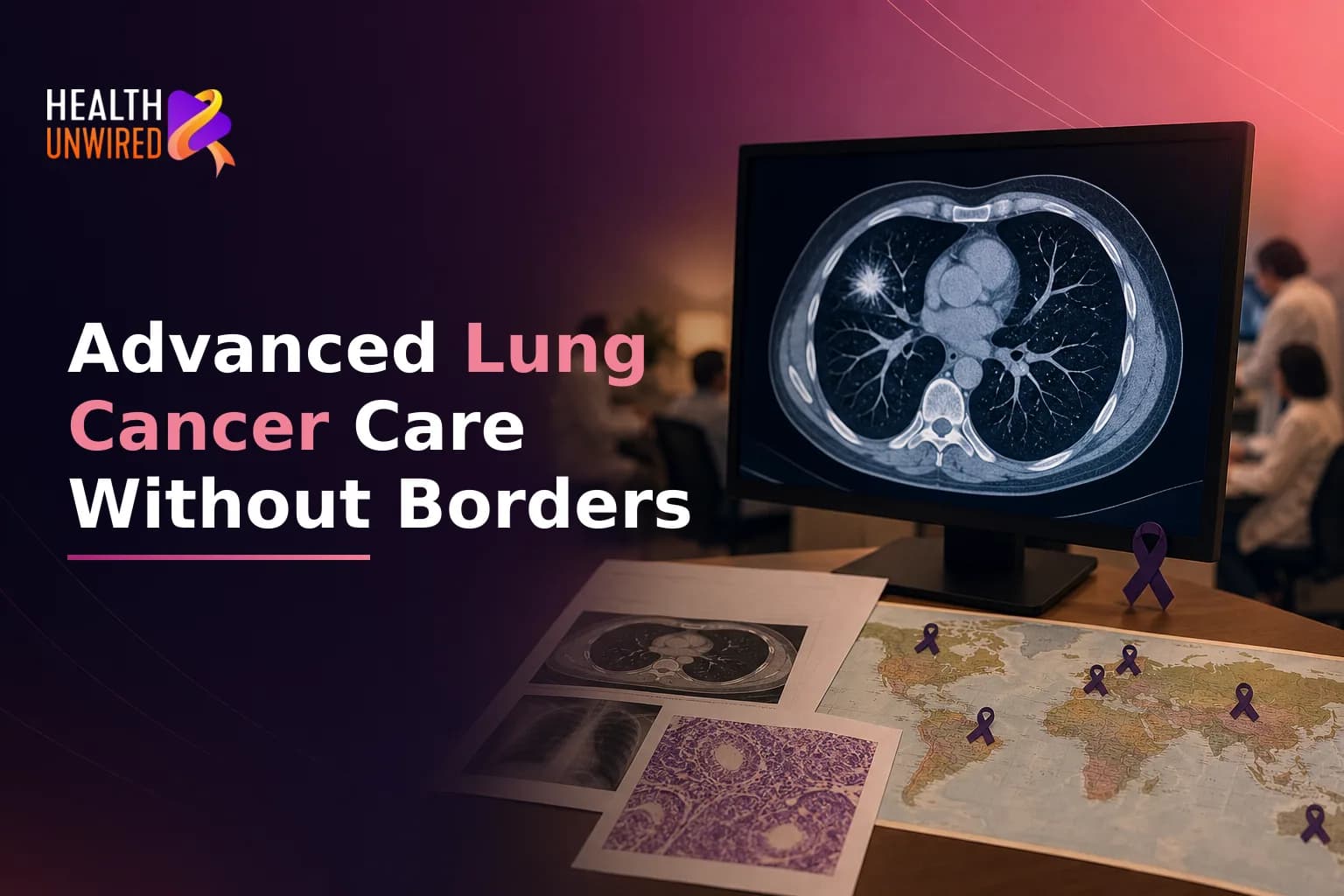
Updated on Jun 16, 2026
When Local Options Feel Limited - What You Can Do Next
An advanced lung cancer diagnosis brings enormous urgency. You want the best treatment available. But what happens when the options near you feel narrow? What if the molecular testing your tumor needs is not available at your local hospital? What if a therapy approved for your mutation type is not yet reimbursed where you live?
For a growing number of patients around the world, the answer is to look beyond their home country. International specialist centers and online expert consultations help you access treatment plans built on the latest evidence - even when local resources fall short.
This guide is for people weighing that choice. It explains what advanced lung cancer treatment abroad involves, how to evaluate specialist centers, and how to take a practical first step from home before committing to any travel.
What Advanced Lung Cancer Means
According to the World Health Organization, lung cancer caused an estimated 1.8 million deaths in 2022, making it the leading cause of cancer death worldwide.
The two main types are non-small cell lung cancer (NSCLC) and small cell lung cancer (SCLC). NSCLC accounts for roughly 85 percent of all cases. It includes several subtypes - adenocarcinoma, squamous cell carcinoma, and large cell carcinoma - each with different features and treatment options. SCLC is less common but tends to grow and spread more quickly.
Advanced lung cancer typically refers to stage III or stage IV disease. At stage IV, the cancer has spread to distant organs such as the brain, liver, or bones. Treatment at this stage usually focuses on controlling the cancer and maintaining quality of life - though every patient's situation is different.
The complexity of advanced lung cancer is also why specialist input matters. Even patients with the same stage and subtype can have very different tumor profiles.
Current Treatment Options for Advanced Lung Cancer
The landscape for advanced lung cancer has changed significantly over the past decade. Your tumor's molecular profile now affects which therapies may work best for you. The National Cancer Institute identifies molecular profiling as a key part of treatment planning for advanced NSCLC.
Biomarker testing - also called genomic or molecular profiling - looks for specific gene changes in your tumor. Common targets include EGFR, ALK, ROS1, KRAS, MET, RET, NTRK, and others. When a targetable alteration is found, there may be a matching drug.
Here is a broad overview of the treatment categories available for advanced lung cancer:
- Targeted therapy: Medicines that act on specific genetic changes in the tumor. New targeted agents are reaching approval for previously untreatable mutations, according to a 2025 review of lung cancer targeted therapy published in NIH PubMed Central.
- Immunotherapy: Treatments that help the immune system recognize and respond to cancer cells. Checkpoint inhibitors are the most widely used class in advanced NSCLC, particularly for tumors without a targetable driver mutation.
- Chemotherapy: A foundational approach, often combined with immunotherapy or used when targeted options are not available or have stopped working.
- Radiation therapy: Used to treat specific sites of spread, manage symptoms, or in certain situations as a local treatment alongside systemic therapy.
- Clinical trials: Research studies testing new drugs, combinations, or approaches. Access to trials varies significantly by center and country, and many of the most promising new options in advanced lung cancer are only available through trials at specialist centers.
Choosing among these options is rarely straightforward. The right approach depends on your tumor subtype, molecular profile, previous treatments, overall health, and your care team's expertise. For a deeper look at how specialists compare these options, see our related guide on immunotherapy vs. targeted therapy vs. chemotherapy for advanced lung cancer: how your tumor profile guides treatment selection.
Common Questions Patients Ask When Considering International Care
Patients thinking about treatment abroad tend to ask similar questions. Here are the most common - and honest answers to each.
Is my diagnosis complete and accurate? A pathology re-review at a high-volume center can sometimes clarify subtype classification or identify molecular features that shift treatment options. This is not about doubting your local team. It is about getting all the information you need before a major decision is made.
Have I had comprehensive molecular testing? Full genomic profiling varies by country and hospital. If your biomarker testing covered only a small panel of targets - or was not done at all - you may be missing information that opens additional treatment options.
Are there approved treatments elsewhere that I cannot access at home? In some cases, yes. Drug approvals, reimbursement policies, and clinical trial availability differ from country to country. A specialist at an international center may have access to therapies that are not yet available or reimbursed where you live.
Is the cost and travel worth it? That depends on what a specialist center abroad can realistically offer compared to what is available at home. An online consultation can help you answer this question before you commit to anything.
Why Specialist Second Opinions Matter in Advanced Lung Cancer
Seeking a second opinion before or during treatment for advanced lung cancer is recommended. The American Cancer Society notes that a second opinion can confirm a diagnosis, identify additional treatment options, and support more confident decision-making. It is never too late to seek one, even during active treatment.
For lung cancer specifically, specialist input is especially important because:
- Molecular profiling is complex and not always interpreted the same way across centers
- Rare driver mutations require oncologists with concentrated experience in those subtypes
- Clinical trial eligibility changes quickly as new studies open at high-volume centers
- Some treatment combinations and sequencing decisions require institutional expertise not found at every hospital
The 2024 International Association for the Study of Lung Cancer (IASLC) global survey on biomarker testing found that cost, time, sample quality, and access were the leading barriers to comprehensive molecular profiling worldwide. Patients can't fix these problems alone, but specialist centers can help.
If you are also managing the physical effects of treatment, our companion resource on managing fatigue and shortness of breath during lung cancer chemotherapy offers practical guidance during treatment.
How Online Oncology Consultations Work
You do not need to travel to get an expert perspective on your case. Online oncology consultations allow you to connect with a lung cancer specialist from anywhere without traveling.
The process typically works like this:
- Upload your records: Pathology reports, CT and PET scan images, molecular testing results, and treatment history are submitted securely through the platform.
- Specialist review: A lung cancer specialist reviews your full case - the actual reports and images, not a condensed summary.
- Video consultation: You meet the specialist by video to discuss your diagnosis, the completeness of your workup, available treatment options, and any specific recommendations.
- Written report: You receive a written summary of findings and recommendations that you can share with your local oncologist or use to pursue a formal referral.
The process can often be completed within a few days. No referral is needed. You can do this while continuing your current care at home.
Benefits of an Expert Online Review Before Committing to Travel
For patients considering treatment abroad, an online consultation is the most practical first step. Before investing time and money in international travel, find out whether a specialist center abroad can offer something different from what is available at home.
Key benefits include:
- Confirmation or revision of your diagnosis before any major treatment decision is made
- Review of your biomarker testing results to identify whether additional molecular testing is needed
- Access to a specialist with deep experience in your specific lung cancer subtype or mutation type
- A second read of imaging studies by a specialist radiologist
- Identification of clinical trials open at specialist centers that may fit your case
- A written expert report you can use to advocate for yourself locally or to support a formal referral request
An online consultation does not replace your local oncologist or commit you to any course of action. It gives you expert input that helps you move forward with more clarity.
What to Prepare Before Your Consultation
The more complete your records, the more the specialist can offer. Here is what to gather before you book:
- Pathology report from your biopsy, including any molecular or genomic testing results
- CT scan images and the accompanying radiology report - ideally the most recent scan
- PET scan images and report, if one was performed
- Brain MRI results, if available (this is commonly done during advanced NSCLC staging)
- A list of all treatments you have received, with drug names and dates
- A brief summary of your current symptoms and how you are feeling day to day
You have the right to copies of your own medical records. Most hospitals and clinics will provide them on request. If your documents are not in English, a clinical summary from your treating physician helps with the language issue.
If you are also evaluating whether going abroad is the right choice for your situation, our article on evaluating specialist centers and when international care makes sense outlines a practical framework that applies across cancer types.
What Happens After the Consultation
After meeting with a lung cancer specialist online, you will have more information to work with. Common outcomes include:
- Your current treatment plan follows international guidelines and you can proceed with greater confidence
- Additional biomarker testing is recommended before a treatment decision is finalized
- A different treatment approach is worth discussing with your local oncology team
- A specific clinical trial at an international specialist center may fit your case
- A referral to a specialist center - whether abroad or at a higher-volume facility in your home country - is recommended based on your tumor profile
Whatever the specialist finds, the information is yours. You can share it with your current team, use it to ask more focused questions, or pursue a formal referral. You are not committed to any particular path by having the consultation.
The goal is to make your treatment decision with all the information you need.
When to Talk to Your Doctor
If you are thinking about a second opinion or exploring treatment abroad, let your current oncologist know. They can help coordinate the transfer of your records and may be willing to write a referral letter. If you are already in treatment and considering a change of approach or center, ask your care team about timing so your care stays on track.
This article is for general information and is not a substitute for medical advice. Always consult your oncologist or care team about your specific situation.
Frequently Asked Questions
Read the full guide
Similar Topics
Lung Cancer Treatment in India for Pakistani Patients
Pakistani patients seeking specialist lung cancer care can access quality treatment in India at significantly…
HealthUnwired Team
Sep 11, 2026
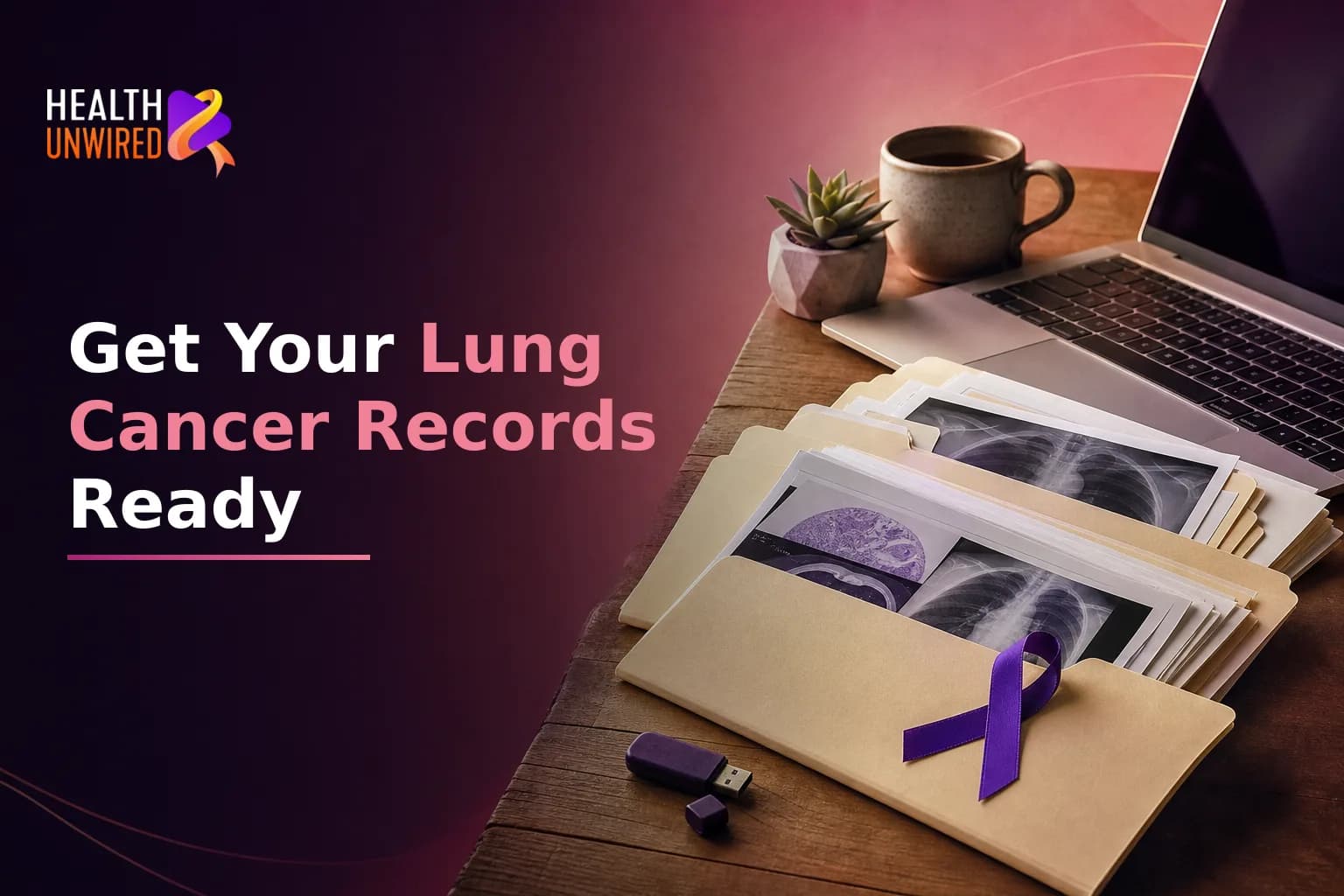
Prepare Your Lung Cancer Records for an Online Second Opinion
Knowing which documents to gather - from pathology slides to molecular test results to DICOM scan files - sha…
HealthUnwired Team
Sep 4, 2026

Lung Cancer Treatment in India for West African Patients
West African patients with lung cancer increasingly travel to India for comprehensive molecular testing, spec…
HealthUnwired Team
Aug 21, 2026