Should You Get a Second Opinion for Early-Stage Cancer?
A second opinion for early-stage cancer is one of the most practical steps you can take before committing to a treatment plan. Here is when it matters most - and how to get one without leaving home.
Updated on Jul 30, 2026
Should You Get a Second Opinion for Early-Stage Cancer?
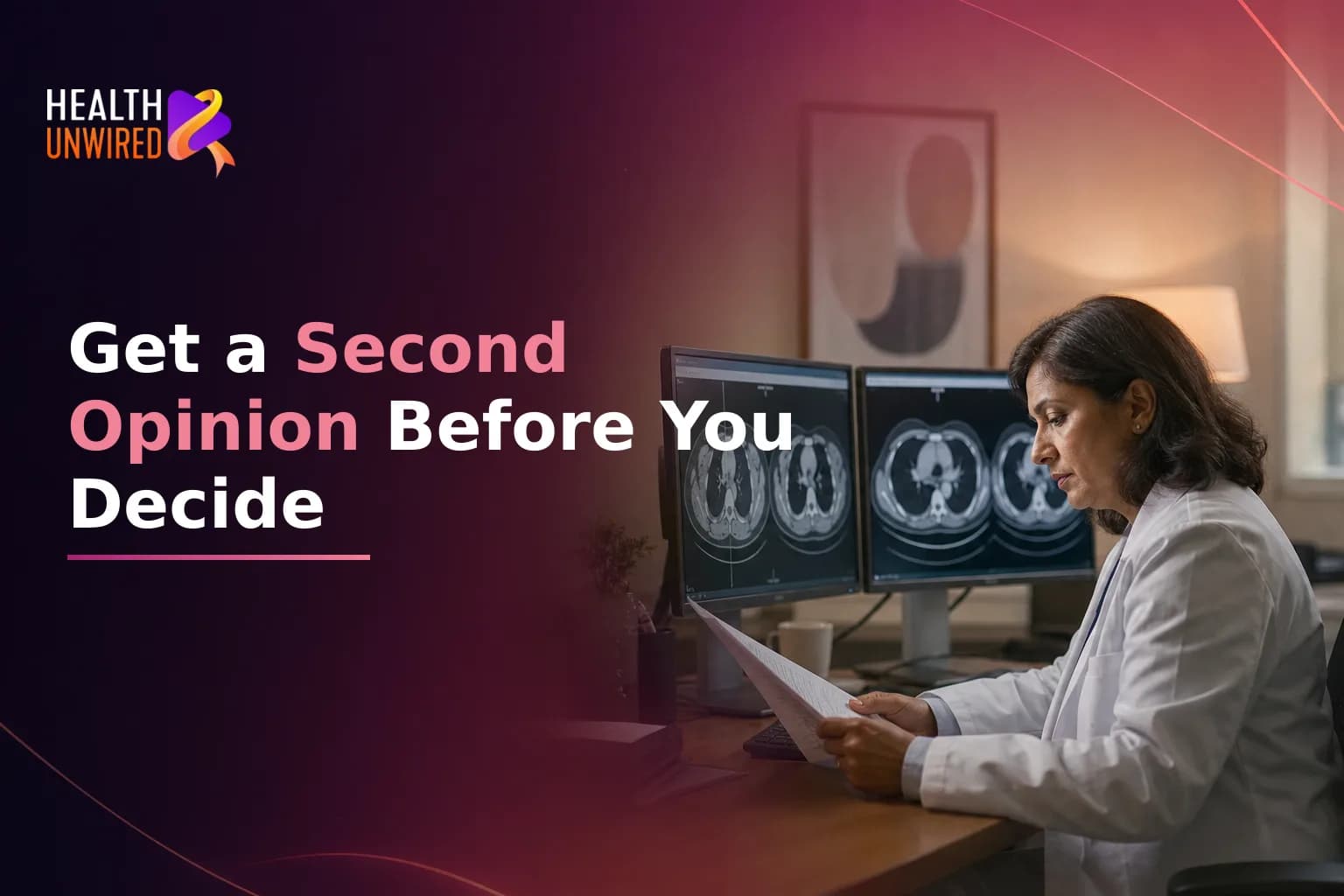
If you've been diagnosed with early-stage cancer and are thinking about getting another oncologist's view, the answer is yes. Getting a second opinion is normal and healthy. It's not a lack of trust in your doctor. It's a way to make sure your diagnosis is correct and your treatment plan is the right one for you.
With most early-stage cancers, you have time. You're not making an urgent decision in the next 24 hours. That's when a second opinion is most helpful - before you start surgery, radiation, or drugs. You can check what you've been told, see if other treatment options are available, and move forward with confidence.
This guide explains when a second opinion is most important for early-stage cancer, what it involves, and how to get one - including from home, with no travel needed.
What Early Stage Means in This Context
Early-stage cancer usually means Stage I or Stage II. At these stages, the cancer has not spread beyond where it started, or has only spread a little to nearby lymph nodes. Treatment at this stage usually aims to cure the disease or stop it from spreading.
Early-stage cancer often has multiple treatment options - surgery, radiation, targeted therapy, or a combination. The choices can be complex. Two qualified oncologists might look at the same case and suggest different approaches. A second opinion can help you understand whether those differences matter for your situation.
Why a Second Opinion Can Change Everything at Early Stage
Pathology reports and imaging scans aren't straightforward. Interpreting a biopsy or scan requires expert judgment, and that judgment can differ from one specialist to another.
A study published in PLOS ONE looked at second opinions for lung cancer, colorectal cancer, and head and neck cancers. It found that second opinions often led to changes in diagnosis or treatment recommendations. In some cases, doctors recommended less intensive treatment, which reduced health risks for patients. (Clinical value of second opinions in oncology, PMC 2023)
Another study looked at breast cancer patients who got second opinions at an NCI-designated cancer center. A review team changed the treatment recommendation for many of those patients. (Value of a second opinion at an NCI-designated centre, PMC 2018) A third study focused on pathology review. It found that in about one in four cases, the pathology report was changed in a way that affected treatment. (Changes in cancer reports after pathology second opinion, PubMed 2014)
This doesn't mean your first opinion was wrong. In most cases, a second opinion confirms what you've already been told. That confirmation is valuable. Knowing two independent specialists agree on your diagnosis and plan gives you confidence as you start treatment.
What Typically Changes After a Second Opinion
When a second opinion does produce something new, it usually falls into one of three categories:
- A change in the diagnosis itself. The second opinion might find a different tumor type, stage, or grade than the first pathologist identified.
- A different treatment recommendation. This might be a different surgical approach, a different drug combination, or a suggestion to try a clinical trial.
- Added information that refines the plan. This is the most common outcome. The second oncologist may agree with the overall approach but suggest additional biomarker testing, a different treatment sequence, or a different specialist for part of your care.
To learn more about what happens after patients get a second opinion, see our article on what changes after a second opinion in cancer care.
Will My Doctor Mind If I Ask for a Second Opinion?
Most experienced oncologists expect patients to get second opinions - and confident doctors support it. The American Cancer Society says seeking a second opinion is common and you have the right to get one. (cancer.org) A strong, experienced oncologist with a good plan won't feel threatened when another expert reviews your case.
If your current doctor reacts badly to the idea, that's worth noting. For advice on how to handle this, see our article on what to do when your oncologist resists a second opinion.
When Is a Second Opinion Most Important?
You should think about getting a second opinion for nearly any cancer situation, but it's especially important when:
- Your cancer type is uncommon or rare, and your oncologist doesn't specialize in it.
- Your pathology results are borderline, unclear, or hard to classify.
- You've been offered multiple treatment options and aren't sure which fits your case.
- Your recommended treatment involves major surgery, organ removal, or significant long-term side effects, and you want confirmation before moving forward.
- Molecular or biomarker testing has been suggested, and you want a specialist to explain what the results mean for your treatment options.
- You're interested in a clinical trial and want to know if you're eligible.
How to Get a Second Opinion - Including Online
You don't have to travel to another city or country to get a second opinion. Telehealth makes remote consultations practical and accessible for patients almost everywhere.
The National Cancer Institute reports that telehealth for cancer care has grown significantly - letting patients who can't travel easily get specialist review from home. (cancer.gov) A patient in Nairobi, Dhaka, Lagos, or Colombo can have their scans and pathology reviewed by a specialist oncologist at a major cancer center without leaving their city.
A remote second opinion has three steps. First, gather your medical records: your pathology report, imaging scans, blood work, and any previous treatment reports. Second, upload those records securely to the platform. Third, a specialist oncologist reviews everything and gives you a written report - and usually a video call to go over the findings together.
At HealthUnwired, you can upload your reports, choose a verified oncologist, and get a video consultation within 48 hours - with no travel needed. The oncologist provides a written summary you can share with your own care team.
To learn step-by-step what the process involves from uploading records to getting your report, see our guide on your first online cancer consultation.
What Records Do You Need to Prepare?
Complete records make a second opinion more useful. Most oncologists reviewing a second opinion will need:
- Your pathology report - the written report from your biopsy or surgery
- Original imaging studies - CT scans, MRI scans, PET-CT scans, mammograms, or ultrasounds. Original digital files work better than printed copies.
- Staging test results, including blood tests and any tumor marker results
- Your proposed treatment plan as explained by your first oncologist
- A brief summary of your health history and any other medical conditions
If you've had surgery or treatment already, include those operative notes and discharge summaries too. The reviewing oncologist needs the complete picture to give you a useful opinion.
A Note on Timing
Many people worry that getting a second opinion will delay treatment and let the cancer grow. For most early-stage cancers, a one or two week pause to gather records and get another opinion is unlikely to hurt your outcome. Your oncologist can tell you if your cancer type and grade make timing a real concern - ask directly about your timeline before deciding that urgency means you can't get another opinion.
If you've been told treatment must start quickly, share that with the oncologist giving the second opinion. A good second-opinion consultant will consider your timeline and tell you if anything really can't wait.
When to Talk to Your Doctor
Talk to your oncologist if you have doubts about your diagnosis, if your treatment options weren't fully explained, or if you feel uncertain before a major intervention. You can also ask your current care team directly about getting a second opinion - many oncologists can help you prepare your records or suggest specialists.
This article is for general information and is not a substitute for medical advice. Always consult your oncologist or care team about your specific situation.
Similar Topics

Leukemia Second Opinion: What Hematologic Oncologists Review
A leukemia second opinion is a recognized and normal step in blood cancer care. This guide explains exactly w…
HealthUnwired Team
Sep 18, 2026
Understanding Your Lymphoma Diagnosis and Staging
A lymphoma diagnosis involves three steps: a biopsy, a pathology report naming your exact subtype, and a stag…
HealthUnwired Team
Sep 16, 2026
Newly Diagnosed with Leukemia: Your First Steps
A leukemia diagnosis is overwhelming, but your first moves can shape everything that follows. Here is what to…
HealthUnwired Team
Sep 14, 2026