Cervical Cancer Treatment in India for International Patients
India offers quality cervical cancer treatment at costs well below private care in the Gulf or Western countries. This guide walks international patients through what to expect, what to bring, and how to plan the journey.
Updated on Sep 1, 2026
If you or someone you love has been diagnosed with cervical cancer, getting effective treatment quickly matters. For patients across Africa, the Gulf region, South Asia, and South-East Asia, India offers quality cancer care at costs often far lower than comparable private treatment closer to home. According to the World Health Organization, cervical cancer affects around 604,000 women globally each year and is the leading cause of cancer death among women in 26 countries - most of them in sub-Saharan Africa and parts of South and South-East Asia. This guide covers what treatment in India involves, how to plan your trip, and what to prepare before you travel.
Why International Patients Come to India for Cervical Cancer Care
India has a large and established cancer care system. Cancer hospitals in Delhi, Mumbai, Chennai, Hyderabad, and Bangalore are accredited by Indian and international organizations. Many senior cancer doctors trained in Europe or North America and follow the same treatment guidelines used worldwide. English is the main language at major private hospitals, and most have international patient teams that handle booking appointments, visa letters, housing help, and translation.
Private care in India costs much less than comparable treatment in Western countries or the Gulf. Treatment costs vary by hospital, disease stage, and approach, so always ask for a written quote that lists diagnostics, treatment, hospital stay, and follow-up. For families paying out of pocket, the savings can be large enough to make international travel worth it.
Wait times are usually shorter too. In many countries, you may wait weeks or months to see a specialist or start treatment. At most major Indian private hospitals, international patients can see a specialist within days and often start treatment within one to two weeks of arrival - provided your records are complete when you arrive.
What Cervical Cancer Treatment in India Typically Involves
Your treatment plan depends on your FIGO stage - the system used worldwide that describes how far the cancer has spread - plus your age, health, and whether you want to preserve fertility. Indian doctors at major centers follow guidelines from NCCN, ASCO, and ESMO, the same organizations that guide treatment in Europe and North America.
For early-stage disease (roughly FIGO stages IA to IB2), surgery is often the first choice. The most common procedure is a radical hysterectomy, which removes the uterus, surrounding tissue, and pelvic lymph nodes. For some younger patients who want to keep the possibility of future pregnancy, a radical trachelectomy - which removes the cervix but not the uterus - may be an option. According to the American Cancer Society, trachelectomy is generally possible for early-stage tumors in women who want to remain fertile. Ask your cancer doctor directly whether your tumor size, location, and lymph node status make you a candidate.
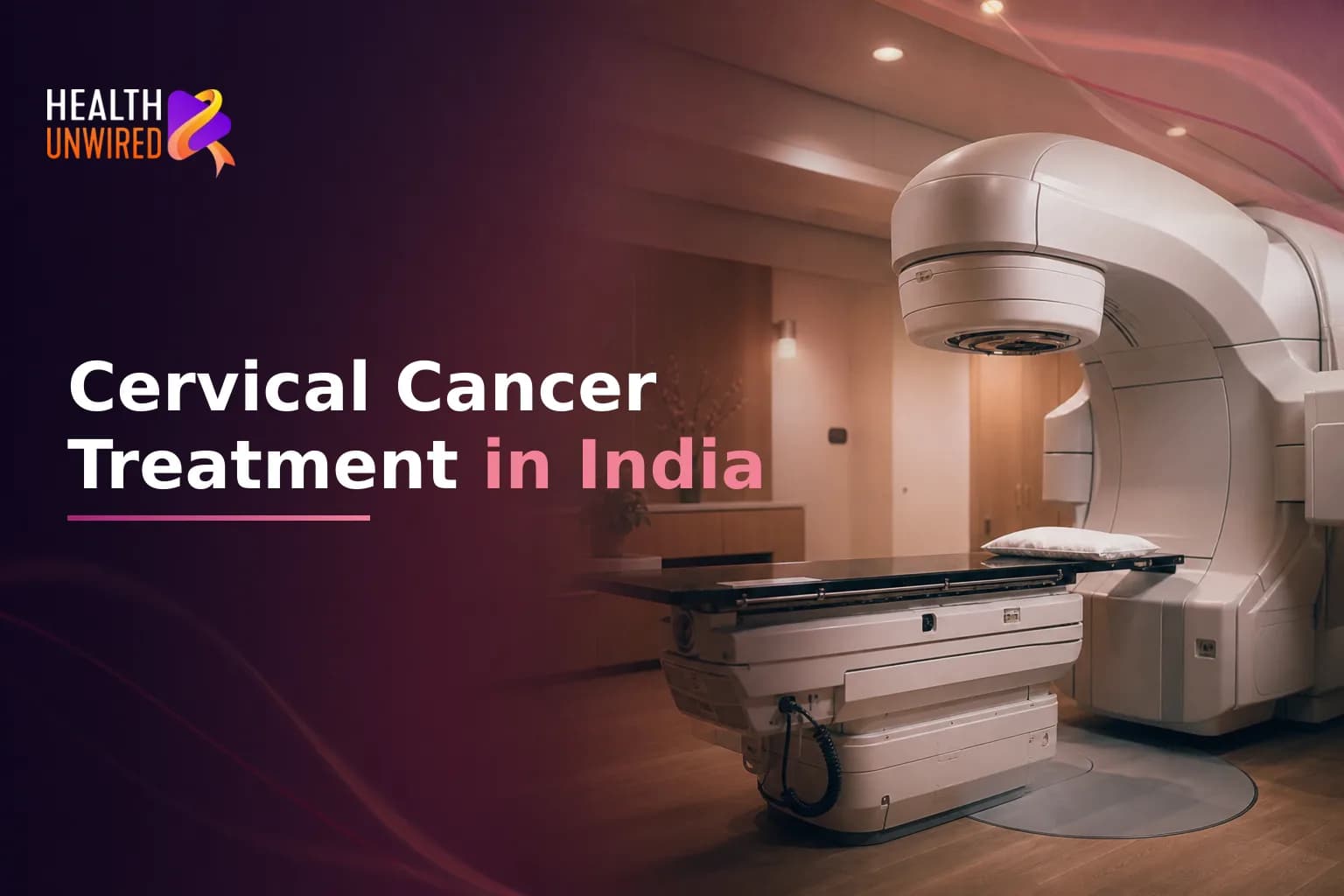
For locally advanced disease (roughly FIGO stages IB3 to IVA), the standard treatment is concurrent chemoradiation - chemotherapy given at the same time as radiation therapy because the combination works better than either treatment alone. Radiation is typically given as external beam radiotherapy combined with brachytherapy - internal radiation placed close to or inside the cervix to deliver a strong dose directly to the tumor. According to the National Cancer Institute, most patients with stage IIB through IVA disease receive this combined approach. India's major cancer centers have modern high-dose-rate (HDR) brachytherapy equipment, which is essential for locally advanced cervical cancer and should be confirmed when you choose a hospital.
For recurrent or metastatic disease, major Indian centers may offer targeted therapies and immunotherapy. Discuss which drugs and treatment schedules with your doctor. This article does not recommend particular drugs or dosing.
How Does Cervical Cancer Treatment in India Compare to Care Elsewhere?
| Factor | India (major private cancer center) | GCC private hospitals | US or UK private care |
|---|---|---|---|
| Surgery for early-stage disease | Lower cost; radical hysterectomy and fertility-sparing trachelectomy available at multiple accredited centers | Moderate to high cost; fertility-sparing options vary by center | High cost; request a written itemized estimate |
| Chemoradiation with brachytherapy | Lower cost; modern HDR brachytherapy available at major centers - confirm at your hospital | Available at select centers; costs are substantially higher | High cost; out-of-pocket costs vary by insurance |
| Wait for first specialist appointment | Often within days to 2 weeks for international patients | Days to 2 weeks on a private pathway | Typically 2-6 weeks or longer via most healthcare systems |
| Language and coordination support | English-language clinical teams; most major centers have international patient desks with coordinator services | Arabic and English widely available; quality varies by center | English; limited structured international patient coordination |
| Medical visa required | Yes - India e-Medical Visa required; apply before booking flights | Depends on home country passport | Depends on home country passport |
Private cancer hospitals in India generally cost much less than comparable private care in the Gulf or Western countries, though prices vary by hospital, city, and how complex your treatment is. The cost savings are most noticeable for weeks-long treatment courses like chemoradiation and for procedures that need longer hospital stays. But cost alone should not drive your choice. The hospital's accreditation, your doctor team's experience with your cancer type and stage, and confirmed access to HDR brachytherapy for locally advanced disease all matter just as much. Request written quotes from at least two hospitals - covering diagnostics, treatment, hospital stay, and initial follow-up - before you pick a center.
What Records and Scans Should You Bring?
The more complete your medical records when you arrive, the faster your Indian doctor can review your case and skip repeating expensive tests. Before you travel, gather:
- Your original biopsy report, including cell type (squamous cell carcinoma, adenocarcinoma, etc.) and HPV typing if it was done
- All imaging scans - CT, MRI, and PET-CT scans, plus the written radiologist report for each
- A treatment plan or staging summary from your local doctor
- Blood test results: full blood count, kidney function, liver function, and tumor markers if taken
- Your current medication list, including any over-the-counter supplements
- A referral letter or clinical summary from your local doctor
Digital copies on a USB drive or in a secure cloud folder work well. Most Indian hospitals accept DICOM format (the standard digital format for medical scans) for imaging files. For a step-by-step checklist on organizing your records before treatment abroad, see Getting Your Medical Records Ready for Treatment Abroad.
How the India e-Medical Visa Works
India offers a dedicated e-Medical Visa for international patients traveling for treatment. You apply online through the Indian government's official e-Visa portal - most nationalities can apply without visiting an embassy in person. You will need to upload a letter from your hospital confirming your name, passport number, nationality, and expected arrival or treatment date. Up to two family members can travel with you on an e-Medical Attendant Visa linked to your application. You must register with the local Foreigners Regional Registration Office (FRRO) within 14 days of arrival in India.
Allow three to five business days for processing, though timelines can vary by country. Apply before booking flights. For detailed steps on the visa process, required documents, and typical delays, see India Medical Visa for Cancer Treatment: What to Prepare.
Planning Your Stay Around Treatment
How long you need to stay in India depends on your treatment approach. Surgery for early-stage disease means three to five days in the hospital, followed by a recovery period of two to three weeks before most patients can safely fly home. A full chemoradiation course for locally advanced disease takes approximately five to six weeks, with daily weekday sessions for external radiotherapy and several brachytherapy appointments during that time. Plan your stay to complete the full treatment course without interruption. Leaving mid-course, even for a week, can affect your results and may mean redoing parts of the schedule.
Most large Indian cancer hospitals have an international patient services team that can help with nearby housing - some have on-campus guesthouses or hotel partnerships within easy travel distance. Your family member traveling on an attendant visa can stay in the same place and come to your appointments.
Fatigue, nausea, and appetite changes are common during chemoradiation. Your hospital team will help manage these with prescribed drugs and nutritional support. Some patients also look for natural options to help with side effects between sessions. Always ask your doctor about any supplements you want to take, as some can interfere with treatment drugs.
Getting a Second Opinion Before You Travel
Before booking flights, think about getting an online second opinion from a cancer doctor who specializes in gynecologic or radiation oncology. A remote review of your biopsy report and scans can confirm your staging is correct, whether the suggested treatment matches current guidelines, and whether India - or a specific hospital - is truly right for you. This usually takes 48 to 72 hours from when you send your records and can prevent an expensive trip that doesn't work out.
For an overview of what cancer doctors look for when reviewing cases like yours, the guide to ovarian cancer second opinions covers the same specialist review process in useful detail - the approach is similar for cervical cancer cases and shows you exactly what a remote review examines.
A second opinion is a normal part of cancer care. Arriving in India confident in your treatment plan is worth the time. You can search for telemedicine options to consult with a verified cancer doctor before you travel. Submit your reports, choose a specialist for your case type, and get a review within 48 hours - no travel required.
When to Talk to Your Doctor
Talk to your local doctor or cancer doctor before making travel plans if your doctor says starting treatment soon is urgent; if you have other health conditions that could affect your fitness for surgery or long trips; if you are already in treatment and thinking about switching providers; or if your staging tests are not complete and your full diagnosis is not yet known. Traveling before you have a complete diagnosis can mean arriving in India only to find you need more tests before treatment starts - adding time and cost to an already hard process.
This article is for general information and is not a substitute for medical advice. Always talk with your cancer doctor or care team about your specific situation.
Read the full guide
Similar Topics

Cervical Cancer Second Opinion: What Gynecologic Oncologists Review
A gynecologic oncologist reviewing a cervical cancer second opinion looks at six key areas: your pathology sl…
HealthUnwired Team
Sep 14, 2026
Cervical Cancer Treatment Abroad: When to Consider International Care and …
If your cervical cancer treatment plan depends on care that is not available locally - brachytherapy access, …
HealthUnwired Team
Jul 10, 2026

My Local Doctor Wants to Treat My Cervical Cancer: Do I Need a Gynecologic…
Your local doctor says they can treat your cervical cancer — but is a gynecologic oncologist the better choic…
HealthUnwired Team
Jun 9, 2026