Getting a Second Opinion Before Lymphoma Treatment
Lymphoma comes in more than 60 recognized subtypes, and the exact subtype shapes every treatment decision. Here is what a hematologic oncologist examines before recommending a plan - and why a second review can matter.
Updated on Aug 8, 2026
Getting a Second Opinion Before Lymphoma Treatment
A lymphoma diagnosis moves fast. Your care team may have a treatment plan ready within days. But before you start, take one step: get a second opinion from a hematologic oncologist - a blood cancer specialist - who reviews your full medical records. This is not a sign of distrust. It is a standard, evidence-based step that often changes the treatment plan in important ways.
Lymphoma has more than 60 subtypes. Each subtype behaves differently and needs different treatments. Getting the subtype exactly right - and having a second specialist confirm it - matters for every decision that follows.
Why Lymphoma Diagnosis Is Especially Complex
Unlike some cancers that look similar under a microscope, lymphoma subtypes can look nearly identical on basic testing. Telling them apart requires a detailed review: tissue examination, protein markers, and sometimes genetic testing. Even experienced pathologists can read the same sample differently when the lines between subtypes are close.
A study examining expert second-opinion pathology reviews for lymphoma found a major diagnostic change in about 17.8% of cases - nearly one in five patients had a real change to their diagnosis after a specialist review. The rate of change varied by subtype, from about 10% for Hodgkin lymphoma to as high as 75% for Burkitt's lymphoma.
That matters when your treatment plan depends on which subtype you have. A second review can confirm the first diagnosis - or find a difference that changes your options.
If you have already read your diagnosis letter and are unsure what some of the terms mean, the guide on understanding your lymphoma pathology report walks through the key sections in plain language.
What a Hematologic Oncologist Reviews Before Treatment Starts
When a hematologic oncologist takes a second look at a lymphoma case, they review several kinds of information. Here is what a careful pre-treatment review typically covers:
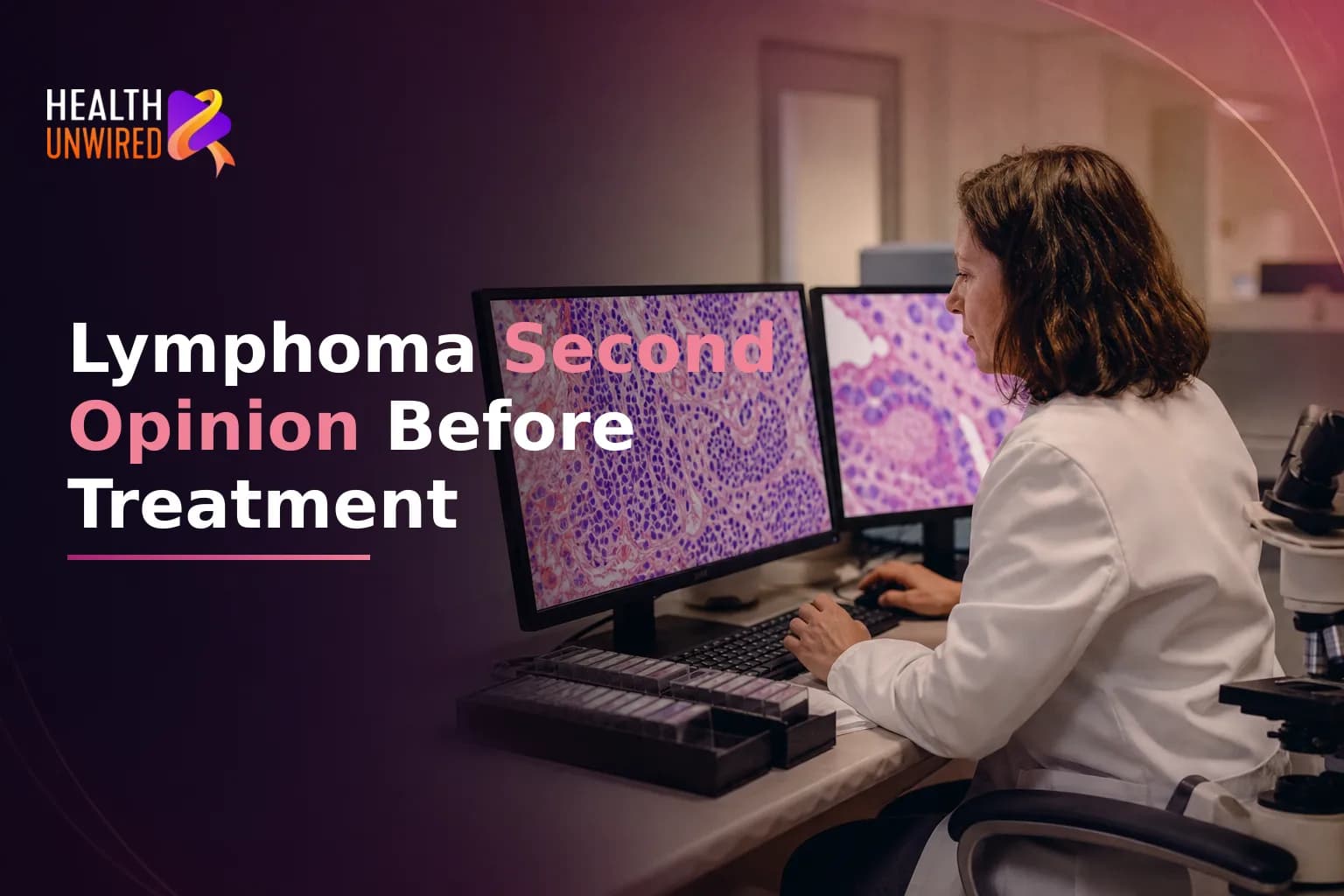
- The biopsy tissue and pathology slides. The specialist reviews the original tissue sample, often requesting the actual glass slides or digital scans from the first pathologist. They look at cell shape, size, and arrangement under a microscope to confirm the diagnosis and the specific subtype - to identify both the broad category of lymphoma and the exact type within it.
- Immunohistochemistry (IHC) markers. IHC is a lab test that colors specific proteins on cancer cells. The results help identify whether the lymphoma is a B-cell or T-cell type, and which specific subtype. Markers like CD20, CD30, CD10, BCL2, and BCL6 each have diagnostic meaning and can change which treatment approaches might work.
- Molecular and genetic testing. For certain subtypes - especially diffuse large B-cell lymphoma (DLBCL) - gene rearrangements in MYC, BCL2, or BCL6 can change how aggressive the disease is and how it gets classified. This testing is done on the biopsy tissue and can change how serious the diagnosis is.
- Staging scans. The oncologist reviews imaging - usually a PET-CT scan - to see how far the lymphoma has spread. The standard way to stage lymphomas is the Lugano classification. Stages go from I, involving one lymph node region, to IV, meaning spread to organs outside the lymph system.
- B symptoms. Fever above 38 degrees Celsius, drenching night sweats, and unexplained weight loss of 10% or more over six months are called B symptoms. These are noted as part of staging and can affect how urgent and intense the treatment plan needs to be.
- Prognostic scoring. For aggressive lymphomas like DLBCL, the International Prognostic Index (IPI) combines five factors: age, stage, LDH (lactate dehydrogenase) level, performance status, and the number of sites outside the lymph system. This score gives the oncologist a sense of risk and helps guide treatment decisions.
- Blood test results. A full blood count, LDH level, kidney and liver function, and screening for infections like HIV and hepatitis B are all standard before treatment starts. A second-opinion specialist will check that these were done and that no result was missed or misread in the first workup.
How Often Does a Second Opinion Change the Plan?
Research shows that second opinions change something important in many lymphoma cases - and it is not only the diagnosis that can shift.
A study published in the Journal of Clinical Oncology compared referring pathology diagnoses with final diagnoses for patients with non-Hodgkin lymphoma seen at National Comprehensive Cancer Network (NCCN) centers. Researchers found that a real portion of patients had their diagnosis changed at the specialist center, and those changes affected treatment plans directly.
Imaging review can also make a difference. A study on PET-CT second-opinion review for patients with diffuse large B-cell lymphoma found that expert radiology review improved staging and changed patient management decisions - sometimes changing the stage, sometimes finding disease that had not been noted before.
What changes most? Sometimes it is the exact subtype, which determines which drugs might work. Sometimes it is the stage - affecting whether treatment needs to target a wider or narrower part of the body. And sometimes a second opinion just confirms that the first plan was right. That confirmation matters. Knowing two specialists agree can help you and your family feel more confident going into hard treatment.
For more on how second opinions change care across cancer types, the article on what changes after a second opinion in cancer care has more details.
What to Bring to Your Second-Opinion Appointment
A lymphoma second opinion needs specific records. The more complete your file, the better the review will be. Here is what to ask your first care team to send before your appointment:
- The full pathology report, including IHC results and any molecular or genetic testing that was done
- A copy of the actual biopsy slides - glass slides or high-resolution digital scans - so the second pathologist can look at the tissue directly, not just read a summary report
- All imaging reports and image files, including PET-CT, CT, and MRI scans, on disc or in a digital format you can share
- Blood test results, including LDH, full blood count, and liver and kidney panels
- A written summary of the proposed treatment plan, if one has been shared with you
Most cancer centers have a medical records team that can prepare these files within a few business days. You have the legal right to your own records. You do not need your doctor's permission to request them and share them with another specialist.
Does Getting a Second Opinion Delay Treatment?
This is one of the biggest worries patients have. For some lymphoma subtypes, treatment does need to start fast. Burkitt's lymphoma and some aggressive DLBCL cases move quickly. In those cases, your oncologist may start treatment while arranging a second opinion at the same time, rather than waiting for the review to finish first.
For slower-growing subtypes - such as follicular lymphoma - there is often more time for a careful review. Your oncologist should be able to tell you how urgent your case is, and whether a short pause to get another opinion is safe.
Online second opinions, where you upload your records and get a written report from a specialist, can often be done faster than scheduling an in-person visit at another hospital. The article on your 60-minute telehealth oncology consultation explains what that process looks like from uploading your records to getting the report.
The weeks between a lymphoma diagnosis and the start of treatment are often hard. Sleep may be hard to come by and worry may be high. If this is affecting you, it is worth addressing alongside the medical process. For over-the-counter support during this time, Ayurnomics has a Sleep and Stress range you can try. Always check with your care team before starting any new supplement, especially if treatment is about to begin.
Choosing the Right Specialist for a Lymphoma Second Opinion
Not every oncologist has the same experience with lymphoma. The field has many different diseases, and some hematologic oncologists focus on certain subtypes. When seeking a second opinion, look for:
- A hematologic oncologist with specific experience in lymphoma, not just general blood cancers
- A center that sees many lymphoma cases each year - more cases often means more exposure to rare subtypes and unusual cases
- Access to a hematopathologist - a pathologist who specializes in blood cancers - who can review the biopsy slides directly rather than just read the written report
- Access to molecular pathology or genomic testing, especially if your subtype may involve MYC, BCL2, or BCL6 gene rearrangements
You do not need to travel far to get this level of expertise. Many major cancer centers now accept digital records and return written second opinions by video visit.
Getting a Lymphoma Second Opinion Online
A second opinion does not need you to fly to another city. Many leading hematologic oncology programs accept digital records. You upload your pathology reports, imaging files, and blood results, and a specialist team reviews them and sends back a written opinion - often within 48 to 72 hours.
This works well for patients who live far from a major cancer center, who are not well enough to travel at the time of diagnosis, who want a review from a specialist outside their home country, or whose caregiver is handling the research for them.
At HealthUnwired, you can upload your records, pick a verified hematologic oncologist, and get a second opinion by video visit - without leaving home. Book your consultation at HealthUnwired to have your lymphoma case reviewed by a specialist, often within 48 hours with no travel needed.
When to Talk to Your Doctor
Ask your current oncologist about a second opinion if your diagnosis feels uncertain, if a general oncologist made it rather than a lymphoma specialist, if the proposed treatment feels too aggressive or too mild for what you have read about your subtype, or if you simply want more confidence before a big decision. Most oncologists support this step. A second opinion is a normal part of good cancer care - not a challenge to your existing doctor.
This article is for general information and is not a substitute for medical advice. Always consult your oncologist or care team about your specific situation.
Similar Topics

Understanding Your Lymphoma Diagnosis and Staging
A lymphoma diagnosis involves three steps: a biopsy, a pathology report naming your exact subtype, and a stag…
HealthUnwired Team
Sep 16, 2026

Lymphoma Treatment in India for Nigerian Patients
Nigerian patients weighing lymphoma treatment options can access specialist haematology care in India at cost…
HealthUnwired Team
Aug 31, 2026
Caregiver's Guide to a Lymphoma Second Opinion
A practical guide for caregivers helping a loved one navigate a lymphoma second opinion. Covers what records …
HealthUnwired Team
Aug 26, 2026