Liver Cancer Treatment Decisions: Understanding Your Options When Surgery, Ablation, and Systemic Therapy Are All Possible
When surgery, ablation, and systemic therapy are all on the table for liver cancer, making the right choice takes more than a single opinion. This guide helps you understand each option and take your next step with confidence.
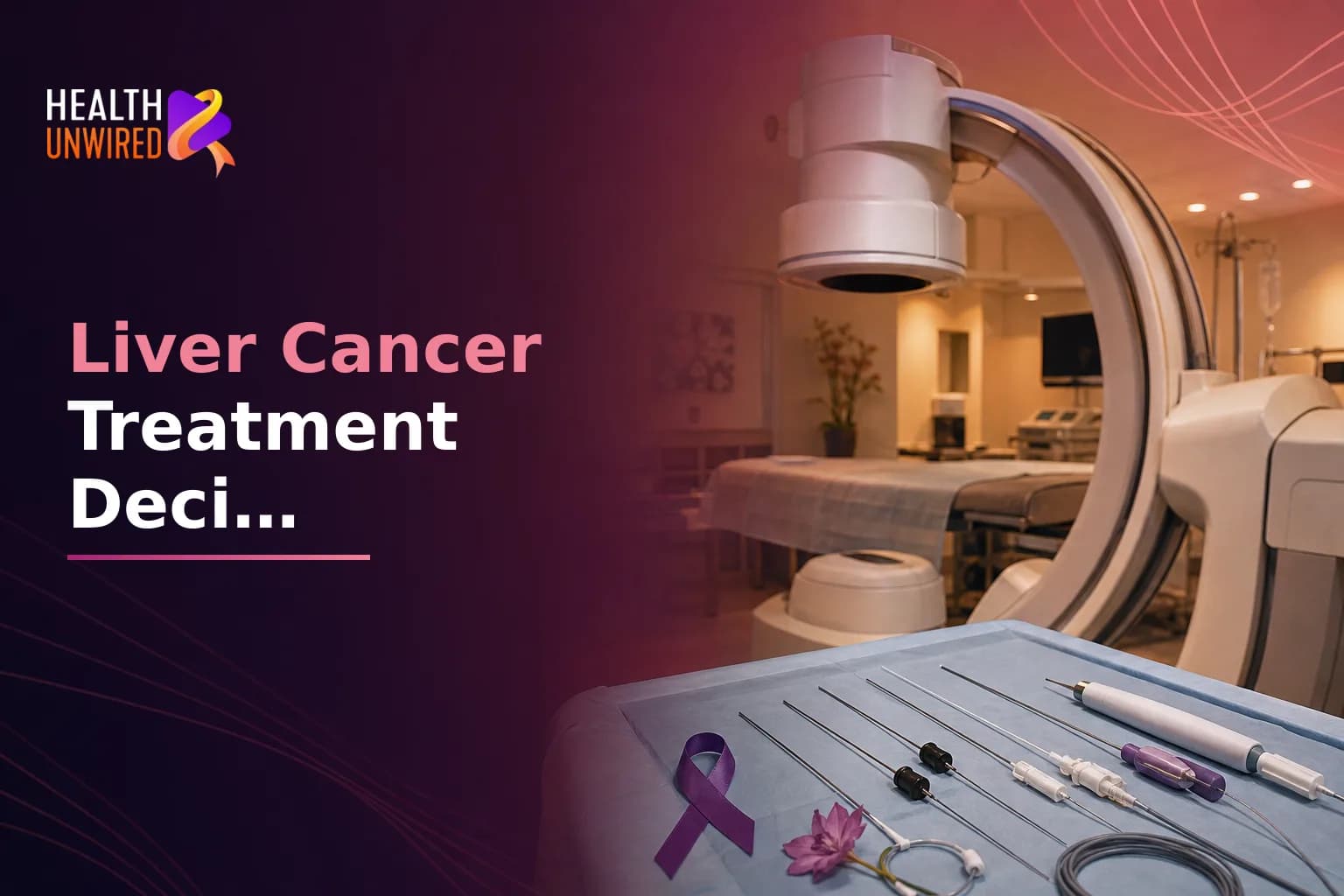
Updated on Jun 11, 2026
When Your Options Feel Like a Decision, Not a Plan
Being told that more than one treatment approach is possible can bring unexpected pressure. The choice you make may shape your care for months or longer.
This article is for people with liver cancer facing multiple treatment options. If your care team has presented surgery, ablation, and systemic therapy as possibilities, you need to understand what each involves, what questions are still open, and how to get specialist input you need.
What Makes Liver Cancer Treatment Decisions Especially Complex
Most liver cancers are hepatocellular carcinoma (HCC), which grows from the liver's main cells. Some start in the bile ducts inside the liver and are called intrahepatic cholangiocarcinomas.
Most people with HCC already have chronic liver disease from hepatitis B, hepatitis C, alcohol damage, or fatty liver disease. This matters because the liver's condition affects which treatments are safe and work best for you.
Before recommending a treatment, your care team assesses two things: the tumor (how many, how large, and whether it has spread into blood vessels or other organs) and the liver's remaining function. These factors determine what treatment is possible for you.
The Barcelona Clinic Liver Cancer (BCLC) staging system combines tumor characteristics, liver function, and overall health to guide treatment choices. According to the National Cancer Institute's guidance, early-stage disease may aim for cure (removing or destroying the cancer entirely), while intermediate and advanced stages focus on controlling growth and quality of life.
The Three Main Treatment Approaches
Surgery
Surgical resection removes the part of the liver with the tumor, plus a margin of healthy tissue around it. It's recommended when the tumor hasn't spread into major blood vessels and the remaining liver is healthy enough to work after surgery.
Liver transplantation replaces the diseased liver with a healthy donor liver. This works well for patients with HCC and serious liver disease, since it treats both problems at once. You need to meet specific medical criteria, get on a waiting list, and receive care at a transplant center.
According to the American Cancer Society, surgery may offer the best chance of long-term disease control for early-stage HCC when the liver works well. But not everyone is a surgical candidate. Your team must consider your individual factors carefully.
Ablation
Ablation destroys tumor tissue without removing it. The most common methods are radiofrequency ablation (RFA) and microwave ablation (MWA). A thin probe guided through the skin and into the tumor delivers heat that kills cancer cells.
Ablation works best for small tumors (typically under 3 centimeters) and is useful for patients whose overall health or liver disease makes surgery too risky. The American Cancer Society notes that for small, well-positioned tumors, ablation can produce results similar to surgery in carefully selected patients. Larger tumors and those near major blood vessels are harder to treat with ablation alone.
Other local approaches include embolization: transarterial chemoembolization (TACE) and transarterial radioembolization (TARE). These target the blood vessels feeding the tumor and are used when tumors are too large for ablation but haven't spread outside the liver. Stereotactic body radiotherapy (SBRT) is available at some specialist centers, especially for tumors that are hard to reach.
Systemic Therapy
Systemic therapy uses medications by mouth or IV that travel through the bloodstream to reach cancer cells. For liver cancer, this mainly means targeted therapy drugs and immunotherapy combinations.
For years, sorafenib was the main systemic option for advanced HCC. In 2020, the FDA approved a combination of atezolizumab (immunotherapy) and bevacizumab (targeted therapy) for unresectable HCC. The National Cancer Institute reported this combination improved survival compared to sorafenib in the IMbrave150 trial. It was the first new treatment showing this benefit since sorafenib was approved in 2007.
Other systemic drugs are used after earlier treatments. Systemic therapy is generally recommended for advanced HCC, especially when cancer has spread into a major blood vessel or other organs. Research is exploring how it can work with local treatments in earlier stages too.
How a tumor's molecular profile shapes the choice between immunotherapy and targeted therapy applies across many cancer types. For a broader look at how specialists approach these decisions, see Immunotherapy vs. Targeted Therapy vs. Chemotherapy for Advanced Lung Cancer.
When More Than One Option Is Genuinely on the Table
For early to intermediate-stage HCC, it's common to have more than one treatment option. A single small tumor may make both surgery and ablation possible. The choice depends on the tumor's location, the underlying liver disease, and your overall fitness for the procedure.
Some patients with tumors too large for surgery may get TACE or systemic therapy first to shrink the tumor for later surgery or transplant. This is called downstaging. Whether it's appropriate and which treatment to use requires specialist expertise and close monitoring.
These decisions benefit from review by a multidisciplinary tumor board, which typically includes a hepatologist, surgical oncologist, interventional radiologist, and medical oncologist. Each brings different expertise. If your case hasn't had this kind of review, that's a reason to seek broader specialist input.
Questions Many Patients Ask at This Stage
It's normal to have questions after appointments. Common ones include: What if the less invasive option doesn't work? Can I still have surgery later? How will treatment affect my existing liver disease? Are there clinical trials my team hasn't mentioned?
These don't have standard answers. You need a specialist who has reviewed your staging, imaging, liver function, and overall health. Getting clear answers through a focused consultation is valuable at this stage.
Why Many Liver Cancer Patients Seek a Second Opinion
Liver cancer treatment varies by hospital and specialist. Not every hospital offers liver transplant, interventional radiology, or hepatobiliary surgery. Not every oncologist has daily HCC experience. What options your team recommends depends on what's available where you are.
A second opinion may confirm your plan. It may also find an option your team didn't mention: a transplant evaluation, downstaging, or a clinical trial. Either way, you'll have more confidence in your choice.
The same principle applies across cancer types. Getting a Second Opinion on Breast Cancer Treatment: What Specialists Review and Why It Matters describes what a specialist review looks like and why it's valuable, even when your original plan is confirmed.
How an Online Liver Cancer Consultation Works and What It Offers
An online consultation is a structured medical appointment, not just an information session. Before the appointment, you upload your documents: imaging reports, pathology results, liver function tests, and treatment notes. The specialist reviews all your material before the session.
During the consultation, the specialist discusses your case in detail. They ask about your symptom history, underlying liver condition, and treatment priorities. They then share their assessment: whether the staging is accurate, whether all options have been considered, and what additional tests or referrals you need.
This format has real advantages for patients with complex diagnoses. You can reach hepatobiliary oncologists and HCC specialists with deep expertise no matter where you are. For patients in the UK, Australia, Canada, the US, Germany, France, or the UAE, access to high-volume liver cancer centers varies widely. An online consultation removes that barrier without travel.
Preparing for Your Consultation
Preparation turns a consultation into a focused, decision-focused appointment. Gather these before your session:
- All imaging reports (CT, MRI, PET scans) with the full radiologist report, not just a summary
- Pathology reports from any liver biopsy, including tumor type, grade, and any molecular or biomarker testing
- Your most recent liver function tests and records of underlying liver disease, including cirrhosis stage, hepatitis status, or portal hypertension
- A written list of treatment options your care team discussed, plus specific questions or concerns about each
- Information about other health conditions that may affect your treatment, such as heart or kidney problems
You don't need to have all the answers. The specialist's job is to explain what your options mean for your specific situation.
Your Next Steps After the Consultation
After your consultation, you'll receive a written summary of the specialist's assessment and recommendations. You can share it with your existing care team, use it to discuss next steps, or bring it to an in-person appointment.
Some patients use the consultation to confirm their plan. Others use it to discuss a different approach, request a transplant referral, or explore clinical trials. Either way, you'll have a clearer picture of your options and a stronger foundation for your decision.
Take Your Next Step: Book a Consultation With a Liver Cancer Specialist
If you need specialist input for your liver cancer treatment decision, HealthUnwired connects you with hepatobiliary oncologists, liver surgeons, and HCC specialists for online consultations.
You can upload your pathology and imaging reports, have a specialist review your treatment plan, and get a clear perspective on your options from anywhere in the world. No referral is needed.
Search for a liver cancer specialist on HealthUnwired, view profiles, upload your reports, and book your consultation. Specialist input at the right time can make a real difference in your decision.
When to Talk to Your Doctor
If you have liver cancer and are trying to understand your treatment options, ask your care team: Has my case been reviewed by a multidisciplinary tumor board? Does my staging include both tumor and liver function assessment? What are the goals of each treatment for me? Are downstaging, clinical trials, or specialist referral relevant?
This article is for general information and doesn't replace medical advice. Always talk to your oncologist or care team about your situation.
Frequently Asked Questions
Read the full guide
Similar Topics
Caregiver Guide to Lymphoma Treatment Options: When Consulting a Hematolog…
When someone you love is diagnosed with lymphoma, the treatment decisions that follow can feel overwhelming. …
HealthUnwired Team
Jun 15, 2026

Prostate Cancer Treatment Decisions: Understanding Surgery, Radiation, Hor…
Prostate cancer treatment decisions are rarely straightforward. This guide explains surgery, radiation, and h…
HealthUnwired Team
Jun 14, 2026

Stomach Cancer Treatment Decisions: Understanding Surgery, Chemotherapy, a…
Surgery, chemotherapy, targeted therapy, or immunotherapy — stomach cancer treatment involves choices that de…
HealthUnwired Team
Jun 13, 2026