Caregiver Guide to Lymphoma Treatment Options: When Consulting a Hematologic Oncologist Changes Your Treatment Plan
When someone you love is diagnosed with lymphoma, the treatment decisions that follow can feel overwhelming. This guide helps caregivers understand lymphoma treatment options and why a consultation with a hematologic oncologist may reshape the plan.
Updated on Jun 15, 2026
When You Are the One Doing the Research
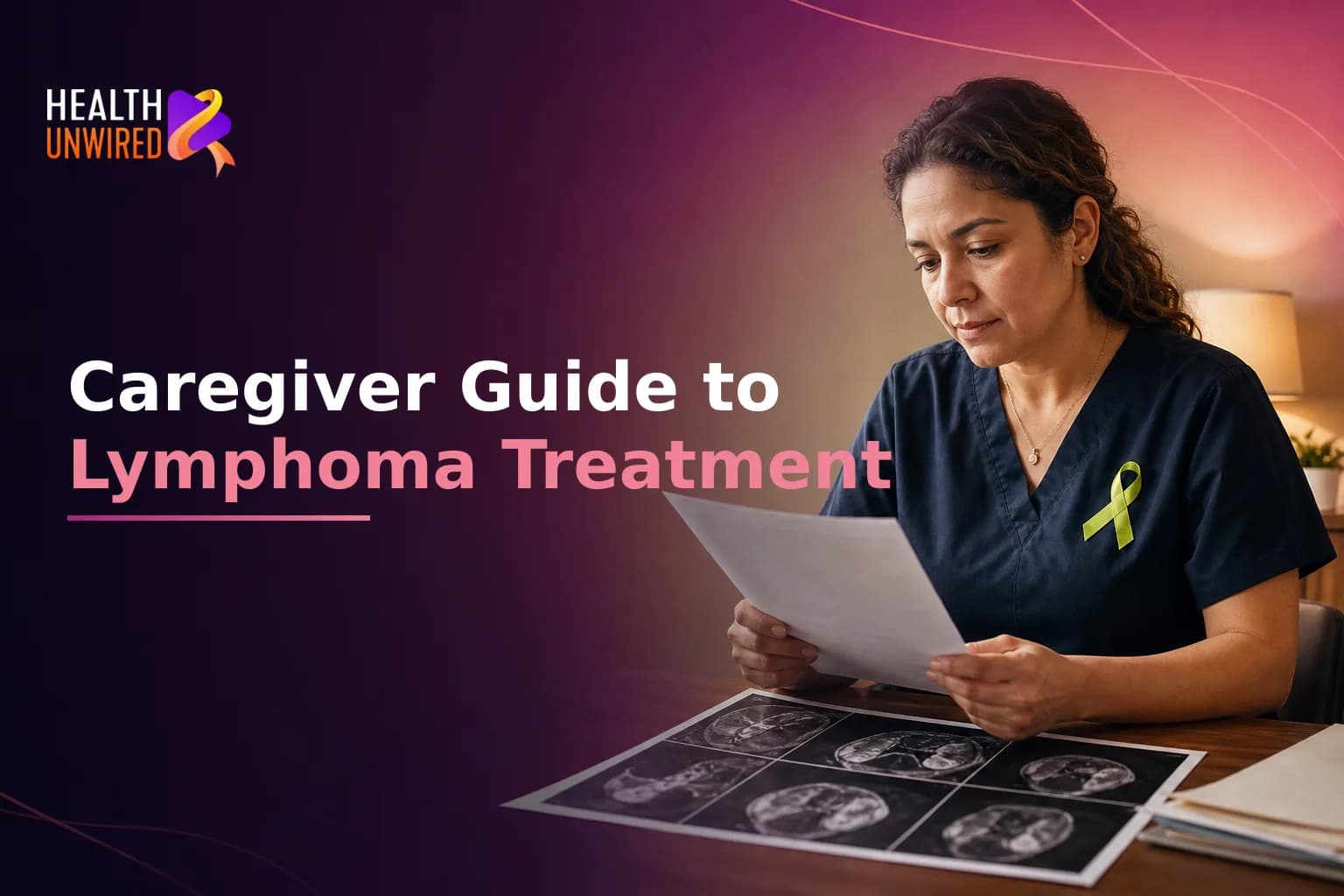
When someone you love receives a lymphoma diagnosis, you often take on a new role. The patient may be too shocked or exhausted to absorb what the doctor says, so you write down questions, read medical information, and try to understand complex medical language. This role is important. Decisions made in the first weeks after diagnosis affect the entire treatment path.
Lymphoma is not one disease but a family of cancers affecting the lymphatic system. The specific type determines which treatments work and in what order. Because of this complexity, a hematologic oncologist — a specialist in blood and lymph cancers — may recommend a different treatment plan.
Understanding Lymphoma: More Than One Disease
Lymphoma starts in lymphocytes — white blood cells that help the body fight infection. There are two broad categories: Hodgkin lymphoma and non-Hodgkin lymphoma.
According to the American Cancer Society, non-Hodgkin lymphoma is one of the most common cancers worldwide and includes more than 60 different subtypes. Some grow slowly and may not need treatment right away. Others are aggressive and require prompt action.
Hodgkin lymphoma is less common but often responds well to treatment, especially when caught early. A specific cell type — the Reed-Sternberg cell — distinguishes it from non-Hodgkin lymphoma under a microscope.
The distinction between these two categories, and between the many subtypes within them, matters. It is the starting point for every treatment decision. Two people diagnosed on the same day may need very different treatments.
Staging and Subtype: Why the Details Matter
Once lymphoma is diagnosed, the next step is to determine how far it has spread. Doctors use the Lugano classification, which is based on where the cancer is found in the body, according to the National Cancer Institute. Stages run from I (cancer in one area) to IV (cancer found in multiple sites or organs outside the lymph system).
But stage alone does not determine treatment. The subtype, the patient's age and health, genetic markers in the cancer, and lab results all shape the treatment decision.
The pathology report — the written result of the biopsy — is the most important document in any lymphoma case. It identifies the exact subtype, describes how the cells look and behave, and may include molecular testing results. These reports can be long and technically dense. A misreading or misclassification of the subtype is one of the most common reasons a second opinion leads to a changed treatment plan.
Treatment Options Available Today
Lymphoma treatment has improved in recent years. Here is an overview of the main approaches used today.
Chemotherapy
Chemotherapy remains a core treatment for many forms of lymphoma. According to the American Cancer Society, chemotherapy for non-Hodgkin lymphoma is often given in combination with other treatments. The specific regimen depends on the subtype and stage and may be combined with immunotherapy or radiation.
Radiation Therapy
Radiation therapy uses high-energy beams to destroy cancer cells. Doctors use it most often for Hodgkin lymphoma and early-stage non-Hodgkin lymphoma where the cancer is limited to one area. According to the National Cancer Institute, doctors may use radiation alone or with chemotherapy, depending on the patient's stage.
Immunotherapy
Immunotherapy helps the body fight cancer. Monoclonal antibodies are one type that doctors use in certain B-cell lymphomas. CAR T-cell therapy is a newer approach in which a patient's own immune cells are changed in a laboratory to recognize and attack lymphoma cells. Doctors use it for some types of lymphoma that have relapsed or not responded to earlier treatment.
Targeted Therapy
Targeted therapy blocks specific proteins or genetic changes that help lymphoma cells survive and grow. These treatments may cause fewer side effects than standard chemotherapy because they work more precisely. Which ones may work depends heavily on the molecular profile of the tumor — another reason thorough testing at diagnosis matters.
Stem Cell Transplant
For some patients — particularly those whose lymphoma has returned after initial treatment or did not respond to it — a stem cell transplant may be part of the plan. This approach uses high-dose therapy followed by an infusion of healthy stem cells to help recovery. Eligibility depends on the subtype, stage, age, and overall health.
In many cases, a treatment plan will combine more than one of these approaches. The sequence and timing of treatments is where specialist expertise makes a difference. If you also have questions about a related blood cancer, our article on leukemia treatment decisions explains how specialist input shapes care in that area.
Common Questions Caregivers Ask Early On
Is this lymphoma fast-growing or slow-growing? This is one of the most important early questions. Aggressive lymphomas typically need treatment to start quickly. Slow-growing lymphomas may allow time to gather information and consult specialists before starting.
How long do we have to make a decision? For most lymphoma subtypes, there is some time to seek a second opinion before committing to a treatment plan — though this varies by subtype. Always ask the treating oncologist about the timeline for starting treatment.
What does the pathology report actually say? Ask for a copy of the report and request that the doctor walk through the key findings in plain language. You have every right to understand the document that drives the treatment plan.
Should we see a specialist before starting? For complex or aggressive cases, a hematologic oncologist focused on lymphoma may find options you hadn't considered or recommend a different approach.
Why Expert Second Opinions Often Change the Plan
Many caregivers assume the first oncologist has already made the best recommendation. Often they have. But lymphoma is one of the most complex areas in cancer medicine, and second opinions frequently lead to important changes in the treatment plan.
The American Cancer Society notes that seeking a second opinion is a normal part of cancer care. It is not a challenge to your doctor. These decisions deserve input from more than one expert.
A hematologic oncologist specializes in cancers of the blood, bone marrow, and lymphatic system. They may recognize a rare subtype that changes treatment, recommend additional molecular testing, find a relevant clinical trial, or suggest a different treatment sequence based on experience with many similar cases.
Common reasons a specialist review changes the lymphoma treatment plan include a reclassification of the subtype after further pathology review, the addition of genetic or molecular testing, a recommendation for a clinical trial, or a different view on the timing and intensity of treatment. That shift — even a small one — can affect how well the treatment works and what side effects happen.
How Online Oncology Consultations Work
Not everyone can easily reach a specialist focused on lymphoma. Wait times at major cancer centers can stretch into weeks. Online oncology consultations have changed that.
Online platforms allow caregivers to upload pathology reports, imaging results, blood work, and the proposed treatment plan and connect with a specialist. Many offer results within days. The specialist reviews the documents and provides a written summary or video consultation discussing findings and recommendations.
For a caregiver managing appointments, logistics, and a loved one's diagnosis, this is practical and helpful. You don't need to travel to a specialist center to get that expertise.
Benefits of Consulting a Specialist Online
- Access without geography. Patients in smaller cities, rural areas, or countries with limited specialist access can connect with lymphoma experts from anywhere in the world.
- Speed. Many caregivers can book a specialist consultation within days — often faster than a referral appointment at a major cancer center.
- Clarity on a complex plan. Specialists are practiced at explaining treatment decisions in plain language, helping caregivers move forward with more confidence.
- Confirmation of the existing plan. When a second review confirms the initial recommendation, that confirmation allows you to move forward with confidence.
- Clinical trial awareness. Specialists are often more aware of ongoing trials relevant to your specific lymphoma subtype.
Preparing for Your Consultation
The more complete the information you provide, the more useful the specialist review will be. Before booking a consultation, gather the following documents:
- The pathology report from the biopsy, including any molecular or genetic testing results
- PET scan and CT scan reports, and the images themselves if available digitally
- Recent blood test results, including complete blood count and LDH
- A written summary of the proposed treatment plan
- A list of the patient's current medications and other health conditions
- Your top three to five questions, written in advance
If you are not sure how to access these records, the treating oncologist's office or the hospital's medical records department can help you obtain copies.
Next Steps After the Consultation
After the specialist review, you will receive a summary of findings and recommendations. Bring that summary to your oncologist and ask about any differences. Most oncologists welcome expert input and are open to using relevant recommendations.
If the specialist identifies a clinical trial that might fit your loved one's situation, ask the treating team about eligibility and how to get a referral. Clinical trials are often overlooked in lymphoma care, and a specialist review is one of the best ways to find them.
If the original plan is confirmed, you can move forward knowing that two qualified experts agree. That matters for the decision and your peace of mind.
When your loved one finishes active treatment and begins thinking about what comes next, our guide on returning to work after lymphoma treatment covers the practical and emotional steps involved in recovery.
Ready to Get a Specialist Review?
You have already done what good caregivers do: gathering information before you commit to a plan. The next step is to get a specialist's review of your specific situation.
Upload your loved one's pathology report, imaging results, and current treatment plan to an online platform. Browse specialist profiles and book a consultation. These decisions deserve more than one expert opinion, and you shouldn't need to travel to get that expertise.
Start the process today.
When to Talk to Your Doctor
Speak with your loved one's oncologist or care team if you are uncertain about the lymphoma subtype, have questions about the proposed treatment or why it was chosen, want to know about clinical trials, or feel that an independent specialist review would help. Asking questions and seeking additional input are always appropriate in cancer care.
This article is for general information and is not a substitute for medical advice. Always consult your oncologist or care team about your specific situation.
Frequently Asked Questions
Similar Topics

Supporting Your Partner Through Pancreatic Cancer Treatment: Navigating Em…
When your partner is diagnosed with pancreatic cancer, your life changes overnight. This guide offers honest,…
HealthUnwired Team
Jun 4, 2026
Understanding Your Lymphoma Diagnosis and Staging
A lymphoma diagnosis involves three steps: a biopsy, a pathology report naming your exact subtype, and a stag…
HealthUnwired Team
Sep 16, 2026
Lymphoma Treatment in India for Nigerian Patients
Nigerian patients weighing lymphoma treatment options can access specialist haematology care in India at cost…
HealthUnwired Team
Aug 31, 2026