Returning to Work After Lymphoma Treatment: Managing Energy and Confidence
Going back to work after lymphoma treatment is a major step in survivorship — and often a harder one than expected. Learn how to manage fatigue, chemo brain, and confidence as you ease back into your career.
Updated on Jun 9, 2026
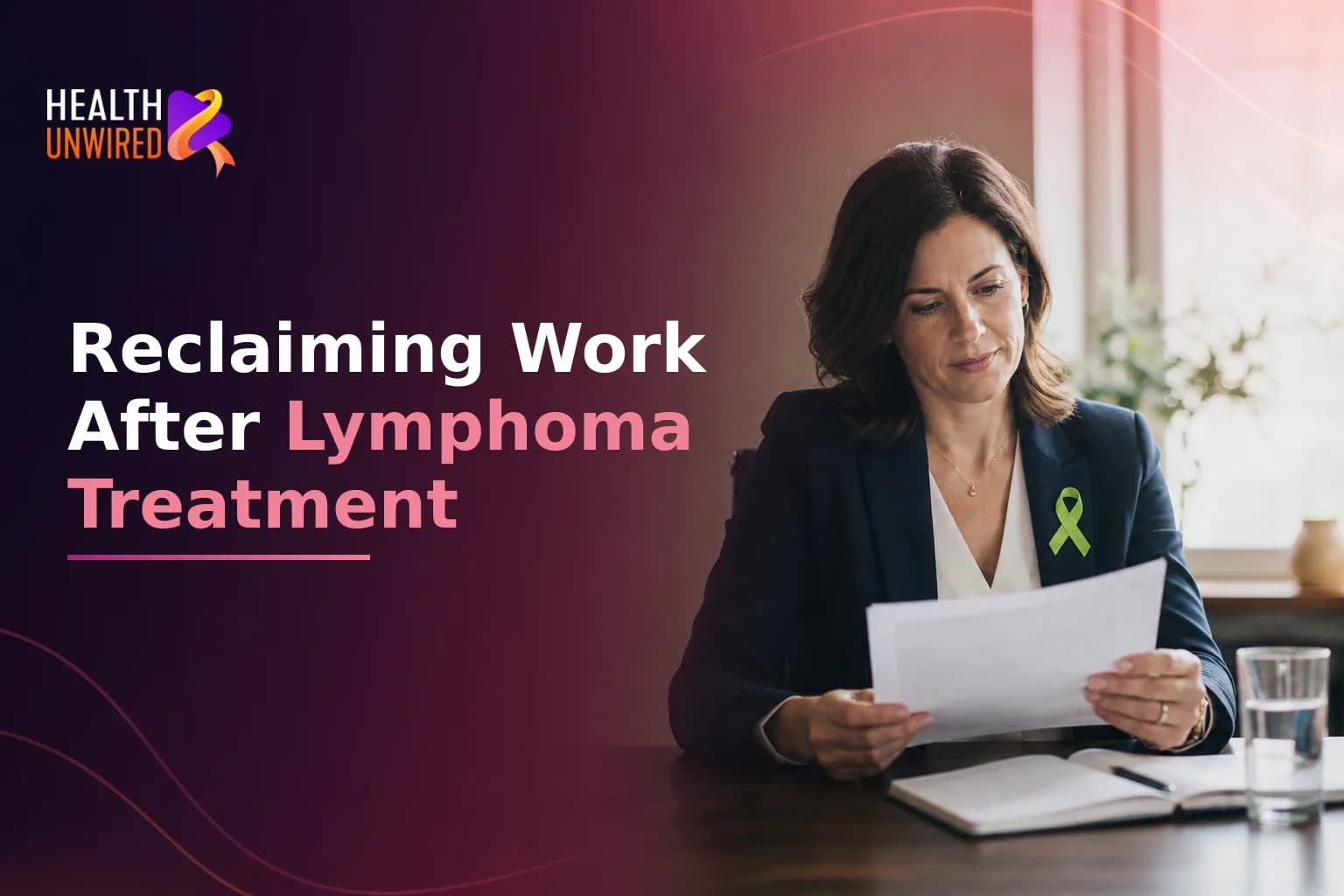
Finishing lymphoma treatment is a real turning point. The weeks or months of chemotherapy, radiation, immunotherapy, or stem cell transplants are behind you. But as hospital appointments slow down, a new question comes up: when should you go back to work, and how do you do it?
For many lymphoma survivors, returning to work is more complex than expected. Your body may still be recovering. Your mind may feel foggy. And your confidence may need time to catch up with your determination. All of this is normal, and you are not alone.
This article covers the most common challenges lymphoma survivors face when going back to work and offers practical strategies for managing your energy, caring for your mental health, and making the transition at your own pace.
Why Going Back to Work Feels Different After Lymphoma
Lymphoma treatment often involves powerful therapies like chemotherapy, radiation, immunotherapy, or stem cell transplants that help fight cancer cells but also put significant strain on the body. Side effects can last for months or even years after treatment ends.
Two of the most common side effects that affect return to work are cancer-related fatigue and cognitive changes, sometimes called chemo brain. These are not signs of weakness. They are physical effects of treatment that take time to resolve. Understanding them can help you plan your return more realistically and with compassion for yourself.
Cancer-Related Fatigue: More Than Just Feeling Tired
Cancer-related fatigue is one of the most widely reported side effects of lymphoma treatment. It is different from ordinary tiredness. Rest alone does not make it go away. Survivors often describe it as a deep, heavy exhaustion that makes even small tasks feel like a big effort.
According to the Mayo Clinic, cancer-related fatigue is the most common side effect of cancer and its treatment. It can result from the treatment itself, anemia, disrupted sleep, emotional stress, or changes in how the body uses energy.
Research on long-term Hodgkin lymphoma survivors shows that between 25% and 40% still experience chronic fatigue years after treatment ends. This level of fatigue can directly affect your ability to concentrate, manage a full workload, or handle everyday work pressures.
Fatigue tends to improve over time for most people. The pace is different for everyone. Knowing that this is a recognized medical condition, not a personal failing, is an important first step toward managing it well.
Cognitive Changes: What Is Chemo Brain?
Chemo brain is the everyday name for cognitive changes that many cancer survivors notice during or after treatment. You might find it harder to remember words, follow a conversation, or stay focused on a task. Some people describe it as thinking through a fog.
Research from the National Institutes of Health shows that up to 75% of cancer patients experience some level of cognitive impairment during treatment. Around 35% still notice these effects several years after treatment ends. For lymphoma survivors in roles that require close attention, sharp memory, or quick thinking, chemo brain can feel like a serious obstacle at work.
For most people, these effects improve gradually over time. Strategies like using written lists, breaking tasks into smaller steps, and scheduling demanding work during your most alert hours can make a real difference. For more on coping with cognitive changes during and after cancer treatment, see our article on managing chemo brain and cognitive changes during cancer treatment.
The Emotional Side of Returning to Work
Returning to work is both a physical and emotional challenge. Many lymphoma survivors feel anxious about being judged, worried about keeping up, or uncertain about who they are now that treatment is over.
Some people feel pressure—from themselves or from others—to return before they are ready. Others find that work brings a sense of purpose and routine that supports recovery. Both experiences are valid.
Anxiety, grief, and low confidence are all common after serious illness. If these feelings are persistent or get in the way of daily life, speaking with a counselor or therapist who understands cancer survivorship may help. Mental health is a real part of recovery, and you deserve support for it just as much as for your physical symptoms.
Planning Your Return: A Gradual Approach Works Best
A phased return to work—starting with reduced hours or lighter duties and building up slowly—tends to work better than going back full-time all at once. The American Cancer Society recommends speaking with your care team before making any decisions, so you have a realistic picture of your physical readiness before you commit to a schedule.
Some steps to consider as you plan:
- Start with fewer hours. Beginning part-time gives your body time to adjust. Even two or three days a week can be a significant effort in the early weeks.
- Choose the right time of day. If you feel better in the mornings, a schedule that starts and ends early may suit you better than a long full day.
- Plan rest in advance. Protect your evenings during the first weeks back. Avoid over-committing socially or to extra tasks at home during this adjustment period.
- Ask about remote working options. Working from home, even part of the time, can reduce the physical demands of commuting and give you more flexibility over your breaks and rest periods.
- Keep a simple energy log. Notice when you feel most alert and when fatigue peaks. Use this information to schedule your most demanding tasks at your best times of day.
Talking to Your Employer
In most countries, you are not legally required to tell your employer about a cancer diagnosis. However, sharing some information—even in general terms—may help you access the adjustments you need to return to your role successfully.
You might explain that you have been recovering from a serious illness and may need some flexibility as you return to your role. You do not have to use the word cancer if you prefer not to. Being clear about what you need, without sharing more detail than you are comfortable with, is a reasonable and professional approach.
When speaking with your employer or HR team, consider asking about:
- A phased or gradual return to full-time hours
- A reduced workload or adjusted responsibilities during the transition period
- Flexible start or finish times to support medical appointments or rest needs
- The option to work from home for some of your hours
- Access to an employee assistance program (EAP), if one is available
In many countries, people recovering from serious illness—including cancer—are protected by employment laws that require employers to make reasonable adjustments. A hospital social worker or patient advocacy organization can help you understand what rights apply to your situation.
Managing Your Energy During the Workday
Once you are back, protecting your energy becomes a daily practice. Small, consistent habits can have a meaningful effect on how you feel by the end of the day.
- Take regular short breaks. Stepping away from your desk for five to ten minutes every hour can stop deep fatigue from building up. A short walk, some light stretching, or a quiet moment away from your screen can help reset your energy.
- Stay hydrated and eat regularly. Dehydration and low blood sugar can make fatigue significantly worse. Keep water at your desk and eat small, balanced meals or snacks throughout the day rather than waiting for larger meals.
- Use memory tools. Write things down. Set calendar reminders. Use to-do lists. These practical tools are especially helpful when chemo brain makes it harder to keep track of everything in your head.
- Protect your evenings. Responding to late emails or taking on after-hours tasks may feel manageable at first, but can quickly drain your reserves. Set a clear boundary between work time and recovery time.
- Communicate with your team. You do not have to explain everything. Saying that you are managing your workload carefully, or asking for adjusted deadlines when needed, is both reasonable and professional.
For more strategies on managing fatigue after cancer treatment, our article on managing fatigue during cancer treatment covers practical approaches that many survivors find helpful.
Physical Activity and Recovery
Gentle physical activity may seem counterintuitive when you are already exhausted. But research consistently shows that regular, moderate movement may help reduce cancer-related fatigue over time.
The National Cancer Institute notes that staying active—even with short daily walks—may support energy levels and improve mood during recovery. You do not need to do anything intense. A walk around the block, some light stretching, or a gentle swim may make a noticeable difference over weeks and months.
Start slowly and increase activity at a pace that feels comfortable for your body. Listen carefully to how you feel. On days when fatigue is worse, rest is the right choice. Always speak with your doctor before starting or changing any exercise routine after cancer treatment.
Rebuilding Your Confidence
Confidence after cancer treatment takes time to return. Many survivors feel they have lost professional ground, or worry that others will notice changes in their performance or energy levels. These feelings tend to ease as you settle into a routine and begin to see what you are still capable of achieving.
A few approaches that may help:
- Set small, realistic goals. Focus on what you can do today, not on how you compare to yourself before treatment. Each small achievement builds confidence for the next step.
- Connect with other survivors. Peer support groups for lymphoma survivors—in person or online—can offer practical advice and reduce isolation. Hearing from people who have gone through the same journey can be genuinely reassuring.
- Consider professional support. A therapist with experience in cancer survivorship can help you work through anxiety, grief, or uncertainty about your identity and future after treatment ends.
- Be patient with yourself. Recovery is not a straight line. Some days will be harder than others. This does not mean you are failing; it means you are still healing, and that process takes real time.
When to Talk to Your Doctor
Talk to your oncologist or care team if any of the following apply to you:
- Fatigue is severe, worsening, or not improving over several weeks
- Memory problems or difficulty concentrating are significantly affecting your daily life or work performance
- You feel persistent low mood, anxiety, or emotional distress that is not improving
- You are unsure what level of physical activity is safe for your current stage of recovery
- You feel pressured to return to work before you feel ready and need support communicating your needs to your employer
Your care team may be able to refer you to occupational therapists, rehabilitation specialists, or psychologists with experience helping cancer survivors return to work. You do not have to go through this transition alone, and asking for help shows strength.
This article is for general information and is not a substitute for medical advice. Always consult your oncologist or care team about your specific situation.
Frequently Asked Questions
Similar Topics
Managing Chemo Brain and Cognitive Changes During Lung Cancer Treatment
Chemo brain is a common but often overlooked side effect of lung cancer treatment. Learn what causes cognitiv…
HealthUnwired Team
Jun 5, 2026

Managing Erectile Dysfunction After Prostate Cancer Treatment: Exploring Y…
Erectile dysfunction is one of the most common side effects after prostate cancer treatment, but many men are…
HealthUnwired Team
Jun 5, 2026
Understanding Your Lymphoma Diagnosis and Staging
A lymphoma diagnosis involves three steps: a biopsy, a pathology report naming your exact subtype, and a stag…
HealthUnwired Team
Sep 16, 2026