Lung Cancer Treatment Options and When to Get a Second Opinion
Surgery, radiation, chemotherapy, or targeted therapy - if you have a lung cancer diagnosis and a treatment plan in front of you, here is what each option means and when a specialist second opinion is worth the extra step.
Updated on Aug 2, 2026
A lung cancer diagnosis forces quick decisions. Within days or weeks, you may need to choose between treatment options you've likely never heard of. Surgery, radiation, chemotherapy, targeted therapy, and immunotherapy - your doctor may recommend one alone, or several together. This article explains what each option does, who it works best for, and when a second opinion makes sense.
Understanding your options means you're ready to ask the right questions and recognize the key factors that shape a recommendation. According to the American Cancer Society, about 77% of lung cancers are non-small cell lung cancer (NSCLC), and about 13% are small cell lung cancer (SCLC). Which type you have - and what stage it is at - are the two most important factors in deciding what treatment makes sense.
How Do the Main Lung Cancer Treatments Compare?
| Treatment | Best Used For | Key Eligibility Factor | Typical Setting |
|---|---|---|---|
| Surgery | Early-stage NSCLC (stages I-II and select III); resectable tumors | Adequate lung function; overall fitness for general anesthesia | Hospital inpatient; gradual recovery over several weeks |
| Radiation Therapy | Early-stage when surgery is not possible; stage III; alongside or after chemotherapy | Tumor location suitable for targeting; prior lung health considered | Outpatient center; multiple sessions over weeks (fewer with SBRT) |
| Chemotherapy | Any stage; SCLC; combined before or after surgery; advanced NSCLC | Adequate kidney and liver function; performance status | Infusion center (IV) or oral tablets at home, depending on the drug |
| Targeted Therapy | NSCLC with a confirmed gene mutation (EGFR, ALK, ROS1, and others) | Biomarker test confirming a targetable mutation is required | Daily oral pills taken at home; regular monitoring visits |
Sources: National Cancer Institute NSCLC Treatment Overview; American Cancer Society Targeted Therapy for NSCLC.
No single approach is universally better than the others. The right treatment depends on your cancer type, stage, tumor genetics, lung function, and personal health goals. In many cases, two or more treatments are used together. The table above is a starting point for conversations with your care team - not a substitute for their evaluation of your specific case.
Surgery: Removing the Tumor Directly
Surgery is one of the most direct ways to treat early-stage NSCLC. According to the National Cancer Institute, doctors commonly use surgery for stages I and II and select stage III cases, but rarely for stage IV. The most common approach removes one lobe of the lung - called a lobectomy. In some cases, doctors remove a smaller section of tissue (a wedge or segment) instead, to preserve more lung capacity.
Minimally invasive techniques such as video-assisted thoracoscopic surgery (VATS) or robot-assisted surgery let surgeons work through small cuts rather than a large chest opening. Recovery time varies, but many patients spend several days in the hospital followed by weeks of gradual recovery at home, with breathing exercises helping lung function return over time.
Your suitability for surgery depends on more than the cancer stage. Doctors look at lung function tests, heart health, and tumor location. If your lung function is borderline, surgery may still be possible with a smaller resection. Getting a second opinion from a thoracic surgeon at a specialist center can change your options here.
Radiation Therapy: Targeting the Tumor With High-Energy Beams
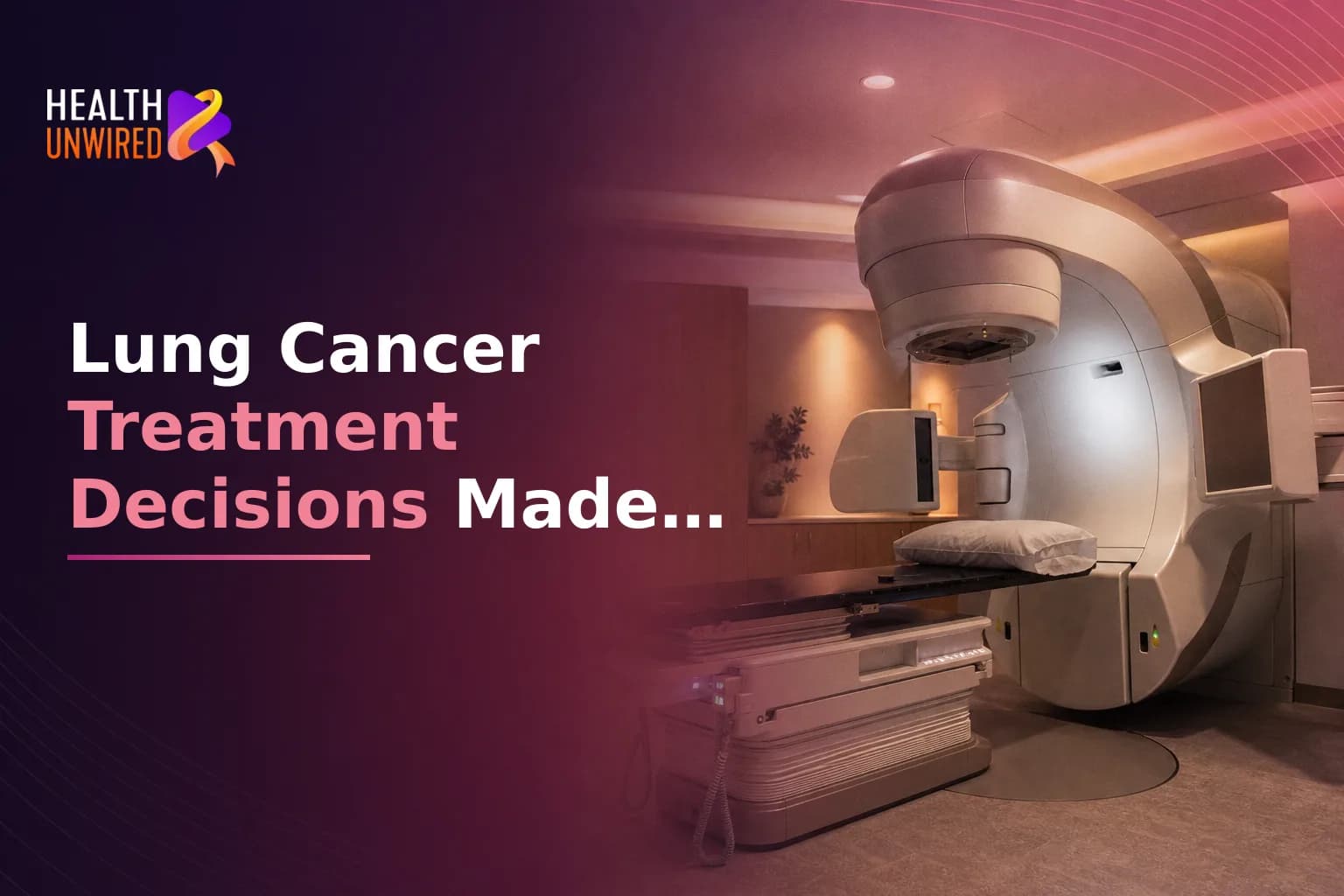
Radiation therapy uses high-energy beams to damage cancer cell DNA and stop cells from dividing. Doctors use it in several different ways depending on your cancer stage.
For early-stage patients who cannot have surgery - because of age, reduced lung function, or other conditions - stereotactic body radiation therapy (SBRT) delivers a small number of precise, high-dose sessions over a few days. For advanced stages, doctors typically give conventional radiation over several weeks, often with chemotherapy, to control the disease in the chest.
Side effects depend on the treatment area. Fatigue is common. Some patients develop temporary throat or chest soreness. A less common but serious risk is radiation pneumonitis - inflammation of lung tissue - that your care team will watch for during and after treatment.
Chemotherapy: Treatment That Reaches the Whole Body
Chemotherapy uses drugs that travel through the bloodstream to reach cancer cells throughout the body. This makes it useful when cancer has spread beyond the lung, or when scans may have missed spread.
For SCLC, chemotherapy is typically central to treatment at any stage. For NSCLC, doctors may use it before surgery to shrink a tumor, after surgery to lower recurrence risk, alongside radiation, or as the main approach at advanced stages. Doctors usually give drugs through an intravenous line at an infusion center, though some drugs come as oral tablets.
Common side effects include fatigue, nausea, and a temporary drop in blood cell counts, which raises infection risk. Your team will monitor your bloodwork throughout and may adjust doses or timing based on how your body responds.
Targeted Therapy: Treating the Tumor's Genetic Driver
Targeted therapy is a growing field in lung cancer care. These drugs block specific proteins or gene mutations that help cancer cells grow. For targeted therapy to work, your tumor must carry the specific mutation the drug targets - which is why biomarker testing (analyzing your tumor's DNA) is essential before starting.
NSCLC testing commonly looks for EGFR, ALK, ROS1, and other mutations, as outlined in the American Cancer Society's overview of targeted therapies for NSCLC. If your tumor carries one of these mutations, the matching drug may be considerably more effective than standard chemotherapy, and you often take it as a daily oral pill with different side effects.
If you haven't had full biomarker testing, ask your oncologist about it before committing to a plan. Comprehensive molecular profiling takes one to two weeks, but the results may significantly change your treatment recommendations. For a plain-English guide, see our article on what your tumor's molecular profile means for treatment.
Immunotherapy: Helping Your Immune System Fight Back
Immunotherapy drugs help the immune system recognize and attack cancer cells. In lung cancer, PD-1 and PD-L1 inhibitors have become an important option for certain NSCLC patients - particularly those whose tumors have high levels of a protein called PD-L1. Doctors may give immunotherapy alone or combined with chemotherapy, depending on your tumor's traits and additional test results.
Side effects differ from chemotherapy. They can affect the immune system, sometimes causing inflammation in the lungs, gut, liver, or skin. Your team can manage most immune-related side effects well if you catch them early, which is why regular monitoring is essential.
How Does Your Doctor Decide What to Recommend?
Your oncologist's recommendation brings together several pieces of information at once:
- The type of lung cancer (NSCLC or SCLC)
- The stage - how far the cancer has spread
- Biomarker and molecular test results from your tumor tissue
- Your overall health, lung function, and fitness for treatment
- Your personal priorities and tolerance for certain side effects
- Whether the goal of treatment is cure, long-term control, or managing symptoms
In many cases, a tumor board - a group of specialists including surgeons, radiation oncologists, medical oncologists, and pathologists - reviews complex cases together and agrees on a combined plan. Not all hospitals have a formal tumor board. If yours doesn't, ask whether more than one specialist can review your case - this is a fair question to raise.
When Should You Get a Second Opinion on Your Lung Cancer Treatment?
A second opinion is normal in cancer care - not a sign of distrust in your doctor. The American Cancer Society notes that it can give you more information and help you feel confident about your treatment plan. These situations make a second opinion worth pursuing:
- You haven't had full biomarker testing and your oncologist hasn't raised it
- You've been told surgery is not possible and want to know if that holds at a specialist center
- Your tumor type is rare, or the stage puts you on the borderline between two different treatment paths
- You are being seen at a general hospital rather than a comprehensive cancer center
- The treatment plan feels incomplete, or key questions went unanswered at your appointment
- You are weighing treatment at a specialist or international center for cost or access reasons
A second opinion doesn't always change the plan - but when it does, the changes can be meaningful. You can read more about what typically changes after a second opinion in cancer care and what a fresh specialist review tends to uncover. If you wonder whether an online review carries the same weight as an in-person one, our piece on whether online lung cancer second opinions are reliable explains the process and what a written oncologist report covers.
Getting a Second Opinion Without Leaving Home
If travel is hard - because of distance, cost, or how you feel right now - an online second opinion can bring specialist review to you. At HealthUnwired, you upload your scans, pathology report, and case notes securely, then connect by video with a verified oncologist who specializes in lung cancer. A detailed written report follows within 48 hours. You don't travel, wait weeks, or interrupt your existing care.
When to Talk to Your Doctor
If you're uncertain about any part of your diagnosis, haven't been offered biomarker testing, are weighing different treatment paths, or want a specialist to review your plan before you commit - these are all sound reasons to ask for more input. The conversation can happen at any point: before treatment starts, between cycles, or if your plan needs to change.
This article is for general information and is not a substitute for medical advice. Always consult your oncologist or care team about your specific situation.
Read the full guide
Similar Topics
Lung Cancer Treatment in India for Pakistani Patients
Pakistani patients seeking specialist lung cancer care can access quality treatment in India at significantly…
HealthUnwired Team
Sep 11, 2026
Prepare Your Lung Cancer Records for an Online Second Opinion
Knowing which documents to gather - from pathology slides to molecular test results to DICOM scan files - sha…
HealthUnwired Team
Sep 4, 2026

Lung Cancer Treatment in India for West African Patients
West African patients with lung cancer increasingly travel to India for comprehensive molecular testing, spec…
HealthUnwired Team
Aug 21, 2026