Should I Preserve My Fertility Before Ovarian Cancer Treatment? What You Need to Know
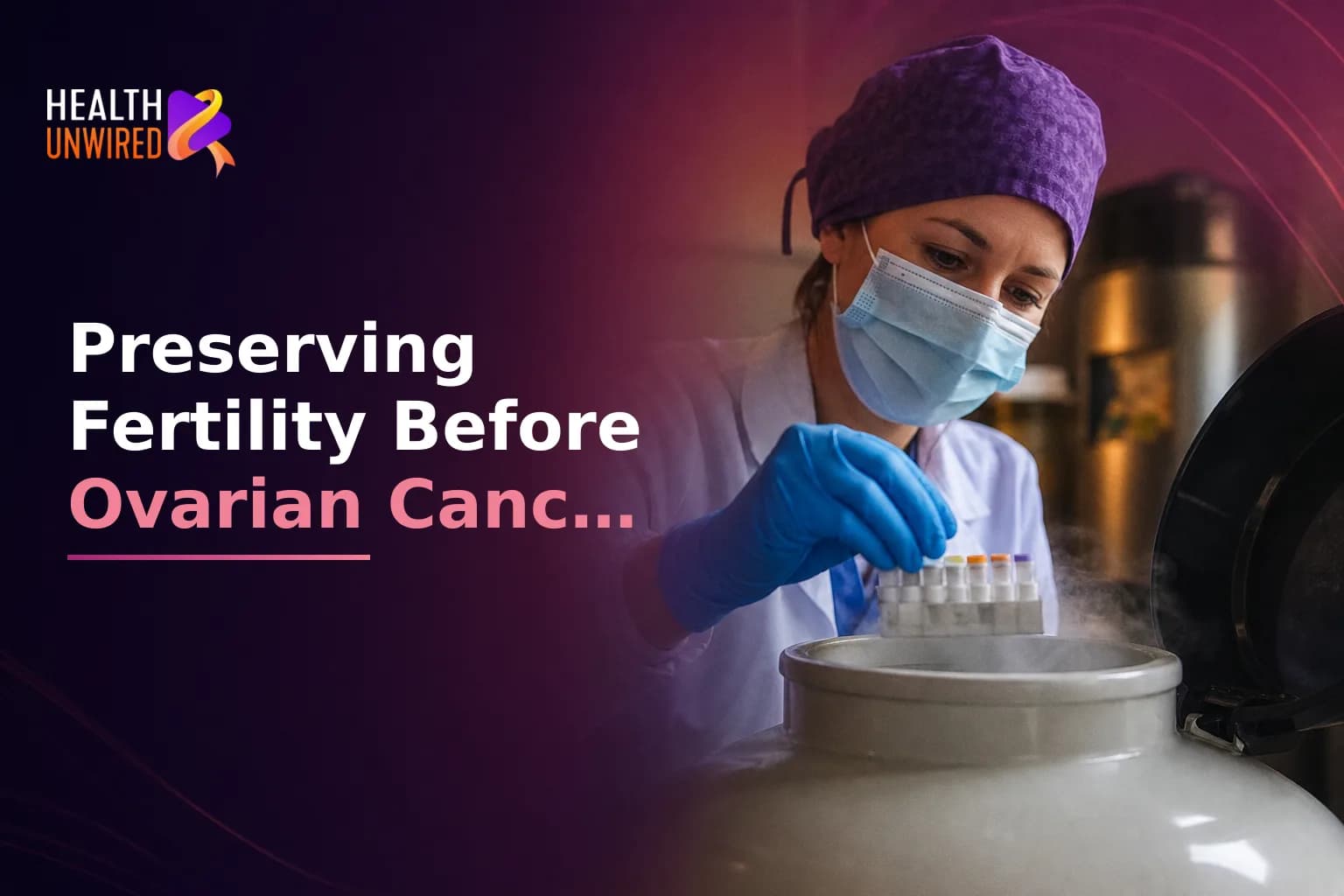
If you are diagnosed with ovarian cancer during your reproductive years, there may be steps you can take to protect your ability to have children before treatment begins. Learn which options exist, who is a candidate, and how to start this conversation with your care team.
Updated on Jun 8, 2026
A Question That Feels Urgent and Personal
A diagnosis of ovarian cancer brings many decisions at once. For some people, one pressing question involves having children in the future. If you are in your reproductive years and have not finished your family, you might wonder: can I do something to protect my fertility before treatment starts?
For many people, the answer is yes. You need proper timing, the right team, and an honest conversation with your oncologist. This article explains what fertility preservation is, what options may be available, who is a good candidate, and what questions to ask your care team.
How Ovarian Cancer Treatment Can Affect Fertility
Ovarian cancer treatment often involves surgery to remove one or both ovaries. When both ovaries are removed, your body can no longer produce eggs or the hormones needed for pregnancy. Even when surgery removes less tissue, chemotherapy can damage the egg-producing tissue inside the ovaries.
Chemotherapy drugs used for ovarian cancer, including platinum-based compounds and taxanes, work by targeting fast-dividing cells. The follicles that hold your eggs are also fast-dividing. As a result, chemotherapy may reduce the number of viable eggs that remain after treatment ends. How much this happens depends on the specific drugs used, the doses, and your age at the time of treatment.
Not everyone diagnosed with ovarian cancer is in their reproductive years. But ovarian cancer does affect younger people. Research from the National Institutes of Health estimates that between 3% and 14% of people with ovarian cancer are diagnosed during their fertile years. For those individuals, the question of fertility preservation is important to explore early.
Who Should Consider Fertility Preservation?
Fertility preservation may be worth discussing with your oncologist if several of the following factors apply to you:
- You have not yet finished your family and want the option to have children in the future.
- You are premenopausal at the time of diagnosis.
- Your cancer has been found at an early stage.
- Your overall health allows for a brief procedure or short delay before treatment begins.
Your care team, ideally including both an oncologist and a reproductive specialist, can help you understand whether you are a good candidate based on your specific diagnosis, tumor characteristics, and overall health. This is not a decision you have to make alone.
Your Fertility Preservation Options
Several approaches to fertility preservation exist. Some take place before treatment begins. Others may be explored after treatment ends. Not every option is right for every person. Eligibility depends on your cancer stage and type, your age, your overall health, and how quickly treatment needs to begin. The following options are among those your care team may discuss with you.
Fertility-Sparing Surgery
For people with very early-stage ovarian cancer, surgery does not always require removing both ovaries. In carefully selected cases, a surgeon may be able to remove only the ovary that contains cancer while leaving the uterus and the other ovary in place. Doctors call this fertility-sparing surgery, or conservative surgery.
According to published research on fertility-sparing approaches in ovarian cancer, this option is generally considered for people with stage IA, grade 1, or low-grade tumors. This means the cancer is confined to one ovary and shows signs of slower growth. Certain stage IC cases may also be reviewed individually, depending on the tumor type.
Fertility-sparing surgery works best in specific situations. If the cancer has spread beyond the ovary or if the tumor is high-grade, a more extensive surgical approach is typically needed. Your surgeon will review your staging results and tumor characteristics carefully before any recommendation is made. Completing your cancer staging first is an essential step.
Egg Freezing (Oocyte Cryopreservation)
Egg freezing is one of the most widely used fertility preservation methods before cancer treatment. Over roughly ten to fourteen days, hormone injections stimulate your ovaries to produce multiple eggs at once. A doctor collects these eggs through a minor outpatient procedure and freezes them for future use.
The American Cancer Society describes egg freezing as an established fertility preservation option recommended for people planning cancer treatment. The number of eggs retrieved is an important factor. Your reproductive specialist will review this with you based on your age and other circumstances and will give you a realistic picture of what to expect.
Mayo Clinic notes that egg freezing is considered one of the most reliable options available, particularly for people who are not yet in a relationship or do not wish to use donor sperm at this time.
Embryo Freezing (Embryo Cryopreservation)
If you have a partner or plan to use donor sperm, embryo freezing is another established option. The process begins the same way as egg freezing: hormone injections stimulate the ovaries, and a doctor retrieves the eggs. Doctors then fertilize the eggs in a laboratory, and the resulting embryos are frozen for future use.
Embryo freezing tends to have higher success rates than egg freezing alone and is considered one of the most reliable fertility preservation methods available. However, this option requires making a decision about using sperm before treatment starts, which is not the right choice for everyone. Your care team will not pressure you either way. The choice is entirely yours to make in your own time.
Ovarian Tissue Freezing
Ovarian tissue freezing is a newer approach. During a surgical procedure, a surgeon removes a portion of ovarian tissue — sometimes an entire ovary — and freezes it. After cancer treatment is finished, doctors may reimplant the tissue in your body to restore the possibility of natural conception or egg retrieval.
This method can be useful for people who cannot delay treatment long enough for egg or embryo freezing, or for those who have not yet gone through puberty. However, there is an important concern specific to ovarian cancer: because the cancer starts in the ovaries, reimplanting frozen ovarian tissue carries a theoretical risk of reintroducing cancer cells into the body. For many ovarian cancer patients, this method is not recommended for that reason. Your medical team will let you know whether it may be appropriate given your specific tumor type and stage.
In Vitro Maturation — An Emerging Option
In vitro maturation, known as IVM, involves collecting immature eggs from the ovaries without full hormone stimulation and allowing them to mature in a laboratory before freezing. This approach takes less time than standard egg freezing and avoids high-dose hormone injections, which may matter if your tumor is hormone-sensitive or if treatment needs to begin very quickly.
The American Society of Clinical Oncology updated its clinical practice guidelines in 2025 to include IVM as an emerging option suitable for some patients. It is not yet as widely available as egg or embryo freezing, and long-term success rates continue to be studied. Ask your care team whether this option is available at your treatment center or through a referral.
Will Fertility Preservation Delay My Treatment?
This is one of the most common concerns, and a completely understandable one. Cancer treatment often feels like it needs to begin immediately, and every day carries weight.
For many people in appropriate clinical situations, a brief delay to complete egg or embryo freezing does not significantly affect cancer outcomes. Clinical guidelines generally support a short window for fertility preservation in eligible candidates. Reproductive specialists can also begin ovarian stimulation at any point in the menstrual cycle rather than waiting for a specific day, which shortens the time required.
The decision about timing belongs to you and your oncology team. If treatment needs to start right away, your team will tell you clearly. If a safe window exists, they can connect you with a reproductive specialist quickly so you can move forward without unnecessary delay.
Questions to Ask Your Care Team
Before your next appointment, consider writing down your questions so you do not forget them in the moment. A few to start with:
- Based on my cancer stage and tumor type, am I a candidate for fertility-sparing surgery?
- How long can treatment safely be delayed so I can complete fertility preservation?
- Can you refer me to a reproductive endocrinologist or oncofertility specialist?
- Are there any preservation methods that are not appropriate for my tumor type?
- What are realistic expectations for the options that apply to my situation?
- Are there financial assistance programs to help with the cost of fertility preservation?
These conversations can feel hard to start right after a diagnosis. But your care team expects these questions and wants to help you think through all of your options. Asking early means more doors stay open.
The Emotional Weight of This Decision
Fertility preservation is not only a medical decision. For many people, it touches something deeply personal: hope for a family, a sense of the future, and grief over what a cancer diagnosis may change. Some people feel clear and ready to act quickly. Others feel overwhelmed by the idea of adding another procedure to an already frightening situation. Both responses make complete sense.
If the emotional weight of this decision feels heavy, speaking with a social worker, counselor, or patient navigator at your cancer center can help. Some cancer centers have dedicated oncofertility counselors trained to support both the practical and emotional dimensions of this choice. Patient advocacy organizations focused on ovarian cancer can also connect you with people who have faced the same decision and found their way through it.
If you go on to receive chemotherapy, you may also want to learn about the other ways treatment can affect your body. Our article on chemotherapy-induced side effects and how to find relief offers useful context on what to watch for during treatment.
A Word on Cost and Access
Fertility preservation can be expensive, and insurance coverage varies widely depending on where you live and your plan. Some cancer centers partner with fertility clinics to offer reduced rates for cancer patients. Nonprofit organizations in several countries help cover fertility preservation costs for patients who cannot afford them. Ask your care team's social worker or patient navigator what is available in your area. Financial concerns should not stop you from talking about fertility preservation.
When to Talk to Your Doctor
Talk to your oncologist about fertility preservation as soon as possible after diagnosis, ideally before your treatment plan is finalized. The earlier this conversation starts, the more options may remain available to you. If your oncologist does not raise the subject, it is completely appropriate for you to bring it up. You can also ask for a referral to a reproductive specialist at any point in your care.
This article is for general information and is not a substitute for medical advice. Always consult your oncologist or care team about your specific situation.
Frequently Asked Questions
Read the full guide
Similar Topics
Ovarian Cancer Treatment in India for Kenyan Patients
Kenyan patients researching ovarian cancer treatment in India will find specialist gynecologic oncology teams…
HealthUnwired Team
Sep 8, 2026
Ovarian Cancer Second Opinion: What Gynecologic Oncologists Review
A gynecologic oncologist reviews far more than a single test result in an ovarian cancer second opinion. Lear…
HealthUnwired Team
Aug 29, 2026
Ovarian Cancer and Fertility: Should You Preserve Your Options?
A new ovarian cancer diagnosis and the wish to have children do not have to be in conflict. Here is what you …
HealthUnwired Team
Aug 23, 2026