Expert Colorectal Cancer Care on Your Budget: How Online Second Opinions Expand Treatment Options Without Hospital Costs
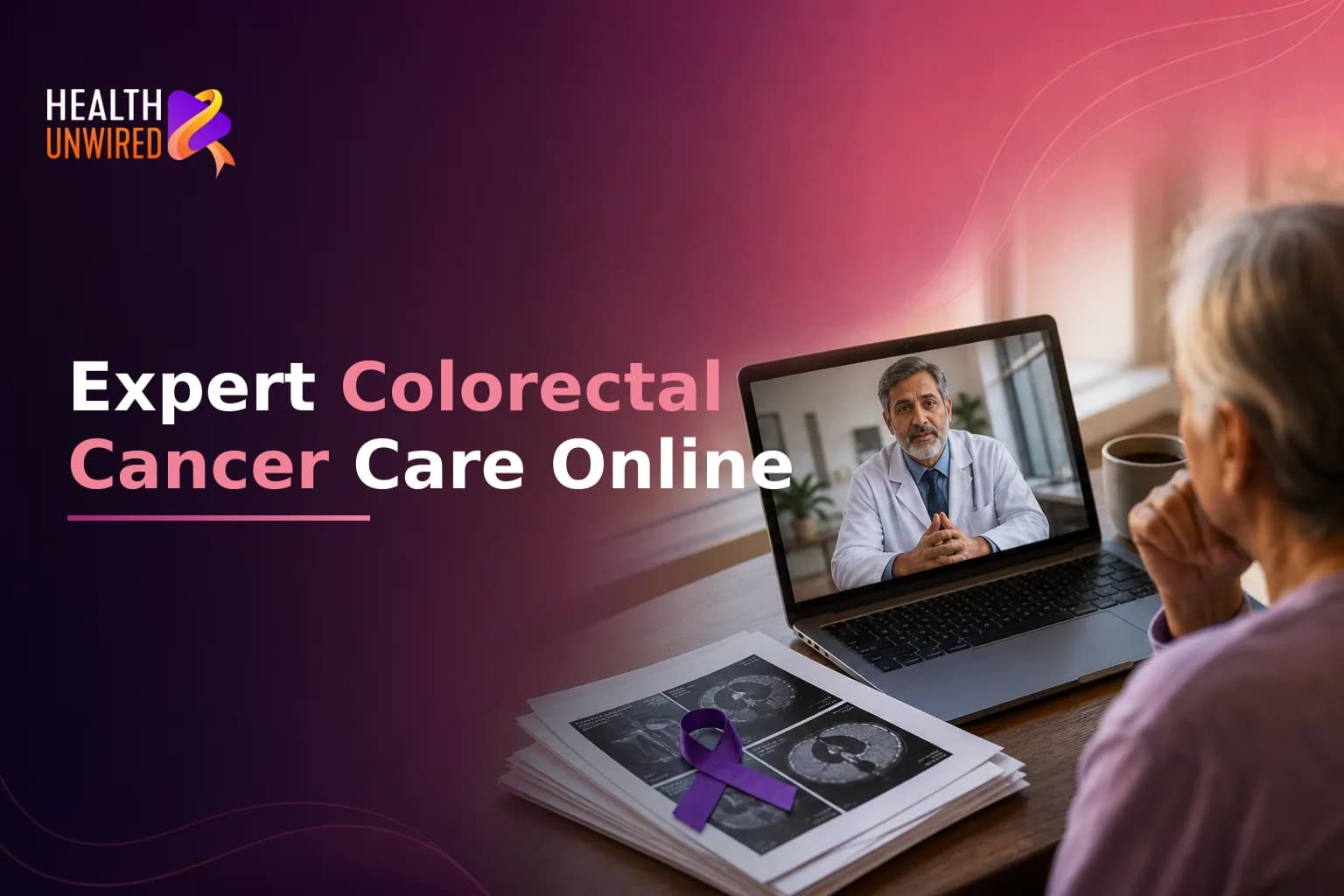
Colorectal cancer treatment decisions are more complex than most patients realize - and expert review is now more accessible than ever. An online specialist second opinion may reshape your treatment plan without the cost of traveling to a major cancer center.
Updated on Jun 17, 2026
When the Diagnosis Arrives and the Questions Begin
A colorectal cancer diagnosis often comes quickly. One day you're waiting for test results. The next, you're holding a report you don't fully understand, and someone is already discussing surgery dates.
Many patients see only their first oncologist. That's partly habit, partly fear of seeming difficult, and partly cost. A specialist second opinion at a major cancer center usually means travel, hotel costs, and high fees.
But this has changed. Online oncology consultations now let patients in the UK, the US, Australia, Canada, France, Germany, the UAE, and other countries connect with colorectal cancer specialists from home. This article explains how online consultations work, why they help, and how to use one for your case.
What You Are Dealing With: A Brief Overview of Colorectal Cancer
Colorectal cancer starts in the colon or rectum, the lower parts of the digestive system. Most cases develop slowly from small growths called polyps. Not all polyps become cancer, but the ones that do can grow through the bowel wall and spread to other organs if untreated.
Doctors classify colorectal cancer by stage - from Stage I (limited to the inner bowel lining) to Stage IV (spread to distant organs like the liver or lungs). According to the National Cancer Institute's SEER program, colorectal cancer is among the most commonly diagnosed cancers in many countries.
The American Cancer Society reports that early-onset colorectal cancer is rising in 27 of 50 countries studied, with younger adults being diagnosed more often than before. This means more people face these decisions when access, cost, and career impact matter most.
Stage matters for treatment planning. So does tumor biology. Two patients at the same stage may have different tumor markers that call for completely different treatments.
Treatment Options: Broader Than Many Patients Realize
Colorectal cancer treatment has expanded in recent years. You have more choices than surgery and standard chemotherapy. Understanding your options helps you ask better questions and recognize possibilities you might not have known about.
Surgery
Surgery is the most common treatment for early-stage colorectal cancer. Depending on the tumor's location and size, surgery may range from a minimally invasive laparoscopic removal to a more extensive open resection. For rectal cancer, the surgical approach can significantly affect long-term bowel function and quality of life. Some patients told they need a permanent colostomy at one center find that a sphincter-preserving approach is possible at a higher-volume hospital.
Chemotherapy
Chemotherapy is often used before surgery to shrink the tumor, after surgery to reduce recurrence risk, or as the main approach for advanced disease. According to the National Cancer Institute's treatment guidelines, chemotherapy for advanced colorectal cancer is commonly combined with targeted agents to improve response rates.
Radiation Therapy
Radiation is used more often for rectal cancer than colon cancer. It may be delivered before surgery to shrink the tumor, after surgery to address remaining disease risk, or combined with chemotherapy. Newer techniques allow more precise delivery with fewer side effects.
Targeted Therapy
Targeted drugs work against specific proteins that help cancer cells grow. For colorectal cancer, these include agents that block blood vessel growth and others that act on signals at the cancer cell surface. As the American Cancer Society explains, which targeted drugs may help you depends on the specific genetic mutations in your tumor - which is why molecular testing matters before any treatment plan is finalized.
Immunotherapy
Immunotherapy helps the immune system recognize and attack cancer cells. It most likely helps colorectal cancers with a specific marker called MSI-H (microsatellite instability-high) or dMMR (mismatch repair deficiency). The National Institutes of Health confirms that testing for KRAS, NRAS, BRAF, and MSI status is recommended for patients with metastatic colorectal cancer - these markers help predict which treatments will work for your tumor.
Questions That Patients Often Carry Into a Consultation
If you just got a diagnosis, you likely have several urgent questions. These are the ones that come up most often:
- Is surgery definitely needed, or are other approaches worth considering?
- Has my tumor been fully tested for KRAS, NRAS, BRAF, and MSI status?
- Can my cancer be surgically removed, or should that assessment be reviewed?
- Are there clinical trials I should know about before I commit to treatment?
- How will the recommended approach affect my daily function and quality of life?
These are important questions. They deserve careful, expert answers, not rushed ones in a brief appointment. That's where a second opinion helps.
Why Patients Seek Expert Second Opinions for Colorectal Cancer
A second opinion isn't about doubting your doctor. It's a standard step in cancer care. Colorectal cancer decisions can be complex. Different specialists may reach different conclusions, especially for advanced cases.
Patients most often seek second opinions when:
- Biomarker testing feels incomplete. Not every facility tests for all recommended markers. A specialist review can find gaps and point to different treatment options.
- The treatment plan involves life-changing surgery. If a procedure would change your daily life, like a permanent stoma, it makes sense to confirm it's the best choice.
- The cancer is advanced or borderline resectable. When colorectal cancer has spread to the liver or lungs, experts may disagree on whether surgery is possible.
- Access to clinical trials is a priority. Specialists at larger centers may know of studies not available at smaller hospitals.
- The diagnosis itself feels uncertain. Rare tumor types need a specialist pathologist's review before starting treatment planning.
For more on how specialist input changes treatment plans, read our article on colorectal cancer treatment decisions and why specialist input matters.
How Online Oncology Consultations Work
Getting an online second opinion is more straightforward than many patients expect. Here's what a typical consultation involves:
- Upload your records. You gather your pathology reports, imaging scans, surgical notes, and treatment summaries, then upload them securely through the platform.
- Choose a specialist. You browse profiles of colorectal cancer specialists and select one based on their sub-specialty focus and experience.
- Book a video consultation. You choose a time that works for you. Because the specialist reviews your records first, the session is focused and efficient.
- Receive a written report. After the consultation, you get a written summary of the specialist's assessment and recommendations - a document you can share with your local care team.
This consultation doesn't replace your own doctor. It adds an expert review that you bring back to your own oncologist. Most oncologists welcome additional specialist input on complex cases.
What Online Access Actually Changes
For patients with colorectal cancer, there are several concrete benefits to getting an online specialist consultation:
- Sub-specialty depth. A colorectal oncology specialist brings focused experience that may not be available at a general hospital or smaller regional center.
- No geographic barrier. Whether you are in rural Canada, regional Australia, a smaller European country, or a location with limited oncology access, you can reach the same specialists as patients in major cities.
- Speed when it matters. Online consultations typically happen within days of uploading your documents - often faster than an in-person appointment at a specialist center.
- A written record for your care team. The specialist's opinion becomes part of your file and gives you something to discuss at your next oncology appointment.
- Lower overall cost. You pay the consultation fee - not travel, accommodation, or hospital facility charges that come with in-person visits to major centers.
Preparing for Your Online Consultation
The more complete your records are, the more useful the specialist's review will be. Before you book, pull together the following:
- Your pathology report. The full report from your biopsy or surgical specimen, including any molecular or biomarker testing results such as KRAS, NRAS, BRAF, MSI, and HER2.
- Imaging reports and scan files. CT, MRI, and PET scan reports and - ideally - the scan files themselves in DICOM format or through a shared imaging portal link.
- Staging documentation. Any report that describes the stage and extent of your cancer.
- Your current treatment plan. A summary of what your doctor has recommended, including any procedures already scheduled.
- A written list of questions in priority order. The consultation has a set time limit. Having your questions ready ensures you cover what matters most before the session ends.
If you are a caregiver coordinating this process for a loved one, the steps are the same. Our caregiver guide to specialist consultations walks through how to make the most of these conversations - much of it applies across cancer types.
If chemotherapy is part of your upcoming treatment, side effects such as peripheral neuropathy are worth raising with your specialist. Our article on chemotherapy-induced neuropathy covers what to expect and what questions to prepare.
Next Steps After Your Consultation
Once you have the specialist's written report, here's how to use it:
- Share it with your treating oncologist. Schedule a follow-up with your local team to go through the specialist's findings together. Most oncologists will discuss the report openly and explain where they agree or see things differently.
- Ask specific follow-up questions. If the specialist recommended additional biomarker testing or a different surgical approach, ask your local doctor to address those points before decisions are finalized.
- Consider a multidisciplinary tumor board review. For complex or advanced cases, a second opinion may prompt your care team to bring your file to a formal multidisciplinary review - a process that can improve treatment planning.
- Look into clinical trials. If the specialist mentioned a relevant study, ask your oncologist how to explore eligibility. ClinicalTrials.gov lists ongoing studies by cancer type, location, and eligibility criteria and is freely available to patients worldwide.
Ready to Get an Expert View on Your Case?
If you face a colorectal cancer treatment decision and want expert input beyond your current care team, an online specialist consultation may be the best step you can take right now. You don't need to travel. You don't have to work through hospital referrals or wait weeks for a clinic appointment. You need your medical records, your schedule, and the right specialist.
Upload your pathology report. Upload your imaging scans. Book a consultation with a colorectal cancer specialist who has the experience your case deserves - and bring that expert perspective into your next treatment conversation.
When to Talk to Your Doctor
Consider seeking specialist input if you are unsure about a recommended treatment plan, if your biomarker testing feels incomplete, if your cancer has been described as borderline resectable, or if you want to know whether a clinical trial might help your situation. Bring any written second opinion back to your treating oncologist and work through the findings together before making final decisions.
This article is for general information and is not a substitute for medical advice. Always consult your oncologist or care team about your specific situation.
Frequently Asked Questions
Read the full guide
Similar Topics

Colorectal Cancer Second Opinion: What Oncologists Review
When you have a colorectal cancer diagnosis or treatment plan in hand, a specialist second opinion re-examine…
HealthUnwired Team
Sep 8, 2026

Colorectal Cancer Treatment Costs in India, the US, and the UK
Surgery and chemotherapy for colorectal cancer can cost very different amounts depending on where you are tre…
HealthUnwired Team
Aug 25, 2026

Colorectal Cancer Treatment in India for UAE Patients
UAE patients with colorectal cancer increasingly travel to India for access to specialist oncology units and …
HealthUnwired Team
Aug 6, 2026