Prostate Cancer Treatment in India for South African Patients
Prostate cancer is the most common cancer in South African men. If access or cost is a barrier to specialist care or newer therapies such as Lu-177 PSMA, India may offer a practical alternative.
Updated on Aug 11, 2026
Prostate cancer affects more South African men than any other cancer, based on data from the IARC GLOBOCAN South Africa fact sheet. If you've just received a diagnosis - or you have a treatment plan and are wondering whether care in India might offer better access or lower cost - this guide explains what's available.
Indian hospitals have treated prostate cancer patients from other countries for many years. They offer robotic surgery, radiation therapy, hormone therapy, and newer radioligand therapies like Lu-177 PSMA. Treatment costs are much lower than private care in most countries, and major hospitals have English-speaking coordinators and international patient departments. This guide covers what treatments are available, what they cost, and how to arrange the trip from South Africa.
Why South African Men Often Seek Prostate Cancer Care Abroad
Many South African men find out they have prostate cancer only after it has spread. This limits local treatment choices. Getting specialist cancer care depends on whether you use the public or private system and where in the country you live. Research on prostate cancer trends in South Africa shows that late-stage diagnosis is common, which makes having access to many treatment options especially important.
Men with metastatic castration-resistant prostate cancer (cancer that has spread and no longer responds to hormone therapy) may find some newer treatments hard to access or afford locally. India has offered this treatment for several years and makes the radioactive material (lutetium-177) domestically, which makes it cheaper than almost anywhere else.
Many South African patients consider India for earlier-stage disease too. They want access to many specialists, modern equipment, and lower costs. It's worth getting a second opinion before starting any major treatment. See Prostate Cancer Treatment in India: Cost, Expertise, and Access for International Patients for a full overview.
What Prostate Cancer Treatments Are Available in India?
Top Indian cancer hospitals offer all the treatments that international experts recommend. Your treatment depends on your PSA level (a protein in the blood that tracks prostate cancer), your Gleason score (how aggressive the cancer looks under a microscope), your cancer stage, and your overall health. An oncologist in India will review all this before recommending a plan. The National Cancer Institute offers a plain-language guide to the main treatment types.
Robotic Radical Prostatectomy
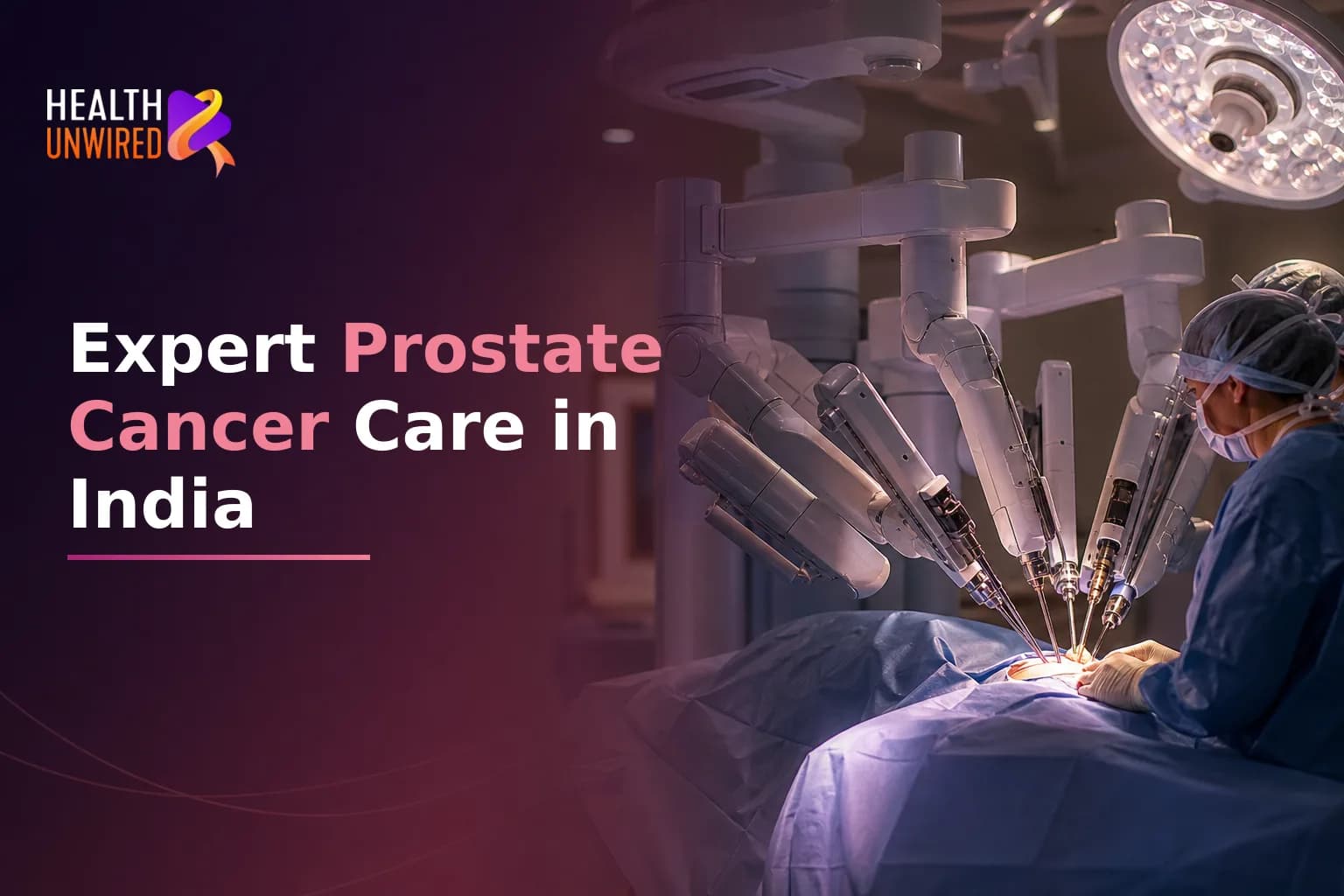
Major Indian hospitals remove your prostate using both open and robot-assisted (da Vinci) surgery. Robot-assisted surgery usually means smaller cuts, less bleeding, and faster recovery. Your surgical team will consider your disease stage and overall health to decide if surgery is right for you.
Radiation Therapy
Your options include intensity-modulated radiation therapy (IMRT), stereotactic body radiation therapy (SBRT), and brachytherapy (radioactive seeds placed inside the prostate). Indian hospitals have equipment that matches what you'd find in Europe or the US, but costs much less.
Hormone Therapy
Androgen deprivation therapy (ADT) lowers the male hormones that fuel prostate cancer growth. Doctors throughout India offer it, and it often works well with surgery or radiation. It can also be the main treatment for advanced disease.
Lu-177 PSMA Radioligand Therapy
For men with metastatic castration-resistant prostate cancer, Lu-177 PSMA therapy is a major recent breakthrough. It uses a radioactive substance that targets prostate cancer cells with a surface protein called PSMA. The radiation hits cancer cells throughout the body while limiting damage to healthy tissue.
Studies show it works. In the VISION trial, men who got Lu-177 PSMA-617 plus standard care lived longer than those who got standard care alone, the National Cancer Institute reports. The U.S. Food and Drug Administration approved an expanded use for this treatment in March 2025, according to the FDA.
India has much lower costs for this treatment. The Bhabha Atomic Research Centre (BARC) in Mumbai makes lutetium-177 locally, so a Lu-177 PSMA-617 cycle costs about INR 125,000 (roughly USD 1,500 at 2024 rates), a peer-reviewed study shows. See the Lutetium Therapy guide to Lu-177 PSMA for details on how it works and who qualifies.
Chemotherapy
Major Indian cancer hospitals offer docetaxel-based chemotherapy for certain types of advanced prostate cancer. It costs much less than private cancer care in Western countries.
What Does Prostate Cancer Treatment Cost in India?
The table below shows what South African patients can expect for treatment options and costs at top Indian cancer hospitals. We got the Lu-177 PSMA cost from a published study. Other costs vary by hospital, city, and how complex your case is. Always get a written quote from your chosen hospital before booking travel.
| Treatment | Availability in India | Approximate Cost (India) | Notes |
|---|---|---|---|
| Robotic Radical Prostatectomy | Available at major centres | Varies - request a written quote | Significantly lower than private rates in the US or UK |
| IMRT / SBRT Radiation | Available at accredited centres | Varies - request a written quote | Modern linear accelerators; comparable to Western technology |
| Hormone Therapy (ADT) | Available nationwide | Varies by agent and duration | Ongoing treatment; costs accumulate over months of use |
| Lu-177 PSMA Radioligand Therapy | Select nuclear medicine centres | -INR 125,000 per cycle (locally produced, 2024) | India produces Lu-177 via BARC; strong cost advantage |
| Chemotherapy (docetaxel-based) | All major centres | Varies - request a written quote | Available at JCI-accredited hospitals |
Lu-177 PSMA cost figure sourced from a peer-reviewed study on Lu-177 PSMA therapy in India, PMC 2024. All other treatment costs vary by hospital, city, and patient profile.
For South African patients, the biggest savings comes from Lu-177 PSMA radioligand therapy. India makes lutetium-177 locally through BARC, so each treatment cycle costs much less than in most other countries. Surgery and radiation also cost less than South African private care. Always get a written quote from your hospital before you book travel.
How to Get a Medical Visa for India as a South African Patient
You can apply for an Indian e-MED (medical e-visa) online without going to a consulate. The visa lets one or two companions travel with you on a medical attendant e-visa. This helps if a family member will support you during treatment.
- Book your hospital appointment. Ask the Indian hospital for a letter listing your treatment plan and estimated stay dates.
- Apply online through the Indian government's official e-visa portal. You'll need: a South African passport valid for at least six months after your arrival, a recent passport photo, and your return flight booking number.
- Upload your hospital confirmation letter as part of the medical e-visa application.
- Pay the visa fee online. E-visa processing usually takes 3 to 5 business days.
- Print your visa approval and carry it alongside your hospital letter when you arrive in India.
Check the High Commission of India in Pretoria for the latest requirements before you apply, as rules can change. If you'll make multiple trips to India (for example, returning for each Lu-177 PSMA cycle), ask if a multiple-entry medical visa is available for your situation.
Which Records Do You Need to Bring?
Bringing complete, well-organised records saves time on arrival and avoids repeat testing. Before you travel, collect the following:
- Your original biopsy pathology report. Ask your South African pathologist whether the glass slides can travel with you for re-reading at the Indian centre
- All PSA test results in date order
- CT scan, MRI, and bone scan reports, plus the actual images on a disc or digital download
- PSMA PET scan images and report, if you have had one (particularly important if you are being assessed for Lu-177 PSMA therapy)
- A current medication list, including dosages and the names of prescribing doctors
- Contact details for your South African GP and oncologist
- Travel insurance documentation and medical aid membership details
If any documents are in Afrikaans, have them translated to English before you travel. Most Indian hospitals use English, so clear translations prevent confusion with your medical records. See Getting Your Medical Records Ready for Treatment Abroad for a full checklist.
What Does the Trip Typically Look Like?
Planning the logistics early reduces stress. Here is a rough guide to timing by treatment type:
- Robotic prostatectomy: Most patients need 7 to 12 days in India. This includes pre-operative visits, the surgery, and early recovery until you can safely fly home.
- SBRT radiation: Doctors give you 5 sessions over 1 to 2 weeks, so this stay is shorter than a full conventional radiation course.
- Lu-177 PSMA therapy: Each cycle is an outpatient visit in one day. You get cycles about 6 weeks apart. Some patients travel to India for each cycle. Others do their first cycles in India and then arrange later cycles at a center closer to home if one is available.
When you arrive, the hospital's international patient department will handle registration, first visits, and any repeat scans before treatment starts. Most major hospitals offer airport pickup and work with nearby hotels. Flights from Johannesburg to Mumbai usually take 8 to 9 hours.
Before you fly home, ask your Indian oncologist to write a discharge summary in English. Include all scans, lab results, and a note for your South African oncologist. See After Your Cancer Treatment in India: Managing Your Follow-Up and Recovery at Home for what to do next.
How to Start Without Leaving South Africa
You don't have to travel to start. Most major Indian cancer hospitals take digital records and give treatment recommendations before you book flights. Many patients do a video consultation with an Indian oncologist first, which gives them a second opinion on their current plan.
Studies show that prostate cancer in South African men often appears in advanced stages. Getting expert input when you're deciding on treatment matters most, especially if your disease is complex or you're offered a new therapy you haven't seen before.
On HealthUnwired, you can upload your records securely, pick a verified oncologist, and get a video or written opinion within 48 hours. You don't have to leave home. Book a consultation with a verified prostate cancer oncologist at HealthUnwired to get a specialist view of your options first. Travel is a big commitment, so a remote consultation first helps you think through your choices before deciding.
When to Talk to Your Doctor
If you're thinking about treatment in India, talk to your current oncologist first. Ask if your disease stage means you need to start treatment soon. Ask for a written summary of your diagnosis and treatment plan. You'll need this for Indian hospitals and your medical visa application.
If you haven't gotten a second opinion on your treatment plan, now's a good time. Get one from a local expert or through a video consultation. Studies show second opinions sometimes change the recommended treatment. Even when they confirm your plan, they give you more confidence to move forward.
This article gives general information, not medical advice. Always talk to your oncologist or care team about your situation.
Read the full guide
Similar Topics

Your First Week After a Prostate Cancer Diagnosis
A prostate cancer diagnosis raises immediate questions about tests, timelines, and next steps. This guide wal…
HealthUnwired Team
Sep 9, 2026

Prostate Cancer Second Opinion: What Oncologists Review
A second opinion on prostate cancer can change more than your diagnosis - it can change your entire treatment…
HealthUnwired Team
Sep 3, 2026
India Medical Visa for Cancer Treatment: What to Prepare
Applying for an Indian Medical Visa is the first practical step for international prostate cancer patients pl…
HealthUnwired Team
Aug 31, 2026