Prostate Cancer Treatment in India: Cost, Expertise, and Access for International Patients
India has become a practical destination for international patients with prostate cancer seeking advanced treatment at a fraction of Western costs. This guide covers treatment options, cost comparisons, radioligand therapy access, and how to plan your care from home.
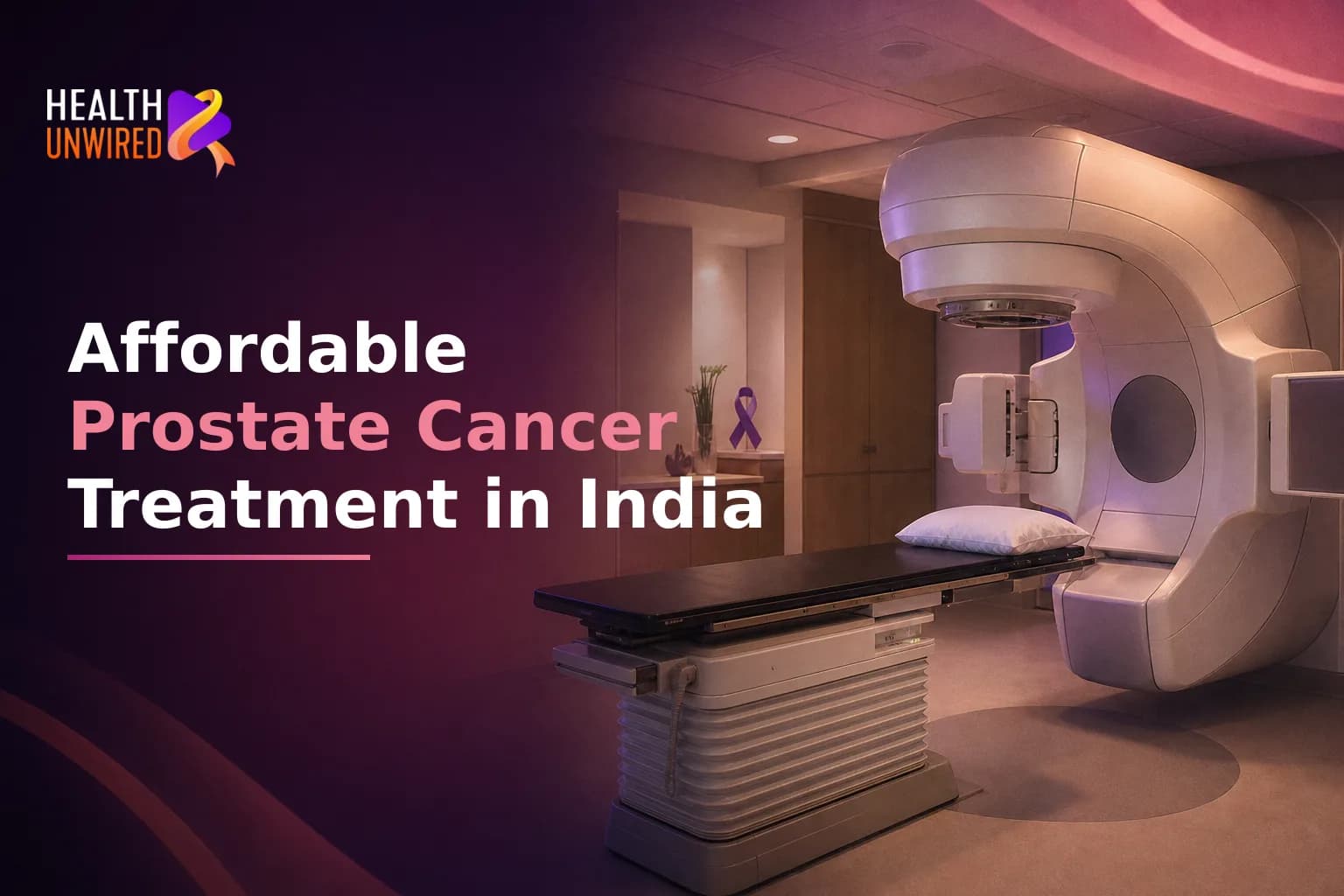
Updated on Jun 27, 2026
Prostate Cancer Treatment in India: Cost, Expertise, and Access for International Patients
Prostate cancer is the second most common cancer diagnosed in men worldwide, with an estimated 1.5 million new cases in 2022 alone, according to the International Agency for Research on Cancer. For men in countries where specialist care is limited, costly, or slow to access, India has become a practical destination for high-quality treatment. If you are weighing care abroad, this guide walks you through what Indian centers offer, what treatment realistically costs, and how to organize your care before you travel.
Why do international patients choose India for prostate cancer care?
Several factors drive international patients toward India. The most common ones are cost, access to advanced technology, and shorter wait times compared to many public health systems.
Major Indian hospital networks have built oncology departments over the past two decades with multidisciplinary tumor boards, robotic surgery platforms, and nuclear medicine units that administer radioligand therapies. Staff speak English in these departments. Most large centers have international patient offices that handle medical visa letters, appointment coordination, and airport transfers.
Patients from the GCC, sub-Saharan Africa, South Asia, and the South Asian diaspora in Western countries make up the largest share of international oncology visitors to India. For many, the decision is straightforward: the same treatment that costs tens of thousands of dollars in the United States or Europe often costs far less in India, without any loss of technical skill at top-tier centers.
Not all hospitals in India are equal, however. When choosing a center, look for one with a dedicated genitourinary oncology team - specialists who focus on prostate, kidney, and bladder cancers - plus access to pathology and imaging. For a closer look at how oncologists weigh your treatment choices, see our companion guide on prostate cancer treatment decisions.
What prostate cancer treatments are available at Indian hospitals?
Indian oncology centers offer the same main treatment options as hospitals in the United States and Europe. The right option for you depends on your stage, pathology, PSA level, and personal priorities. Your oncologist should walk you through each before you commit to any plan.
- Radical prostatectomy - surgical removal of the prostate gland. Your surgeon can do this as open surgery or with robotic-assisted minimally invasive surgery. Several major Indian centers have Da Vinci robotic platforms.
- Radiation therapy - including external-beam radiation therapy (EBRT), intensity-modulated radiation therapy (IMRT), and stereotactic body radiation therapy (SBRT). Some centers also offer brachytherapy (radioactive seed implants).
- Hormone therapy (androgen deprivation therapy, or ADT) - used alone or in combination with radiation or surgery. ADT lowers testosterone, which fuels most prostate cancer growth.
- Next-generation hormonal agents and targeted therapy - for advanced or treatment-resistant prostate cancer, including drugs that block androgen receptors or androgen synthesis pathways.
- Lu-177 PSMA radioligand therapy - a newer treatment for metastatic castration-resistant prostate cancer, described in more detail below.
- Chemotherapy - used in certain settings, particularly for hormone-sensitive metastatic disease or castration-resistant prostate cancer.
According to the National Cancer Institute, treatment for prostate cancer is highly individualized. Stage, Gleason score (also called Grade Group), PSA level, and whether the cancer has spread all determine what your doctor recommends. This is one reason a specialist second opinion before you travel can be valuable - it confirms that your plan matches current standards for your specific case.
How does prostate cancer treatment cost compare: India vs the USA?
| Treatment | India - Private Hospital | USA - Uninsured or Self-Pay |
|---|---|---|
| Radical prostatectomy | Varies by center and technique (open vs robotic) - request a written itemized quote | ~USD 38,000-61,000 cumulative over 1-5 years (privately insured patients, 2007-2020 data) |
| IMRT radiation therapy (full course) | Varies by center and fractionation schedule - request a written itemized quote | ~USD 28,500 mean, 2025 published data |
| Hormone therapy (ADT) | Varies by drug, duration, and whether the drug is manufactured locally in India | Varies widely by drug and duration - often USD 1,000-3,000 or more per month for newer agents |
| Lu-177 PSMA therapy (per cycle) | INR 125,000-250,000 per cycle (~USD 1,500-3,000, 2024 data, indigenous vs imported Lu-177) | Contact treatment center - USD pricing varies significantly by center and insurance status |
| Time from inquiry to first appointment | Often within a few weeks through most international patient programs | Weeks to several months depending on center, specialist, and insurance authorization |
US surgery and radiation cost figures are sourced from a 2025 peer-reviewed study of privately insured US patients using 2007-2020 data and a 2025 comparative economic evaluation of prostate cancer treatment modalities. India Lu-177 PSMA cost data are sourced from a 2024 peer-reviewed study on Lu-177 PSMA treatment in India. Currency codes: INR = Indian Rupee, USD = US Dollar. All figures are estimates only. Always request a written, itemized quote from your chosen hospital before you travel or commit to a care plan.
The main finding is clear: for several treatment types, documented US out-of-pocket costs substantially exceed what international patients typically pay in India. The gap is most visible in radioligand therapy, where India's domestic production of Lu-177 significantly reduces the per-cycle cost compared with countries that rely on imported material. Surgery and radiation pricing in India varies by hospital and technology, so a written quote is an essential step.
Lu-177 PSMA therapy: India's growing role in radioligand treatment
One of the most significant recent advances in prostate cancer treatment is radioligand therapy using lutetium-177 (Lu-177) targeted to prostate-specific membrane antigen (PSMA). Doctors use this approach for metastatic castration-resistant prostate cancer (mCRPC) - a stage where the cancer has spread and no longer responds to standard hormone therapy. Pluvicto (lutetium vipivotide tetraxetan) received US FDA approval for this use in 2022.
A 2024 peer-reviewed study on Lu-177 PSMA treatment in India found that India's domestic production capability for Lu-177 gives the country a meaningful cost advantage. Per-cycle costs using indigenously produced material run roughly INR 125,000 (~USD 1,500), compared with INR 250,000 (~USD 3,000) for imported material. Indian centers, including those in major metro cities, have published clinical experience with this therapy, making India one of a relatively small number of countries outside the US and Europe where patients can access Lu-177 PSMA therapy with documented institutional experience.
If your oncologist has mentioned Lu-177 PSMA therapy as a possible option - or if you are trying to understand whether you may be eligible - the Lutetium Therapy guide to Lu-177 PSMA provides a clear explanation of how the therapy works, who qualifies, and what the treatment process involves.
One important logistics note: PSMA-PET imaging - a specialized scan that maps PSMA protein expression across the body - is typically required before Lu-177 PSMA therapy can begin. Before you travel, confirm that your chosen Indian center has PSMA-PET imaging on site, or has a reliable referral partner that does.
What to bring and how to prepare before you travel
Most delays in the international patient process happen because records arrive late, are in the wrong format, or are missing key components. Getting organized before you leave is one of the highest-value steps you can take.
Bring or arrange to securely transmit the following before your first appointment:
- Your biopsy pathology report, including Gleason score or Grade Group and the number of positive cores
- All imaging studies: multiparametric MRI of the prostate (mpMRI), bone scan, PSMA-PET or CT-PET if you have had one, and any CT scans of the abdomen and pelvis
- Your PSA history - ideally a written list of values with dates, covering at least 12 months
- A summary of any previous treatments, including drugs, radiation doses, and treatment dates
- A current medication list and a note of any known allergies
- Your most recent blood panel, including a full blood count and hormone panel if available
Bring originals and digital copies. Most major Indian centers let you upload digital records by secure upload or email before your arrival, so the oncology team can review your case in advance. This means your first in-person appointment can focus on planning rather than data collection - saving days on your trip.
For more on preparing records for a cross-border consultation, our article on liver cancer treatment in India for international patients covers the pre-travel logistics in detail, and most of those steps apply directly to prostate cancer cases as well.
Medical visa, travel logistics, and support at Indian centers
Most international patients traveling to India for cancer treatment apply for a Medical Visa (MV category). This allows you to stay for the duration of your treatment and typically permits one or two companions to accompany you. The hospital's international patient department can usually provide a formal invitation letter - required as part of the visa application - after we review your case and schedule your appointment.
Major Indian cities with strong oncology infrastructure include Delhi, Mumbai, Chennai, Bengaluru, and Hyderabad. Each has multiple large hospitals with dedicated international patient services. These services typically include in-hospital coordinators who communicate in English, accommodation guidance near the hospital, and a single point of contact who manages your appointments across departments - surgery, oncology, radiology, and nuclear medicine.
Language is rarely a barrier at leading centers in these cities. Oncologists and most senior nursing staff communicate in English. You receive discharge summaries and written reports in English, which matters greatly when you return home and need to hand over your records to a local doctor for follow-up care.
Using a remote consultation to plan your India care path
Traveling for treatment is a large commitment. A video consultation with a verified Indian oncologist before you book flights lets you evaluate whether the fit is right without leaving home. You can review your current reports with a specialist, ask whether the center's capabilities match your stage and treatment needs, and get a realistic cost estimate in writing - all on a single call.
At HealthUnwired, you can upload your reports securely, choose a verified oncologist who specializes in prostate cancer, and connect by video within 48 hours - no travel required. This is one of the lowest-risk ways to start the India care path. You find out whether the trip makes sense before you commit to it.
When to talk to your doctor
If you are considering treatment in India, talk to your current doctor about your plan before you book anything. Ask for a written summary of your diagnosis, cancer stage, and the recommended treatment - this becomes your core document for every consultation abroad. If you have not yet received a specialist's opinion, or if your diagnosis is recent and you want to confirm the plan before committing, a second opinion from a genitourinary oncologist - in person or by video - is a reasonable and common step before any major decision.
This article is for general information and is not a substitute for medical advice. Always consult your oncologist or care team about your specific situation.
Frequently Asked Questions
Read the full guide
Similar Topics

Your First Week After a Prostate Cancer Diagnosis
A prostate cancer diagnosis raises immediate questions about tests, timelines, and next steps. This guide wal…
HealthUnwired Team
Sep 9, 2026

Prostate Cancer Second Opinion: What Oncologists Review
A second opinion on prostate cancer can change more than your diagnosis - it can change your entire treatment…
HealthUnwired Team
Sep 3, 2026

India Medical Visa for Cancer Treatment: What to Prepare
Applying for an Indian Medical Visa is the first practical step for international prostate cancer patients pl…
HealthUnwired Team
Aug 31, 2026