Liver Cancer Treatment in India for International Patients
India has specialist liver cancer programs, internationally accredited hospitals, and significantly lower treatment costs than most Western countries. Here is what international patients need to know before they decide to travel.
Updated on Jun 22, 2026
Reviewed by [VERIFY: name and credentials of reviewing hepatobiliary oncologist, e.g. Dr. [Name], MBBS, MD (Oncology), Fellowship in Hepato-Pancreato-Biliary Surgery] | Last reviewed: June 2026
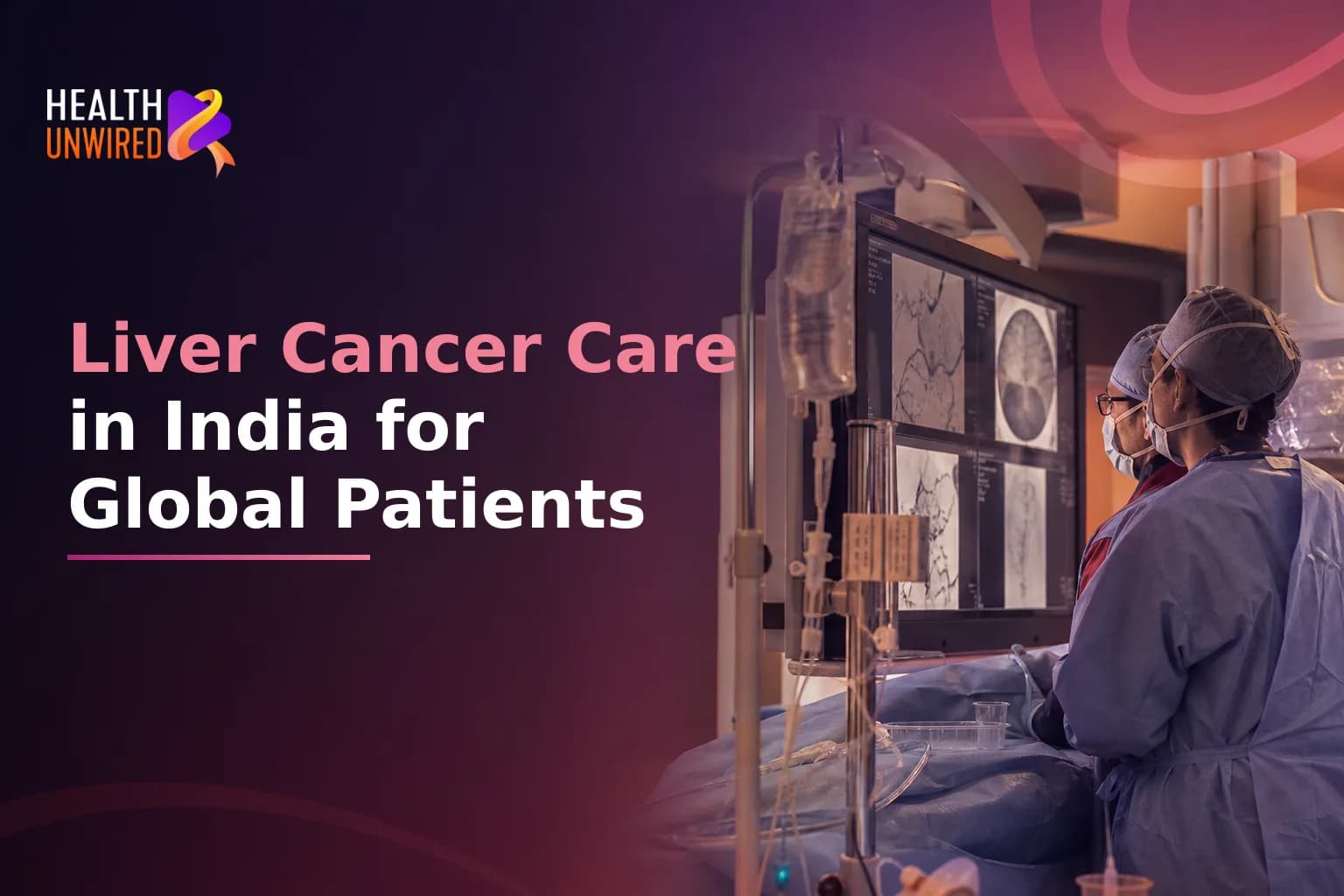
In 2022, approximately 866,000 new liver cancer cases were recorded worldwide, making it the sixth most commonly diagnosed cancer and the third leading cause of cancer death globally. For many patients, reaching the right specialist is not simple. Liver transplant programs, interventional radiology units capable of delivering TACE (transarterial chemoembolization), and hepatobiliary surgery teams are not evenly distributed around the world. That gap is one reason why patients from Nigeria, Bangladesh, Sudan, the UAE, Sri Lanka, Myanmar, and many other countries travel to India each year for liver cancer treatment. This guide covers what you need to know before you decide - from what treatment actually involves, to the visa steps, to how to stay connected with your care team once you return home.
Why International Patients Choose India for Liver Cancer Treatment
India's cancer care infrastructure is larger and more specialized than many people outside South Asia realize. The National Cancer Grid - a government-backed consortium - links more than 230 cancer centers across the country through shared clinical guidelines, training standards, and research programs. Leading private hospitals in Mumbai, Chennai, Delhi, Hyderabad, and Bengaluru hold Joint Commission International (JCI) accreditation, the same benchmark used to evaluate hospitals in the US and Europe, alongside National Accreditation Board for Hospitals and Healthcare Providers (NABH) certification.
For liver cancer, this infrastructure matters. Asia-Pacific and sub-Saharan Africa together account for an estimated 85 percent of liver cancer cases globally, yet specialist resources are not distributed proportionally. India's high-volume liver programs - where surgeons, interventional radiologists, transplant hepatologists (doctors who specialize in liver disease), and medical oncologists collaborate on complex cases regularly - may offer access to procedures that are simply unavailable at home.
Cost is also a practical reality. Treatment at a leading Indian private hospital typically costs significantly less than comparable care in the US, UK, or Australia. Patients from Gulf states, East Africa, and South Asian neighbors often find that the cost difference - even after flights and accommodation - makes the trip worthwhile. For patients in countries where liver transplantation or stereotactic body radiation therapy (SBRT) does not exist locally, India may be one of the few realistic paths to those options.
What Liver Cancer Treatment Actually Involves
Understanding your options before you choose a hospital helps you ask better questions and evaluate centers more clearly. The right approach for hepatocellular carcinoma (HCC) - the most common type of primary liver cancer - depends on tumor size and number, location within the liver, how well the liver is functioning overall, and your general health.
According to the American Cancer Society, the main treatment options include:
- Surgery (hepatic resection) - Removing the portion of the liver that contains the tumor. This works best when the tumor is contained, not growing into nearby blood vessels, and the liver is healthy enough to handle the removal.
- Liver transplantation - Replacing the diseased liver with a healthy donor organ. India has active transplant programs at major centers. Eligibility depends on specific medical criteria that the care team will assess.
- Ablation - Using heat (radiofrequency ablation or microwave ablation), cold (cryotherapy), or other energy methods to destroy the tumor from within. The American Cancer Society notes that ablation works best for tumors 3 cm or smaller, and may be combined with other treatments for tumors up to 5 cm.
- TACE (transarterial chemoembolization) - Chemotherapy is delivered directly into the artery feeding the tumor, then that artery is blocked to cut off the blood supply. TACE is widely used when surgery is not possible and is available at most major Indian cancer centers.
- Targeted therapy and immunotherapy - Systemic treatments (medicines that work throughout the body) that may slow tumor growth in advanced cases. Your oncologist reviews your tumor's specific profile to assess which agents may be appropriate for your situation.
- Stereotactic body radiation therapy (SBRT) - Precisely targeted, high-dose radiation delivered over a small number of sessions to limit exposure to surrounding liver tissue.
The National Cancer Institute notes that choosing among these options is complex. A multidisciplinary team - including a liver surgeon, interventional radiologist, hepatologist, and medical oncologist - ideally reviews all factors together and agrees on a plan before treatment begins.
For a closer look at how specialists weigh these approaches against each other, our guide to liver cancer treatment decisions covers how surgery, ablation, and systemic therapy compare and what typically tips the decision one way or another.
What to Look for in an Indian Liver Cancer Center
India has hundreds of hospitals that treat cancer. For liver cancer, selectivity matters. Look for these markers when evaluating a center:
- Dedicated hepatobiliary surgery program - A team that performs liver resections and transplants regularly, not just occasionally. Volume is directly tied to experience for complex procedures.
- In-house interventional radiology unit - Required for TACE, ablation, and other image-guided procedures. Confirm the unit is at your specific hospital, not outsourced to another facility.
- Multidisciplinary tumor board - A formal, regular meeting where surgeons, oncologists, radiologists, and hepatologists review each case together before a plan is agreed on. Ask whether this happens weekly or bi-weekly.
- JCI or NABH accreditation - Independent verification that the facility meets international quality and patient-safety standards.
- International patient services department - A team that handles visa invitation letters, airport transfers, accommodation coordination, translation, and liaison with your home-country doctors.
Cities with well-established liver cancer programs include Mumbai, Chennai, Delhi NCR, Hyderabad, and Bengaluru. When shortlisting hospitals, ask directly: how many liver resections and transplants does your team perform each year? A serious center will answer without hesitation.
How the India Medical Visa Process Works: Step by Step
India offers a specific visa category for medical travel - the e-Medical Visa. Here is how the process works as of mid-2026:
- Step 1 - Get a hospital invitation letter. Your chosen Indian hospital writes a formal letter on its letterhead confirming your name, nationality, passport number, and planned admission date. This document is required before you can apply for the visa.
- Step 2 - Apply online through the official portal. Submit your e-Medical Visa application at the official India e-Visa portal. You need a passport valid for at least six months from your arrival date with at least two blank pages, a recent passport-size photo, and the hospital invitation letter.
- Step 3 - Wait for approval. Processing typically takes around three working days. The visa arrives as a PDF sent to your email address. Apply at least a week before your intended travel date to allow for delays.
- Step 4 - Know your entry terms. The e-Medical Visa is typically valid for 60 days from first arrival, with triple entry permitted. You can leave India and re-enter twice within that window - useful if treatment involves staged procedures.
- Step 5 - Bring attendants. Up to two blood relatives may travel with you on e-Medical Attendant Visas, which run concurrently with yours and expire when yours does.
- Step 6 - Know how to extend. If treatment takes longer than planned, you can apply for an extension of up to one year through India's e-FRRO (Foreigners Regional Registration Office) portal. Your treating hospital provides a supporting medical letter for the application.
Visa rules can change. Always confirm the latest requirements for your specific nationality at the official India e-Visa portal before you apply.
Which Records and Documents to Bring
Organized records mean your Indian care team can start planning immediately, without repeating tests you have already had. Prepare the following before you travel:
- All imaging scans in digital format - CT, MRI, PET-CT, and ultrasound. Bring them on a USB drive or CD, or use a secure file-transfer link your hospital provides.
- Pathology and biopsy reports, and original biopsy slides if the hospital requests them for local re-review by their own pathologist.
- Recent blood work - liver function tests (LFT), complete blood count (CBC), and tumor markers such as AFP (alpha-fetoprotein). Ideally from the past four to six weeks.
- A current list of all medications, including any herbal or traditional remedies.
- A brief summary letter from your home oncologist covering your diagnosis, tests done, findings, and the treatment they have recommended or already started.
- Insurance documents and prior-authorization letters if your insurer covers care abroad.
Many Indian hospitals with international programs offer a pre-arrival digital case review. You upload your records through a secure portal, and a specialist reviews them before you fly - often producing a preliminary treatment plan and cost estimate in advance. Use this service whenever it is available. It can confirm that the center is equipped for your specific case before you book a flight.
Cost: A Realistic Picture
Treatment costs in India vary considerably depending on the hospital, city, and complexity of your case. A few practical points to help you plan:
- Diagnostic re-workup - scans, blood work, and specialist consultations - is generally much less expensive than comparable testing at private hospitals in Western countries or the Gulf.
- Liver resection and liver transplant cost substantially less at leading Indian private hospitals than at equivalent centers in the US, UK, or Australia. Premium hospitals in Mumbai or Delhi are more expensive than hospitals in smaller Indian cities, though both are typically lower than Western equivalents.
- TACE and ablation are available across a range of price points depending on the facility and equipment used.
- Accommodation near major cancer centers ranges from budget guesthouses to serviced apartments. Most international patient departments have ties to nearby options. Factor in meals, local transport, and incidentals as well.
Always ask for a written, itemized cost estimate before you commit to traveling. Add a buffer of roughly 20 to 30 percent above that estimate for unexpected steps, additional sessions, or a longer stay than planned.
For a sense of how similar medical-travel logistics play out for another complex abdominal cancer managed in India, see how patients approach ovarian cancer treatment in India. The visa steps, record preparation, and accommodation planning follow much the same pattern.
Get a Second Opinion Before You Book a Flight
Before committing to travel, confirm that India is actually the right next step for your specific case. A second opinion from an experienced hepatobiliary oncologist - done remotely, using your existing scans and reports - can verify whether your diagnosis and staging are accurate, whether the proposed treatment aligns with current clinical guidelines, and whether there are options you have not yet been offered.
A second opinion is a normal, healthy step - not a vote of no confidence in your current doctor. It simply gives you better information at a moment when better information directly changes your choices.
For a broader look at how patients evaluate international specialist centers for a related gastrointestinal cancer, our guide to pancreatic cancer treatment abroad walks through the framework for assessing whether a center is the right fit for a complex case. The same questions apply across cancer types.
You can upload your reports, connect with a verified oncologist on HealthUnwired, and receive a specialist response within 48 hours - without leaving home. Book a video consultation here.
Staying Connected With Your Care Team After You Return Home
Treatment in India does not have to mean losing continuity with your home doctor. Most international patients travel for a specific procedure - a liver resection, one or two TACE sessions, a course of radiation - and then return home for monitoring and follow-up.
Leading Indian hospitals with international programs typically offer teleconsultation after discharge. You share follow-up scans and blood results through a secure portal, and the specialist reviews them remotely and responds with guidance. This makes it practical to receive your procedure in India and manage ongoing monitoring closer to home, with the Indian team available by video when questions come up.
Coordinate with both teams from the beginning. Share your Indian hospital's treatment summary and discharge notes with your home-country oncologist so your care is integrated - not split between two systems that are unaware of each other.
When to Talk to Your Doctor
Talk to your oncologist or care team if you are considering treatment in India and want to understand how a proposed plan compares to your current options, which records to send ahead for a pre-arrival digital review, or how to coordinate follow-up care across two countries. If you do not yet have a specialist, or want an independent review of your diagnosis before you decide anything, an online consultation is a practical and lower-cost first step.
This article is for general information and is not a substitute for medical advice. Always consult your oncologist or care team about your specific situation.
Frequently Asked Questions
Read the full guide
Similar Topics
Which Liver Cancer Treatment Fits Your Case?
Liver cancer treatment depends on tumor size, stage, and how well your liver is still working. This guide com…
HealthUnwired Team
Sep 6, 2026

Why You Should Get a Second Opinion for Liver Cancer
Liver cancer treatment involves some of the most complex eligibility decisions in oncology. Here is when a se…
HealthUnwired Team
Aug 17, 2026
Liver Cancer Treatment Decisions: Understanding Your Options When Surgery,…
When surgery, ablation, and systemic therapy are all on the table for liver cancer, making the right choice t…
HealthUnwired Team
Jun 11, 2026