Should Your Caregiver Join Your Online Oncology Consultation?
Including your caregiver in a video second opinion can change how much you take in from the call. This guide covers how to prepare them - from sharing records to agreeing on roles - so both of you get the most from your online oncology consultation.
Updated on Aug 4, 2026
If you are managing lung cancer and have a video second opinion scheduled, you might wonder: should my caregiver join the call? In most cases, yes. A caregiver on your online oncology consultation can help you remember more information, ask better follow-up questions, and feel less alone during technical discussions. This guide covers how to prepare - from making the decision to preparing for the call to using what you learn afterward.
The short answer: Including a caregiver in your online oncology consultation is practical. Studies show that when caregivers join cancer decision-making appointments, patients feel more engaged and in control. Prepare together - share records, agree on roles, and build a ranked question list. Both of you will get much more from the call.
Why Caregiver Presence Changes Your Online Oncology Consultation
Oncology consultations pack a lot of information into a short time. An oncologist reviewing your case may cover staging, biomarker results, treatment options, and a recommendation - all in 30 minutes or less. It's hard to absorb all of that while also dealing with the emotional weight of the conversation.
Research in the NIH PubMed Central shows that when caregivers participate actively in decision-making consultations, patients feel more engaged and in control of their own care. A study on lung cancer treatment decisions found that both patients and caregivers play active roles in these conversations, and caregiver presence helps patients understand complex information they might otherwise miss.
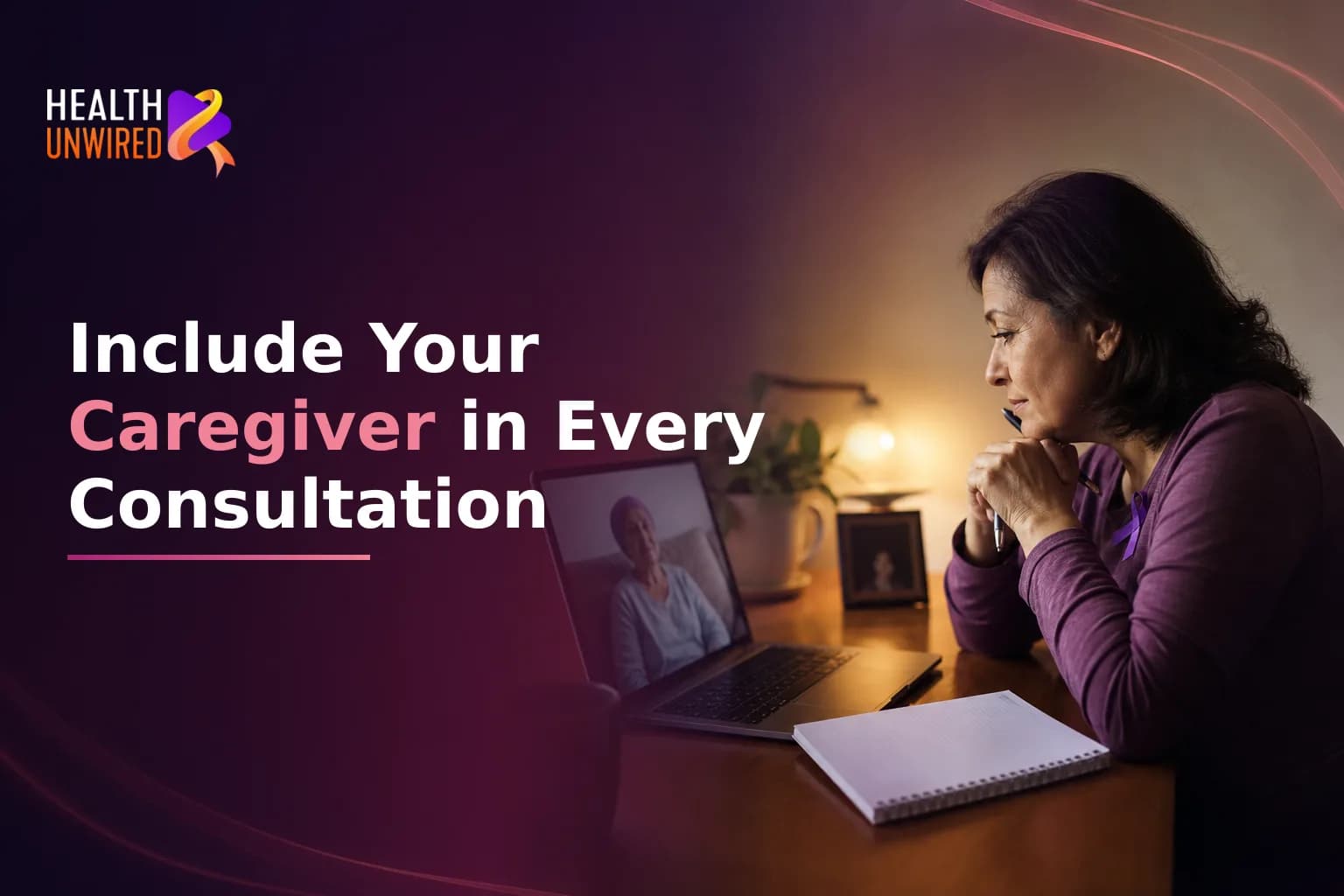
Your caregiver is not there to speak for you. They are there as a second set of ears - to take notes while you focus on the conversation, and to help you review what was said after the call ends. That division of labor sounds simple, but it changes what you learn.
According to the American Cancer Society, seeking a second opinion is a normal part of cancer care. Including your caregiver means the information does not rest on one person's memory alone.
When to Include Your Caregiver - and When You Might Not
You don't need a caregiver on the call. But consider including them if:
- You are processing a new or changing diagnosis and feel overwhelmed by the technical detail.
- You are weighing treatment options and want a trusted person to help you think them through afterward.
- You tend to forget key details once you leave a medical appointment.
- Your caregiver knows your medical history almost as well as you do and might catch something you miss.
- You are fatigued, unwell, or anxious enough that managing the conversation alone feels like too much right now.
You may prefer a solo call if the topic is highly personal, if your caregiver tends to steer the conversation away from your questions, or if you feel confident managing the discussion alone. Both choices are valid. What matters is that whoever is on the call is prepared.
What Role Should Your Caregiver Play on the Call?
Agree on your roles before the appointment. A clear plan avoids awkward moments when two people try to lead at once and keeps the conversation focused on your needs.
- You lead the conversation. Open the call, briefly describe your situation, and ask your most important questions.
- Your caregiver takes notes. This is the most valuable thing they can do during the call. Accurate notes let you review the oncologist's exact words later without relying on memory alone.
- Your caregiver asks follow-up questions after you finish yours. Use a simple signal beforehand - such as a nod - to keep the structure clear.
Your caregiver might also handle the technical side: testing the internet connection, having documents ready to share, and managing files if the platform supports it. For a full guide to physical and technical setup, see the HealthUnwired guide on how to set up your home for an online oncology consultation.
How to Prepare Your Caregiver Before the Appointment
Preparation makes the difference between a productive call and a rushed one. Work through these steps together in the few days before your appointment.
Share the Medical Records Together First
Your caregiver should know what documents have been uploaded to the platform and what each one contains. For a video second opinion, the reviewing oncologist will typically look at your pathology report, imaging results (CT scan, PET-CT, or MRI), biopsy reports, and your current or proposed treatment plan. Familiarity with these documents helps your caregiver ask sharper questions and notice if something is missing.
The National Cancer Institute has tracked significant growth in telehealth for cancer care. Most platforms now allow you to upload documents securely before the appointment. If you haven't gathered your records yet, start with your current care team's medical records department. You can also check whether your hospital or clinic has a patient portal where you can download records directly.
Build the Question List as a Team
Sit down together and write out every question you have. Then rank them by importance. Put the most pressing ones at the top. Oncology consultations move quickly. A ranked list means you won't leave the call wishing you had asked something earlier.
For a lung cancer second opinion, useful questions often include:
- Does this oncologist agree with the current staging?
- Have all relevant biomarker tests been done? Many guidelines recommend testing for EGFR, ALK, ROS1, KRAS, and PD-L1 status, among others.
- Are there treatment options that aren't available locally?
- What does this oncologist think of the proposed treatment plan overall?
- Are there clinical trials worth considering for this case?
For a broader caregiver guide to lung cancer treatment choices at different stages, see the advanced lung cancer caregiver's guide to treatment decisions.
Prepare a Two-Minute Case Summary Together
The oncologist may ask for a brief overview of the case at the start of the call. Prepare this together in advance: when symptoms started, what tests were done, what the current diagnosis is, what treatment you've been offered or started, and what your main questions are. Keep it to two minutes or less. This gives the oncologist a clear starting point and leaves more time for your questions.
Have your caregiver read this summary back to you during your preparation session. If they can explain your situation clearly and in plain terms, you're both ready for the call.
Run a Technical Check the Day Before
A dropped connection halfway through a second opinion is frustrating and can mean losing key information. Go through this checklist together before the appointment day:
- Test video and audio on the device you plan to use for the call.
- Choose a quiet room with good light on your face.
- Close unneeded browser tabs and applications to reduce lag.
- Note a phone number backup in case the video connection fails mid-call.
- Have your ranked question list and any key printed documents within easy reach.
If your caregiver is joining from a different location, do a test call together the day before. Two separate screens can sometimes cause echo or feedback. Using earphones on at least one end usually fixes this quickly.
After the Call: What Your Caregiver Can Do
The work continues after the call ends. The hours after a second opinion are often when the information starts to feel real and new questions surface. Your caregiver can help by reading the notes aloud while they're fresh, filling in any gaps, and writing a short summary of what the oncologist recommended. Include any points where the second opinion differs from your current plan.
A different recommendation from a second oncologist doesn't automatically mean a change is necessary. It opens a conversation you'll need to work through with your primary care team. For guidance on handling different opinions, see the article on what changes after a second opinion in cancer care.
Caregivers often carry far more of this process than anyone acknowledges - researching, preparing, listening, and then helping to make sense of everything that was discussed. If disrupted sleep or sustained stress is affecting your ability to think clearly, talk to your doctor about support options.
A Note Specific to Lung Cancer Second Opinions
Lung cancer treatment has changed significantly over the past decade. Biomarker testing - which looks for specific genetic mutations or other markers in the tumor - now shapes treatment decisions for many patients. A second-opinion oncologist will examine closely whether all recommended biomarker tests have been completed and whether the results are being used fully in the current plan.
The NCI's guidance on informal caregivers in cancer notes that caregivers work as partners in care. In a fast-moving field like lung cancer, a caregiver who has reviewed the key documents and understands the key terms can help keep the consultation focused and make sure your most important questions get answered before the call ends.
Ready to Book Your Video Second Opinion?
At HealthUnwired, you can upload your reports, choose a verified oncologist, and have an online oncology consultation within 48 hours. Book your video second opinion at HealthUnwired.
When to Talk to Your Doctor
Talk to your oncologist or current care team if your caregiver is having trouble accessing your records on your behalf, if you are unsure which documents the second-opinion oncologist needs to review, or if you need language or communication support during the video call. Many online consultation platforms have coordination staff who can help with these details before the appointment.
This article is for general information and is not a substitute for medical advice. Always consult your oncologist or care team about your specific situation.
Read the full guide
Similar Topics
Lung Cancer Treatment in India for Pakistani Patients
Pakistani patients seeking specialist lung cancer care can access quality treatment in India at significantly…
HealthUnwired Team
Sep 11, 2026
Prepare Your Lung Cancer Records for an Online Second Opinion
Knowing which documents to gather - from pathology slides to molecular test results to DICOM scan files - sha…
HealthUnwired Team
Sep 4, 2026

Lung Cancer Treatment in India for West African Patients
West African patients with lung cancer increasingly travel to India for comprehensive molecular testing, spec…
HealthUnwired Team
Aug 21, 2026