Your First Week After a Pancreatic Cancer Diagnosis
The days right after a pancreatic cancer diagnosis are full of unfamiliar tests, medical terms, and fast decisions. This guide explains what each first-week test is looking for and which questions to ask your oncologist at your first appointment.
Updated on Jul 28, 2026
Your First Week After a Pancreatic Cancer Diagnosis
A pancreatic cancer diagnosis can feel shocking. In the days right after, you may face tests you have never heard of, specialists with new titles, and pressure to make decisions before you feel ready. This guide explains what typically happens in your first week and which questions matter most at your first oncology appointment.
What to Do in Your First Week: A Quick Overview
- Confirm the exact type and location of your cancer with your doctor.
- Find out which imaging tests and biopsy procedures have been ordered.
- Request your own copies of all reports and scan images.
- Write down your questions before every appointment.
- Bring someone you trust to take notes alongside you.
- Ask whether molecular profiling has been ordered on your biopsy sample.
- Ask your team for a clear timeline: when does treatment need to start?
What Pancreatic Cancer Actually Covers
The pancreas sits behind the stomach. It produces enzymes that help digest food and hormones that regulate blood sugar. When doctors say pancreatic cancer, they most often mean a type called pancreatic ductal adenocarcinoma, or PDAC. Research on pancreatic adenocarcinoma epidemiology shows that this type accounts for about 85% of all pancreatic cancer diagnoses. Less common types include pancreatic neuroendocrine tumors (PNETs) and acinar cell carcinoma. Each type behaves differently and may require a different approach.
Your diagnosis letter will state the type and, where known, the location. Most tumors start in the head of the pancreas, though they can also start in the body or tail. Location matters because it affects which surgical options are possible and what your symptoms might be.
The Tests You Will Have - and What Each One Looks For
The first week usually involves several tests. Some may already be complete. Others will be scheduled in the days ahead. Here is what each one does and why your team needs it.
CT Scan (Computed Tomography)
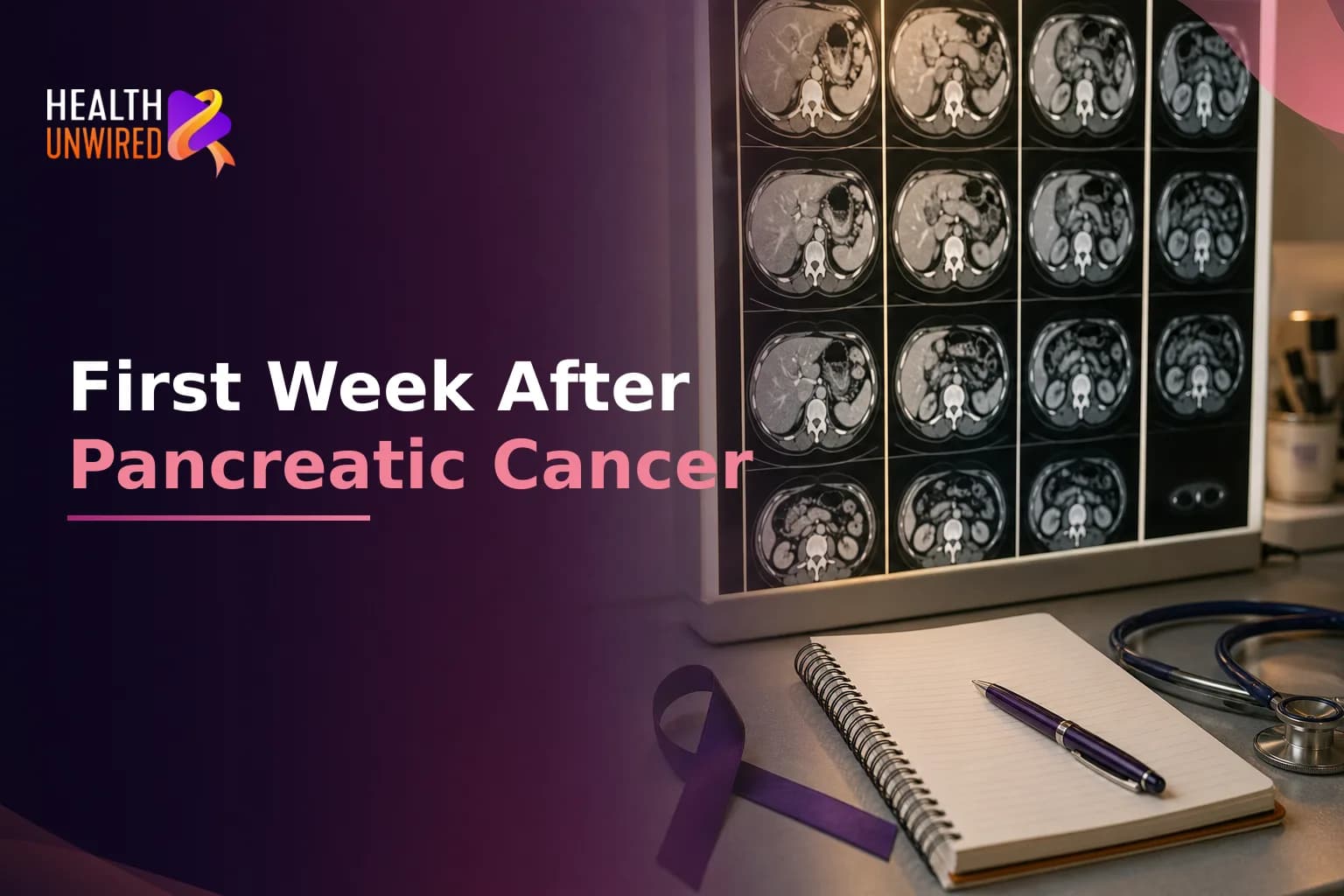
A CT scan is typically the first detailed look at the tumor. It takes cross-sectional images of the abdomen using X-rays and a contrast dye. Doctors use it to see how large the tumor is, whether it has grown into nearby blood vessels, and whether cancer appears to have spread to the liver or other organs. A high-quality, contrast-enhanced CT scan is one of the most important images your oncologist will use. If your initial scan was done at a smaller facility, your specialist may ask for a repeat with a pancreas-specific imaging protocol.
MRI and MRCP
Magnetic resonance imaging (MRI) uses magnets and radio waves rather than radiation. It is especially useful for detecting small lesions in the liver that a CT scan may miss. A subtype called MRCP (magnetic resonance cholangiopancreatography) gives a detailed view of the bile ducts and pancreatic ducts - helpful when jaundice or a blockage is part of the picture.
Endoscopic Ultrasound (EUS)
An endoscopic ultrasound passes a thin, flexible tube through your mouth and into your stomach. A small ultrasound probe sits at the tip of the tube. Because the probe ends up very close to the pancreas, it produces detailed images that a surface scan cannot match. Published research on the role of EUS in staging pancreatic cancer shows it is especially valuable for assessing how closely the tumor sits to blood vessels - a key factor in deciding whether surgery is possible. EUS is also the most common way to collect a biopsy sample from the pancreas.
Biopsy
A biopsy takes a small sample of tissue from the tumor so a pathologist can examine it under a microscope. For pancreatic cancer, a doctor usually does the biopsy during an EUS procedure - a technique called EUS-FNA or EUS-FNB. In some cases, a radiologist may guide a needle through the skin using CT imaging. The biopsy confirms the diagnosis and identifies the exact cell type. It also provides tissue for molecular profiling, which is described below.
PET-CT Scan
A PET-CT combines two types of imaging in one session. You receive a small amount of a radioactive tracer that cancer cells absorb. The scanner then identifies areas of high activity throughout the body. Not every patient needs a PET-CT in the first week, but your doctor may order it when spread to distant organs is suspected. Our guide on understanding PET-CT scans in cancer diagnosis explains what to expect during the procedure and how to interpret the results.
Blood Tests and CA 19-9
Your team will order blood tests to check liver function, kidney function, and overall health. One specific test measures a protein called CA 19-9, which cancer cells sometimes release into the bloodstream. CA 19-9 alone cannot confirm or rule out pancreatic cancer - other conditions such as bile duct blockage and pancreatitis can also raise its level. However, research on CA 19-9 as a tumor marker in pancreatic cancer suggests it has around 79% sensitivity when used alongside imaging in the right clinical setting. Your team will likely measure it at diagnosis as a baseline so they can track changes once treatment begins.
Understanding Your Results: Stage and Resectability
Once imaging and biopsy results come back, your oncologist will describe the stage and whether surgery appears feasible. For pancreatic cancer, there are two parallel ways to frame this.
The first is the standard TNM staging system (stage I through IV). This system is based on tumor size (T), lymph node involvement (N), and spread to distant organs (M). The second, which is equally central to your treatment decisions, is a classification of resectability:
- Resectable: the tumor does not appear to involve the main nearby blood vessels, and surgery to remove it may be possible.
- Borderline resectable: the tumor is in close contact with blood vessels but surgery may still be an option, often after treatment aimed at shrinking the tumor first.
- Locally advanced (unresectable): the tumor has grown into key blood vessels in a way that makes surgery unsafe at this time, though other treatments may still help.
- Metastatic: cancer has spread to distant organs, most commonly the liver or the lining of the abdominal cavity.
Ask your oncologist directly which category your tumor falls into. Every major treatment decision follows from that answer.
Ask About Molecular Profiling
Molecular profiling, also called biomarker testing or tumor gene testing, looks for specific mutations in your tumor's DNA. This is different from hereditary genetic testing, which examines genes you were born with. For some patients with pancreatic cancer, profiling may reveal mutations that influence which treatment paths are worth exploring. A doctor usually performs this testing on tissue from your biopsy. Ask your oncologist at your first appointment whether it has been ordered or is recommended for your case.
Questions to Ask at Your First Oncology Appointment
You will not remember everything said in that first meeting - that is completely normal. The best thing you can do is prepare a written list beforehand. The American Cancer Society and Memorial Sloan Kettering Cancer Center both recommend bringing a trusted person to take notes so you can focus on listening. Key questions for your first appointment include:
- What is the exact type and stage of my cancer?
- Is my tumor resectable, borderline resectable, or unresectable right now?
- Has molecular profiling been ordered on my biopsy tissue?
- What treatment do you recommend, and why this sequence?
- How many patients with this type of pancreatic cancer does your center treat each year?
- Are there clinical trials I may be eligible for?
- What is the timeline - how soon does treatment need to begin?
- Who else is on my care team, and what is each person's role?
- What symptoms should prompt me to call before my next scheduled appointment?
For a fuller checklist you can bring to any oncology appointment, see our patient checklist of questions to ask your oncologist at your first appointment.
Should You Get a Second Opinion?
Yes - getting a second opinion is a normal, healthy step. It is not a vote of no confidence in your current doctor. For a diagnosis as complex as pancreatic cancer, a second specialist may confirm the existing plan, refine the staging, or flag that molecular profiling has not yet been done. Leading cancer centers with dedicated pancreatic programs typically review cases through a multidisciplinary team. That kind of collective review can be particularly valuable when surgery is being considered or when the tumor is classified as borderline resectable.
You can now pursue a second opinion without traveling. An online consultation lets a specialist review your scans, pathology report, and treatment plan remotely. Our guide on preparing for an online pancreatic cancer second opinion walks through exactly which records to gather and how the process works from start to finish.
The Emotional Side of the First Week
The days right after a diagnosis are often shocking and scary. You may not sleep well. Concentrating on anything else may feel impossible. That is a normal response to an abnormal situation.
A few things that tend to help: keep a single notebook for your questions and answers so you don't lose information between appointments. If a caregiver can come with you, let them take notes while you listen. Ask your care team whether a social worker or oncology nurse navigator is available - many cancer centers include these as part of routine care. If sleep disruption and anxiety are consistently affecting your ability to cope, raise this directly with your doctor. Some patients also find rest and stress management helpful. Always check with your oncologist before adding any supplement, since some may interact with cancer treatment.
When to Talk to Your Doctor
Do not wait for your next scheduled appointment if you develop jaundice (yellowing of the skin or the whites of the eyes), sudden or worsening pain in your abdomen or back, signs of infection such as fever, or difficulty eating or keeping food down. These symptoms may be related to the cancer or to a blocked bile duct, and they may need prompt attention.
If you want a specialist to review your full case before deciding on treatment, ask your current doctor for a referral or seek a second opinion at another cancer center. You can also connect with an oncologist for an online consultation. Most consultations can be arranged within 48 hours, with no travel required.
This article is for general information and is not a substitute for medical advice. Always consult your oncologist or care team about your specific situation.
Read the full guide
Similar Topics

Pancreatic Cancer Second Opinion: What Oncologists Review
Before committing to surgery or chemotherapy for pancreatic cancer, a specialist second opinion may reveal op…
HealthUnwired Team
Aug 31, 2026
Pancreatic Cancer Treatment in India for International Patients
For international patients facing a pancreatic cancer diagnosis, India offers specialist GI oncology teams, h…
HealthUnwired Team
Aug 20, 2026

Preparing for an Online Pancreatic Cancer Second Opinion
An online second opinion for pancreatic cancer starts before the video call. Here is exactly which records to…
HealthUnwired Team
Jun 23, 2026