Prostate Cancer Treatment in India for Kenyan Patients: Specialist Centers, Costs, and Medical Tourism Logistics
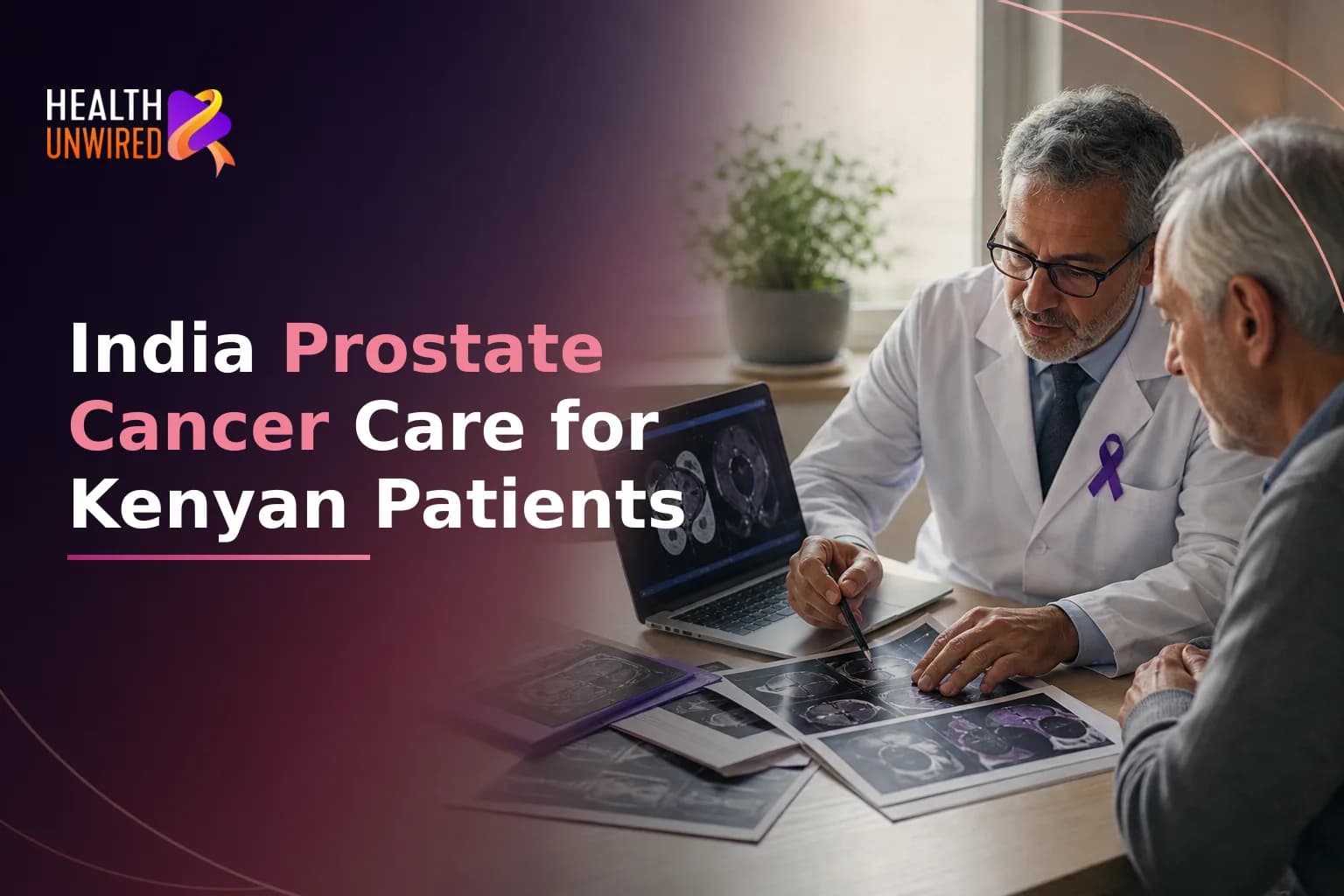
Prostate cancer is the most common cancer among men in Kenya, and India offers specialist care - including robotic surgery, advanced radiation, and Lu-177 PSMA therapy - at significantly lower costs than Western countries. This guide covers treatment options, approximate costs, visa logistics, and remote follow-up for Kenyan patients and caregivers considering treatment in India.
Updated on Jul 6, 2026
Prostate Cancer Treatment in India for Kenyan Patients: Specialist Centers, Costs, and Medical Tourism Logistics
Prostate cancer is the most common cancer among men in Kenya, and one of the most common across sub-Saharan Africa. A population-based registry study in PMC (NIH) found an age-standardized incidence rate of 39.9 per 100,000 men in Kenya in 2020 - one of the highest rates in the region. The WHO Regional Office for Africa notes that prostate cancer is the leading cancer among men across sub-Saharan Africa. Many diagnoses happen at a late stage, when specialist care is needed urgently.
If you or a family member has been diagnosed with prostate cancer, India is a destination many Kenyan patients consider each year. This guide covers what treatment options are available in India, what they cost compared to Western countries, how to travel there on a medical visa, and what follow-up care looks like after you return home. It is written for patients and caregivers making treatment decisions.
Why Do Kenyan Patients Choose India for Prostate Cancer Care?
India offers a full range of prostate cancer treatments - including robotic-assisted surgery, radiation therapy, hormone therapy, and a targeted radioligand therapy called Lu-177 PSMA. Treatment costs are generally much lower than in the United States or the United Kingdom. Treatment can begin within days of arriving, not weeks or months like in some healthcare systems.
Several large hospitals in Delhi, Mumbai, and Chennai have dedicated East African patient departments and Swahili-speaking patient coordinators. That support can make the experience less stressful for patients and caregivers managing illness and travel away from home.
For a guide to medical tourism logistics in India, including visas and remote follow-up, see our guide to medical tourism for cancer care in India.
What Prostate Cancer Treatments Are Available in India?
The main treatment options for prostate cancer depend on the stage of the disease and your overall health. The National Cancer Institute (NCI) lists the standard options as active surveillance, surgery (radical prostatectomy), external beam radiation therapy (EBRT), brachytherapy (radioactive seeds placed inside the prostate), hormone therapy (also called androgen deprivation therapy, or ADT), and targeted therapies for advanced or metastatic disease.
Major cancer hospitals in India offer all of these options. Robotic-assisted prostatectomy, intensity-modulated radiation therapy (IMRT), and nuclear medicine therapies such as Lu-177 PSMA are available at specialist cancer centers in Delhi, Mumbai, and Chennai. The American Cancer Society provides a breakdown of which options are typically used at each stage - reviewing this before you travel can help you understand whether your oncologist's plan aligns with international standards of care.
For more on prostate cancer treatment decisions, including surgery, radiation, and hormone therapy, see our article on prostate cancer treatment decisions and when to seek a second opinion.
How Does Prostate Cancer Treatment Cost in India Compare With the USA and UK?
Cost is one of the main reasons Kenyan patients look to India. Treatment costs in India are generally much lower than in Western countries, though exact figures vary by hospital, city, treatment type, and each patient's specific needs. The table below gives a broad comparison across key factors. Always request a detailed, itemized written estimate from any hospital before booking travel - the figures below are reference points, not quotes.
| Treatment or Factor | India | USA / UK |
|---|---|---|
| Robotic-assisted prostatectomy | Substantially lower than Western countries - request a written estimate from the hospital before travel | Varies widely; often high out-of-pocket cost for international patients without local insurance coverage |
| External beam radiation (IMRT) | Substantially lower - request a written estimate; cost depends on number of sessions | Varies by number of sessions; often high for patients without local insurance coverage |
| Lu-177 PSMA therapy (per cycle) | Approx. INR 125,000 per cycle at institutional rates in India (2024 data - see source note below) | Significantly higher; pricing varies by country and insurance status |
| Wait time to start treatment | Typically days to 2 weeks after the hospital reviews your records | Often weeks to months; longer for patients without local coverage |
| East African language support | Swahili-speaking coordinators available at several major centers | Not routinely available at most cancer centers |
Lu-177 PSMA institutional cost source: The Lancet Regional Health - Southeast Asia, 2024. Costs for international patients at private hospitals may differ from institutional rates. Confirm current pricing directly with the hospital.
The cost advantage that India offers over Western countries is meaningful across most treatment types. However, the total cost of a treatment trip includes more than the procedure itself - flights, accommodation for you and a companion, and time away from work all add up. Getting a complete, itemized estimate before you commit to a particular center is important for planning your trip.
What Is Lu-177 PSMA Therapy, and Can I Get It in India?
Lu-177 PSMA therapy - also known as lutetium-177 PSMA-617 or by the brand name Pluvicto - is a treatment for metastatic castration-resistant prostate cancer. This is a form of prostate cancer that has spread to other parts of the body and no longer responds to standard hormone therapy. The therapy works by attaching a radioactive substance to a molecule that targets a protein called PSMA, which is found on most prostate cancer cells. This delivers radiation directly to cancer cells.
India is one of the few countries that produces Lu-177 domestically. That domestic production has helped keep the therapy more accessible and affordable there than in many Western markets. A 2024 study in The Lancet Regional Health - Southeast Asia found that local production helps keep costs lower. Not all patients are eligible for this therapy - eligibility depends on a positive PSMA PET scan and a specific prior treatment history, which your doctor will assess from your records.
For more on how this treatment works, who qualifies, and what the cycle schedule typically involves, see the Lutetium Therapy guide to Lu-177 PSMA, which covers eligibility and the treatment process.
Which Cities and Centers in India Specialize in Prostate Cancer?
Delhi, Mumbai, and Chennai are where most international cancer patients are treated in India. Each has large multispecialty hospitals with dedicated oncology departments and nuclear medicine units that can deliver therapies including Lu-177 PSMA.
Delhi is a common first stop for East African patients because of direct flights from Nairobi and East African patient desks at several hospitals. Mumbai and Chennai also have major cancer centers with significant experience treating patients from sub-Saharan Africa.
When contacting a hospital, ask specifically whether they have treated Kenyan patients before, what their experience is with the treatment you need, and whether they have a dedicated African patient coordinator. A hospital's international patient desk can provide a remote review of your case and a cost estimate before you book flights.
For more on evaluating hospitals remotely and what to expect as an international patient, see our article on prostate cancer treatment in India: cost, expertise, and access for international patients.
How Do Kenyan Patients Get a Medical Visa for India?
There are two main visa routes for Kenyan patients traveling to India for treatment.
The e-Medical Visa is the faster option. Kenyan passport holders can apply entirely online without visiting an embassy. It allows triple entry and is valid for 60 days from the date of first arrival. This works well for most patients who need one course of treatment and a short follow-up period.
The regular Medical Visa requires a visit to the Indian High Commission in Nairobi but allows stays of up to one year with multiple entries. This is the better option if you will need several cycles of therapy spread across several months.
Key documents required for either visa typically include:
- A valid Kenyan passport with at least 6 months of remaining validity and at least 2 blank pages
- A formal invitation or referral letter from the treating hospital in India, stating your diagnosis, the treatment required, and the expected dates
- A Yellow Fever vaccination certificate showing the vaccination was given at least 10 days before travel
- An Oral Polio Vaccination (OPV) certificate showing a dose was given at least 4 weeks before travel
- Proof of funds - bank statements or a sponsorship letter - showing you can cover treatment and living costs
The e-Medical Visa is typically processed within 3 to 5 working days. Begin the visa process as soon as you have a confirmed hospital appointment. Do not book flights until the visa is approved. Visa requirements can change; verify current requirements directly with the Indian High Commission in Nairobi before applying.
What Medical Records Should You Bring?
The hospital in India will need to review your records before you arrive and when you check in. Gather and share all of the following before your trip:
- Biopsy report - your pathology report with Gleason score and grade group
- PSA (prostate-specific antigen) history - a list of your test results over time
- Imaging: CT scans, MRI scans, bone scans, or a PSMA PET scan if you have had one
- Any previous treatment records - surgery notes, radiation planning documents, or hormone therapy records
- Your current medication list
- A referral or summary letter from your oncologist or urologist in Kenya
Send digital copies of all records to the hospital's international patient desk before booking your flight. Many major hospitals can do a remote review of your case and give you a treatment plan and cost estimate before you commit to traveling. This step can prevent costly surprises and wasted time on arrival.
Language Support and Practical Logistics
Language is a common concern for Kenyan patients traveling to India. In practice, the major cancer hospitals that regularly treat East African patients conduct clinical discussions in English. Several hospitals in Delhi and Chennai also have Swahili-speaking patient coordinators who can help with translation, appointment scheduling, and paperwork.
Ask the international patient desk about accommodation options close to the hospital. Many hospitals have partnerships with nearby guesthouses or serviced apartments at reduced rates for patients and one accompanying family member. Meals, local transport, and SIM card support are arranged through the same desk.
Plan your length of stay carefully before you go. A course of external beam radiation may require 4 to 8 weeks on-site. Robotic surgery typically requires 7 to 14 days before it is safe to fly. For Lu-177 PSMA cycles, some patients choose to return home between cycles instead of staying the whole time. Your treatment team will advise on the best schedule for your specific case.
The stress of managing travel, waiting for results, and adapting to an unfamiliar environment is real. Some patients notice that disrupted sleep worsens fatigue during treatment stays. If sleep disruption or anxiety are issues, ask your care team about options such as Ayurnomics's Sleep and Stress range.
Remote Follow-Up After You Return to Kenya
Once back in Kenya, stay in contact with your treating team in India and your local oncologist for ongoing care. Most hospitals offer email or messaging-based follow-up. PSA tests and post-treatment imaging can usually be done in Kenya, with the results sent to the Indian team for review.
If you want a second opinion, book a remote oncology consultation at HealthUnwired. You can upload your reports and get a specialist opinion within 48 hours.
When to Talk to Your Doctor
If you are considering treatment in India, speak with your oncologist or urologist in Kenya first. Ask for a formal referral letter and complete copies of all your records. Key moments when specialist input matters most include just after a new diagnosis (to confirm stage and grade), before committing to a specific treatment plan, and when a current therapy has stopped working and a new option is being considered.
If you are unsure about your plan or want a second opinion, an online consultation can help without needing to visit a clinic.
This article is for general information and is not a substitute for medical advice. Always consult your oncologist or care team about your specific situation.
Frequently Asked Questions
Read the full guide
Similar Topics
Your First Week After a Prostate Cancer Diagnosis
A prostate cancer diagnosis raises immediate questions about tests, timelines, and next steps. This guide wal…
HealthUnwired Team
Sep 9, 2026

Prostate Cancer Second Opinion: What Oncologists Review
A second opinion on prostate cancer can change more than your diagnosis - it can change your entire treatment…
HealthUnwired Team
Sep 3, 2026
India Medical Visa for Cancer Treatment: What to Prepare
Applying for an Indian Medical Visa is the first practical step for international prostate cancer patients pl…
HealthUnwired Team
Aug 31, 2026