Thyroid Cancer Treatment in India for International Patients
If you are considering thyroid cancer treatment in India, this guide explains what the full care pathway looks like, which records to prepare before you travel, how specialist centers approach surgery and radioactive iodine therapy, and how your follow-up works once you are back home.
Updated on Jul 29, 2026
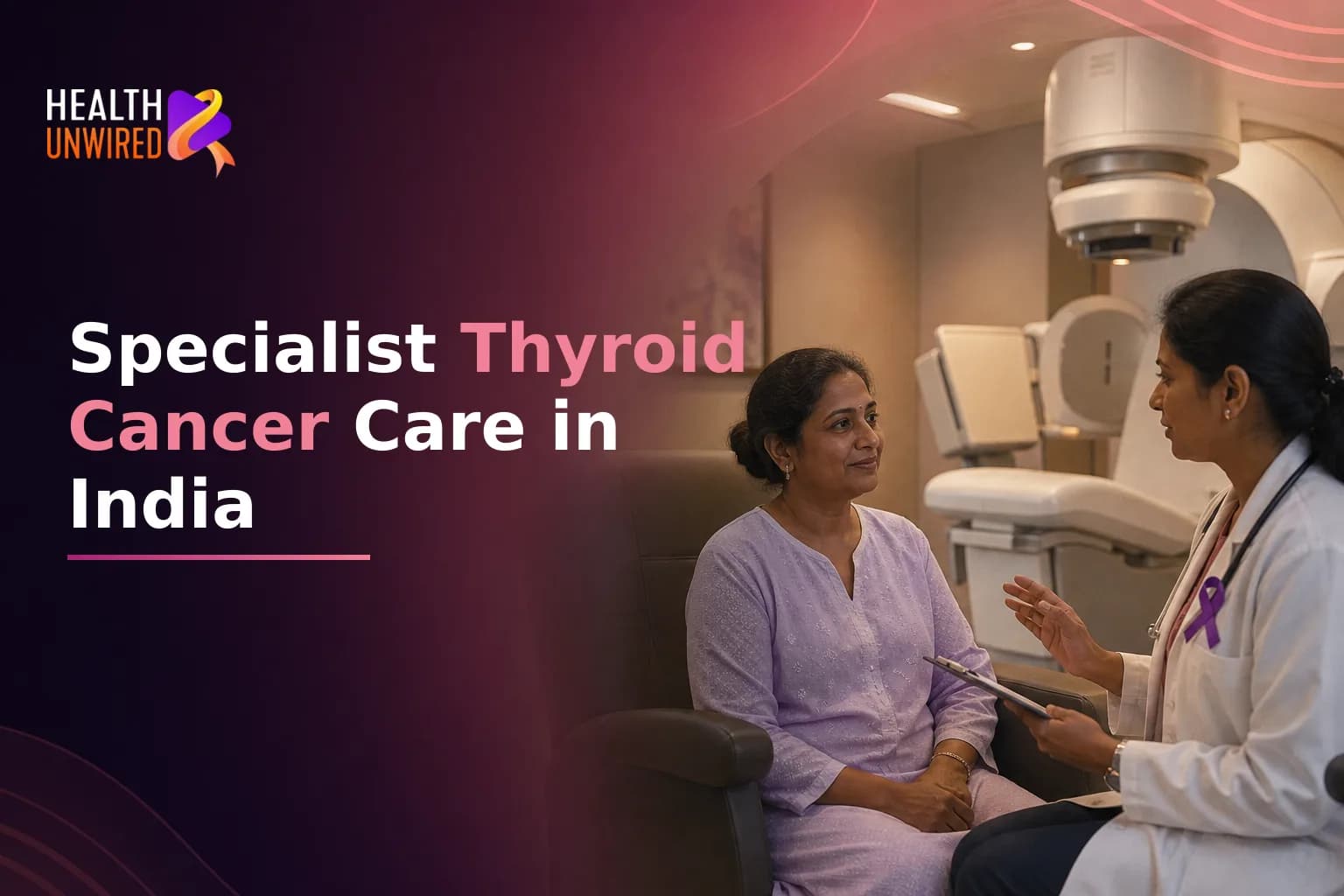
If you have been diagnosed with thyroid cancer and are weighing your treatment options, one path some international patients take is traveling to India for specialist care. India has a large network of hospitals with dedicated endocrine surgery programs, nuclear medicine units that can give radioactive iodine (RAI) therapy, and team-based tumor boards that review thyroid cancer cases together. This guide explains what that care pathway looks like, what to bring with you, how to evaluate centers, and how your follow-up works once you are back home.
Why Do International Patients Choose India for Thyroid Cancer Care?
Thyroid cancer is one of the more common cancers worldwide. Research shows that about 2 million people were living with thyroid cancer globally in 2021 (Global Burden of Disease Study 2021, PubMed Central). In India alone, about 38,574 new thyroid cancer cases were expected in 2025, based on hospital cancer registry data (Thyroid Cancer Registry Analysis, NCBI). This volume means India's specialist hospitals manage large numbers of cases each year. Surgical and nuclear medicine teams that handle more cases develop stronger skills over time.
Many international patients come from countries where access to RAI facilities is limited, where waiting for a specialist appointment takes months, or where paying for treatment at home is not realistic. Patients from the Middle East, Africa, South and Southeast Asia, and the South Asian diaspora in the US, UK, and Australia have all used India's private hospitals for specialist endocrine oncology care. India's private centers offer substantially lower costs than private care in Western countries, but you should always request a written, itemized cost estimate from the specific hospital before committing to travel.
If you are still deciding whether specialist input actually changes your options, the companion article on thyroid cancer treatment options and why specialist input matters walks through how different treatment plans are built for different subtypes and stages.
Which Thyroid Cancer Subtypes Are Treated in India?
Not all thyroid cancers follow the same treatment path. The National Cancer Institute identifies four main subtypes: papillary, follicular, medullary, and anaplastic. The first two - papillary and follicular - are called differentiated thyroid cancers (DTCs). They generally respond well to surgery and, when appropriate, RAI therapy. Medullary thyroid cancer starts from a different cell type and does not absorb iodine, so RAI is not part of that treatment. Anaplastic thyroid cancer is the rarest and most aggressive form and requires a highly specialized team approach.
When you evaluate a center in India, ask specifically about their caseload and approach for your particular subtype. A hospital may have strong outcomes with well-differentiated papillary and follicular cases but less experience with rarer presentations. Centers that hold regular tumor board meetings - where endocrine surgeons, medical oncologists, nuclear medicine doctors, and endocrinologists review each case together - are better equipped to handle the full range of subtypes safely.
Understanding your subtype is a critical first step before any specialist consultation. If you are still working through your diagnosis paperwork, the guide to understanding your thyroid cancer pathology report explains the key terms and what to look for before your first oncology meeting.
What Does Thyroid Cancer Care in India Offer International Patients?
The table below summarizes the factors that most often lead international patients to seek thyroid cancer care in India, compared with settings where local access may be limited. Every patient's situation is different, so treat this as a starting framework rather than a final checklist.
| Factor | Specialist center in India | Limited-access local setting |
|---|---|---|
| Specialist team structure | Endocrine surgeon, nuclear medicine physician, medical oncologist, and endocrinologist typically available at one site | Specialists may exist but be spread across multiple hospitals or cities, requiring separate referrals and coordinated scheduling |
| RAI therapy facilities | Isolation rooms and nuclear medicine units available at most major private hospitals in large Indian cities | Dedicated RAI isolation facilities may be absent or carry long waits in some countries |
| Molecular and genetic testing | BRAF, RET, and RAS mutation testing available at accredited labs; informs targeted therapy decisions for eligible cases | Testing may not be locally available, or samples may need to be sent to external reference labs with added delay and cost |
| Treatment cost | Substantially lower than US, UK, or Australian private care for most procedures; request an itemized written quote before travel | High in self-pay markets; may be covered by national insurance but often subject to wait lists |
| Initial appointment timing | Private centers typically able to schedule within one to three weeks for most thyroid cancer cases | Waits of several weeks to months are common in underfunded or capacity-constrained systems |
The central takeaway from this comparison is access. India's specialist centers can generally offer a complete thyroid cancer care pathway - from surgery through RAI and long-term hormonal monitoring - under one roof, often faster than many overburdened public health systems elsewhere. The cost advantage is real, but it varies by center and city. Never commit to travel based on an unofficial online estimate alone - get a written, itemized quote from the hospital's international patient office.
Which Records Should You Share Before Traveling to India for Treatment?
Before you book any flights, share your records with the center you are considering. Most reputable hospitals in India have international patient offices that accept digital records by secure email or upload portal. Preparing the right documents in advance can save considerable time once you arrive. The key items to gather include:
- Your pathology report from the original biopsy, including the histology type and any immunohistochemistry or molecular marker results
- Ultrasound reports of the neck and any CT or PET-CT scans of the neck and chest
- Surgical notes if you have already had a partial or total thyroidectomy
- Recent blood results, especially TSH, free T4, and thyroglobulin levels
- A complete list of your current medications, including any thyroid hormone replacement therapy
- Any prior treatment records, including radiation or systemic therapy, if applicable
Sharing records before arrival serves two purposes. First, the center can give you a realistic written treatment plan and cost estimate before you commit to travel. Second, if your case is complex, the tumor board can review it in advance, so your first in-person appointment moves directly to planning rather than information gathering. Some international patient offices can also arrange a preliminary video call with your specialist before you travel.
If you want an independent review of your records before choosing a center, you can book an online consultation with an oncologist through HealthUnwired - upload your reports, choose a specialist, and receive a written opinion within 48 hours, without traveling anywhere.
How Long Will You Need to Stay in India?
For most patients with differentiated thyroid cancer, the treatment pathway in India takes roughly three to six weeks of in-country time, depending on how care unfolds and whether RAI therapy follows surgery.
Surgery itself - a total thyroidectomy or, in select low-risk cases, a diagnostic or therapeutic lobectomy - typically involves four to seven days in hospital, followed by a short recovery period before the next step. If RAI therapy is recommended, most protocols require either a period of thyroid hormone withdrawal or preparation with recombinant TSH to maximize iodine uptake by any remaining thyroid tissue. You then receive the RAI dose in a hospital isolation room, and you'll remain slightly radioactive for a defined period. According to the American Cancer Society, the length of time you need to remain in isolation after RAI depends on the dose received and local radiation safety regulations - your care team will advise you on the specific requirements for your case.
Patients with medullary or anaplastic thyroid cancer typically have more complex timelines. These cases require careful team-based planning and may be managed across more than one treatment phase, sometimes with systemic therapy continuing after discharge. Budget additional time if your subtype is not well-differentiated, and confirm the detailed treatment timeline with your center before booking travel.
Once acute treatment is complete, most follow-up can be managed remotely. Thyroglobulin blood tests and TSH monitoring can be done at a local laboratory at home and reviewed by your India-based team via telehealth. You may need periodic imaging if surveillance results raise a concern, and your team will advise you when in-person review becomes necessary.
What Visa and Logistics Do You Need to Plan For?
International patients traveling to India for medical care typically apply for a Medical Visa (MV). This visa allows multiple entries and can be extended within the country if treatment takes longer than planned. You will need a letter from the hospital in India confirming your appointment and the nature of your treatment as part of your application. A companion traveling with you may apply simultaneously for a Medical Attendant (MX) visa.
For a step-by-step walkthrough of the visa process, what to pack, accommodation near treatment centers, and managing your schedule across time zones, the guide on medical tourism to India for cancer care covers the logistics end to end.
The practical details matter more than most patients expect before they leave home. How far is the hospital from the nearest international airport? Does the hospital have a partnered guesthouse or accommodation block for accompanying family members? Who is your named English-speaking patient coordinator, and how do you reach them after hours? Most major private hospitals in cities such as Mumbai, Delhi, Chennai, and Bangalore have dedicated international patient departments that manage these arrangements - but it is worth confirming each point in writing before departure.
Planning international cancer care carries its own emotional weight. The weeks between diagnosis and travel can be among the hardest - uncertainty, distance, and disruption to daily routines often affect sleep and stress levels in ways you might not expect. Some patients use sleep and stress support options at Ayurnomics during this period while preparing for treatment.
What Questions Should You Ask a Specialist Center Before You Commit?
Not every hospital that lists thyroid cancer treatment on its website will have the specialist experience you need for your case. These questions help you assess whether the fit is right:
- How many thyroid cancer surgeries does your endocrine surgery team perform each year?
- Do you have an on-site nuclear medicine department with dedicated RAI isolation facilities?
- Does your team hold a regular multidisciplinary tumor board, and will my case be reviewed there before my first appointment?
- What molecular testing is performed on-site, and which tests are sent to external labs?
- Can my ongoing follow-up - TSH monitoring and thyroglobulin checks - be coordinated remotely after I return home?
- What is included in the written cost estimate, and what additional costs should I budget for separately?
If the centers propose different treatment plans, an independent second opinion from an endocrine oncologist can help you compare options. HealthUnwired offers online consultations with oncology specialists who can review your records and give you an assessment of your treatment plan by video, within 48 hours.
When to Talk to Your Doctor
Talk to your current oncologist or endocrinologist before making any decisions about traveling abroad for treatment. Let them know you are considering India and ask for copies of all your records in a portable digital format. If your treatment plan involves a complex or rare subtype, ask for a referral to an endocrine oncology specialist before finalizing any international travel plans. If your local system has a long wait and you feel the timing is a concern, discuss that openly with your doctor - they can help you understand whether urgency is medically relevant for your specific diagnosis.
This article is for general information and is not a substitute for medical advice. Always consult your oncologist or care team about your specific situation.
Similar Topics
Thyroid Cancer Second Opinion: What Endocrine Oncologists Check
A second opinion from an endocrine oncologist before thyroid cancer treatment can catch misclassified biopsie…
HealthUnwired Team
Aug 27, 2026
Understanding Your Thyroid Cancer Pathology Report: Decoding Tumor Type, S…
Your thyroid cancer pathology report is the foundation of every treatment decision your care team will make. …
HealthUnwired Team
Jun 19, 2026
Thyroid Cancer Treatment Options: Why Specialist Input Changes Your Decisi…
Surgery, radioactive iodine, or active surveillance — the right path for thyroid cancer is not the same for e…
HealthUnwired Team
Jun 10, 2026